

Pest · Coleoptera (beetles) · affects Fodder beet, Maize, Common sunflower
Especially harmful
Sand weevil
Opatrum sabulosum
Description
How to identify
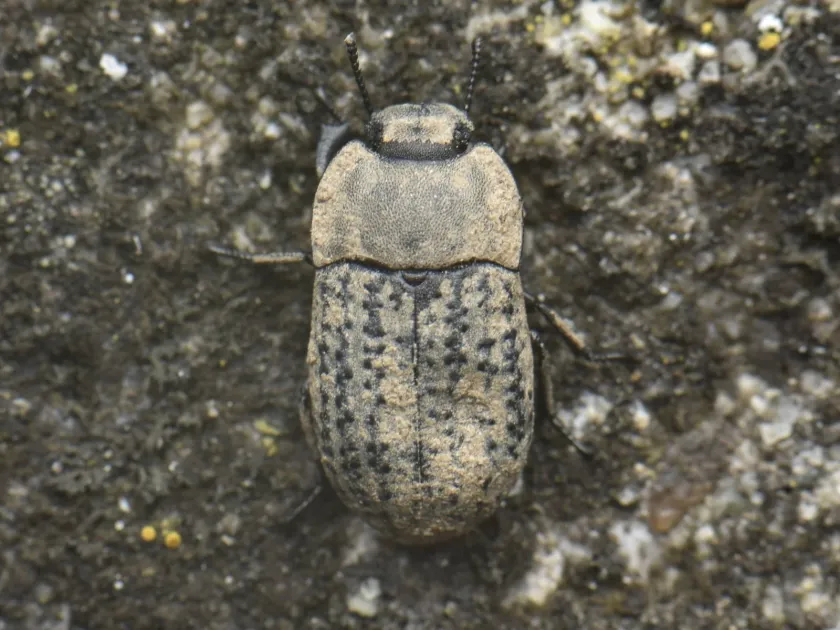
The sand weevil (Opatrum sabulosum) is a member of the Tenebrionidae family. Adult beetles are 7–10 mm long, with a matte black body featuring serrated edges on the pronotum.
The elytra are covered in small bumps and short, light-colored hairs, allowing the beetle to blend perfectly with sandy soil or debris, making them difficult to detect.
The larvae are cylindrical, yellow-brown in color, and have a hardened chitinous exoskeleton that protects them in the soil environment.
These insects undergo complete metamorphosis. The life cycle involves eggs, larvae, pupae, and adults, with the adult stage being the primary overwintering phase.
They are highly resistant to adverse conditions, including dry spells, which allows them to thrive in arid and semi-arid agricultural regions.
What it damages
As a polyphagous pest, the sand weevil can cause extensive damage to a wide range of crops by feeding on seedlings and young plants.
Affected crops include: fodder beet, cabbage, pepper, hop, apple trees, peas, tomato, and eggplant.
The beetles primarily target the tender stems of young seedlings, often cutting them off completely at the soil surface, leading to plant death and significant yield losses.
In apple orchards, they may feed on buds, causing severe damage to fruit production before the growing season fully begins.
The severity of damage often depends on population density, with high numbers of beetles capable of wiping out an entire field in just a few days.
When it appears
Adult beetles emerge from their overwintering sites in the soil early in the spring as soon as the ground warms up (usually 10–12°C).
April and May represent the peak period of activity, coinciding with the emergence of spring crops when the plants are most vulnerable to feeding.
During the hotter summer months, their surface activity decreases, though they continue to feed on weeds and other vegetation surrounding the crops.
By autumn, beetles migrate back into the top layers of the soil to overwinter, burying themselves at depths of up to 20 cm.
The staggered development cycle means that multiple generations or age groups may exist, necessitating continuous monitoring throughout the season.
Signs of infestation
The most common sign of infestation is the sudden appearance of bare patches or thinned stands in newly planted fields, particularly near field margins.
Stems of young plants may appear chewed, with irregular edges or deep cavities in the base, indicating the presence of active feeding.
During the day, beetles can be found hiding under soil clumps or plant residues near the damaged crops; they often play dead when disturbed.
The presence of adults in soil or traps near affected areas is a definitive indicator of the pest's presence and potential threat.
In orchards, failure of buds to sprout or visible gnaw marks on buds serve as a clear diagnostic sign of early-season damage.
Control measures
Effective management requires an integrated approach that combines cultural practices with targeted chemical applications.
- Deep autumn plowing to destroy overwintering grounds.
- Strict weed control in and around the fields to remove alternative food sources.
- Crop rotation to break the cycle of pest colonization.
- Application of systemic seed treatments to protect young seedlings.
- Use of poisoned bait traps along field edges to intercept migrating beetles.
Frequent inter-row cultivation helps disrupt the beetles' movement and can mechanically destroy larvae and pupae residing in the upper soil profile.
Chemical control via edge spraying is highly effective for localized infestations, preventing the spread of the pest to the interior of the field.
Promoting rapid plant growth through optimal fertilization and irrigation can help crops pass the sensitive seedling stage more quickly, reducing exposure time to the pest.
In brief
10
Damages crops
Content graph
Damages crops · 10
Content graph
Connections · Sand weevil
Most often together:
Marketplace
Products · 20
Biology
Taxonomy
- Latin name
- Opatrum sabulosum
- Order
- Coleoptera (beetles)
- Family
- Tenebrionidae
- EPPO code
- OPARSA
Community
Discussion
No discussions yet — be the first.