
Adelium
Adelium
Description
How to identify
The genus Adelium belongs to the family Tenebrionidae, commonly known as darkling beetles. These insects are characterized by an elongated body, typically exhibiting a metallic, bronze, or black sheen that makes them distinct in the field.
Adult beetles usually measure between 8 and 15 millimeters in length. A key morphological feature used for identification is the eyes, which are divided by a supraorbital ridge, separating the dorsal and ventral parts of the ocular structure.
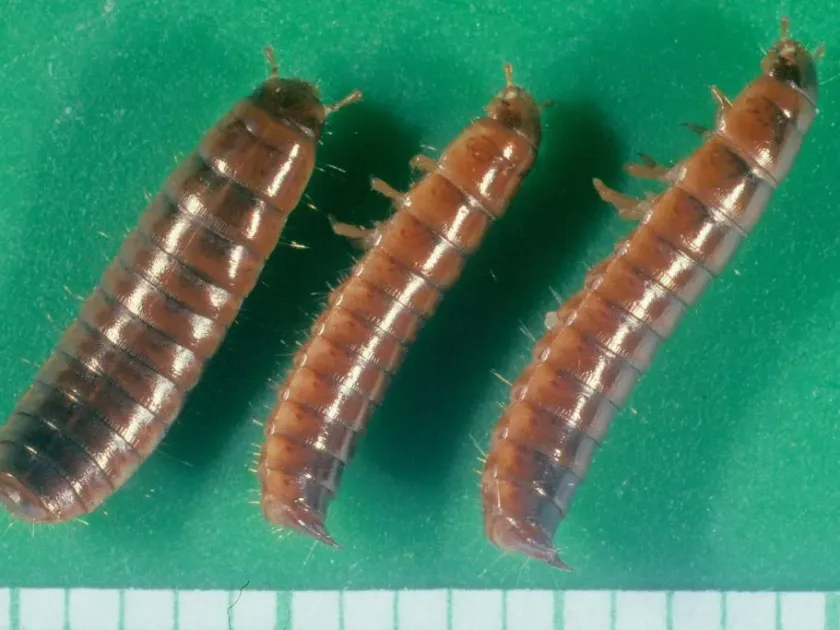
Adelium larvae are often referred to as false wireworms. They have a cylindrical, highly sclerotized, yellowish to brown body. Their head is well-developed, featuring powerful mandibles designed for chewing through tough plant fibers and roots.
These beetles are primarily nocturnal or crepuscular, spending daylight hours hidden under leaf litter, bark, or within soil crevices. This secretive behavior often leads to their presence being underestimated until significant damage occurs.
The genus is diverse, with numerous species primarily distributed in Oceania. They have successfully adapted to various environments, ranging from dense forests to intensively managed agricultural landscapes.
What it damages
Adelium species can affect a wide range of agricultural crops, including cereals, forage grasses, and vegetables. Young seedlings are particularly vulnerable, as their succulent tissues are easily consumed by both larvae and adults.
Adult beetles feed on the aerial parts of plants, including leaves and young stems. In cases of high population density, they can cause severe defoliation, leaving only the primary leaf veins behind.
The larval stage is considered the most destructive, as it dwells in the rhizosphere. Larvae feed on roots and the base of stems, disrupting the plant's nutrient and water uptake, which often leads to wilting and eventual plant death.
Nurseries and young orchards are at particular risk, as the beetles may feed on the bark of young saplings, leading to stunted growth or entry points for secondary infections by fungi or bacteria.
When natural food sources are scarce due to dry conditions or habitat alteration, Adelium populations often migrate into cultivated fields, turning from generalist scavengers into significant agricultural pests.
When it appears
The lifecycle of Adelium is closely synchronized with seasonal rainfall and temperature cycles. Adult activity peaks during warmer months, especially following periods of precipitation which create ideal conditions for reproduction.
Egg laying typically occurs in soil rich in organic matter. Once hatched, the larvae undergo several instars while feeding in the soil. The duration of this stage is heavily influenced by soil moisture and temperature levels.
Pupation takes place within specialized soil cells constructed by the larvae. The emergence of the new generation of adults often coincides with the peak growing season of major crops, posing a direct threat to yield.
In stable, warm climates, the species may complete multiple generations within a single year. In cooler regions, however, the life cycle is usually annual, with overwintering occurring primarily in the larval or adult stage.
Monitoring adult flight patterns using light traps or pheromone baits is a common practice to predict population surges and time the implementation of control measures accordingly.
Signs of infestation
The first signs of an Adelium infestation often appear as patchy areas of stunted or wilting plants. Farmers frequently misinterpret this as drought stress until closer inspection reveals the true cause.
Leaf damage is characterized by irregular, jagged edges, caused by the adult beetles' feeding activity. Unlike lepidopteran larvae, these beetles create rough, broken margins on the leaf blade.
Digging near the base of wilting plants will often reveal the presence of the larvae. Their presence is usually accompanied by physical damage to the root system, which may look frayed or partially consumed.
The accumulation of small, black fecal pellets on the soil surface near the affected plants is another strong indicator of significant beetle presence and active feeding.
If the infestation is ignored, the patches of damaged plants will expand rapidly, eventually leading to thin plant stands and a substantial reduction in the overall harvest potential.
Control measures
Managing Adelium requires an integrated pest management (IPM) approach that combines mechanical, cultural, and chemical tactics to maintain populations below economic thresholds.
- Deep tillage of the soil before planting to disrupt larval development and destroy pupal cells.
- Crop rotation with non-host species to break the pest's reproductive cycle.
- Use of light traps to monitor and mass-trap adult beetles during peak activity.
- Application of soil-applied insecticides if population densities exceed acceptable levels.
- Sanitation of field borders to remove weeds and debris that provide refuge for the beetles.
Chemical control is most effective when targeting larvae through soil treatment at the time of sowing. Seed treatments or granule applications are often preferred over foliar sprays, which are less effective against soil-dwelling stages.
Biocontrol agents, such as entomopathogenic nematodes or specific fungi, are gaining attention as environmentally friendly alternatives for managing Adelium larvae in the soil, offering sustainable long-term control.
Taxonomy
- Latin name
- Adelium
- Order
- Coleoptera (beetles)
- Family
- Tenebrionidae
- EPPO code
- ADLMSP
Discussion
No discussions yet — be the first.