
Short-horned Tenebrionid beetle
Adelium brevicorne
Description
How to identify
Adelium brevicorne is a member of the Tenebrionidae family (darkling beetles), belonging to the order Coleoptera. Adult beetles are characterized by a medium-sized, dark, and often shiny exoskeleton that is highly adapted to arid environments.
Morphologically, these beetles possess an oval, slightly flattened body. As the specific epithet implies, the antennae are notably short, which serves as a primary diagnostic feature for identification in field settings.
The species exhibits high resilience to temperature fluctuations and varying soil conditions. These insects lead a largely secretive lifestyle, frequently seeking refuge under plant debris or within soil cracks during the day.
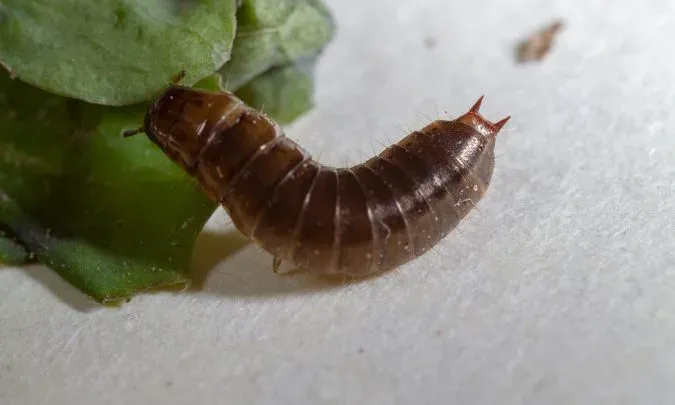
Larvae develop within the soil layer and possess elongated, cylindrical bodies with a yellowish-brown hue. They are equipped with robust, chewing mouthparts that enable them to feed on both decaying organic matter and living plant tissues.
The life cycle involves complete metamorphosis, consisting of the egg, larva, pupa, and adult stages. Adult activity peaks during warmer months, which provide optimal conditions for reproduction and feeding.
What it damages
The primary damage is caused by the soil-dwelling larvae, which feed on the underground parts of young plants, including germinating seeds and the root systems of cereal crops and various other agricultural plants.
In intensive agricultural regions, this species can cause significant losses in winter and spring cereal stands. Damage to the root system results in stunted growth, delayed development, and potentially the mortality of seedlings during early growth stages.
Adult beetles, while generally omnivorous, may damage vegetative plant parts when populations are high. They have been observed feeding on leaf margins or stems, rendering them a potential threat to a broad spectrum of agroecosystems.
The pest prefers fields with high amounts of crop residue, which provides essential shelter and supplementary food sources. Fields with poor weed management are at a significantly higher risk of experiencing mass infestations.
The economic threshold of damage depends on the crop variety and its development phase. The greatest risk occurs during prolonged, dry spring periods when weakened plants cannot compensate for root system damage.
Signs of infestation
A primary indicator of the pest's presence is patchy emergence across the field. In affected areas, plants exhibit noticeable growth delays, yellowing, and are easily pulled from the soil due to damaged root structures.
Close inspection of the subterranean parts of seedlings often reveals characteristic chewed areas or a lack of fine root hairs. Larvae of the darkling beetle can frequently be found in the soil surrounding affected plants.
Adult beetles may be spotted on the soil surface at dusk or dawn. When disturbed, they typically burrow into the substrate or hide under soil clods. High counts of adult beetles in traps serve as a reliable indicator of potential upcoming damage.
Damage caused by adults typically manifests as notched or irregular leaf margins. Because these symptoms can be confused with other beetle species, professional laboratory identification of collected specimens is often necessary for accurate diagnosis.
Indirect evidence of infestation includes large accumulations of crop residue that were not properly tilled into the soil, creating a conducive environment for the build-up of the beetle population.
Control measures
The key management strategy is deep autumn plowing, which disrupts the habitat of the larvae, exposing them to predators and harsh weather conditions, significantly reducing the population density.
Implementing crop rotation is an effective way to disrupt the beetle's life cycle. It is recommended to avoid planting susceptible crops in fields where high beetle populations were observed during the previous season.
Using insecticidal seed treatments prior to sowing is the most effective method for protecting seedlings from soil-dwelling pests. This practice creates a protective zone around the developing plant during the critical establishment stage.
- Implementing crop rotation sequences.
- Performing timely and thorough soil cultivation.
- Eliminating weed infestations at field margins.
- Applying soil-applied insecticides in identified hot spots.
- Regular population monitoring via soil sampling and pheromone traps.
Chemical control during the growing season is rarely employed and should only be considered when the economic threshold is exceeded, posing a direct threat to the overall crop stand density.
Taxonomy
- Latin name
- Adelium brevicorne
- Order
- Coleoptera (beetles)
- Family
- Tenebrionidae
- EPPO code
- ADLMBR
Discussion
No discussions yet — be the first.