
Lesser mealworm
Alphitobius
Description
How to identify
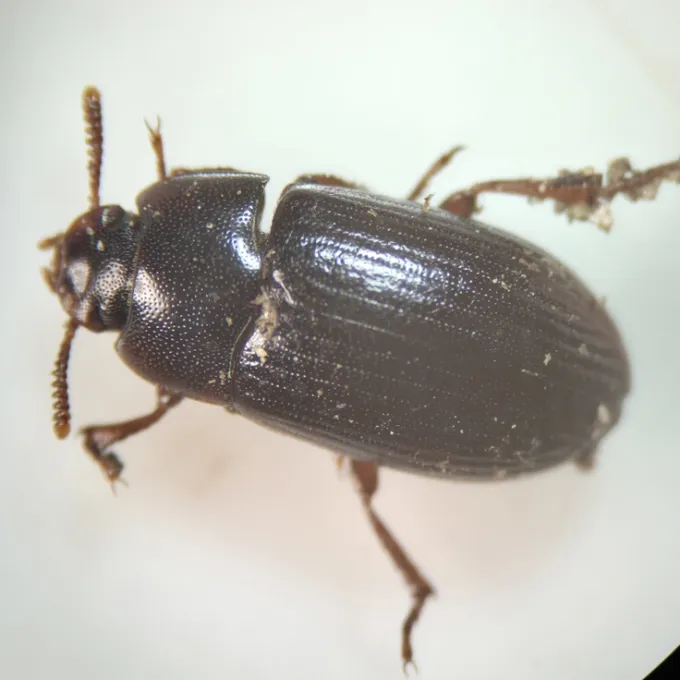
The lesser mealworm (Latin: Alphitobius diaperinus) is a beetle of the Tenebrionidae family. Adult beetles are small, ranging from 5 to 6 mm in length, with an elongated, flattened body that is reddish-brown to black in color.
The larvae, known as "lesser mealworms," are yellowish-brown, hard-bodied, and grow up to 10 mm. They are highly active and can quickly bury themselves in grain or insulation materials, making them difficult to detect.
The life cycle consists of egg, larva, pupa, and adult stages. The duration of the life cycle is heavily dependent on temperature and humidity, with development being fastest in warm, damp conditions typical of grain stores.
These insects are highly adaptable and cosmopolitan, found in almost every region of the world where grain is processed, stored, or where livestock production occurs.
Adult beetles possess wings and are capable of flight, which enables them to move easily between different rooms or buildings in a storage facility or farm complex.
What it damages
This pest primarily attacks grains, cereals, flour, and finished animal feeds. It is particularly attracted to damp or moldy grain, which creates an ideal environment for feeding and development.
In poultry production, the lesser mealworm is a significant economic threat. Larvae often infest bedding, where they feed on poultry feed and droppings. They may also consume weak or dying birds, causing skin lesions.
Beyond direct feeding damage, the beetle degrades the quality of stored products. Contamination with frass, shed skins, and carcasses makes the product unsalable and unhygienic.
Infestations often lead to localized heating of the grain mass, which accelerates spoilage, promotes mold growth, and further reduces the nutritional value of the feedstock.
- Direct consumption of grain embryos and endosperm.
- Contamination of stored products with insect waste.
- Destruction of polystyrene or other building insulation materials.
- Vectoring of bacterial, fungal, and viral poultry pathogens.
When it appears
The lesser mealworm is most active in warm weather, thriving at temperatures between 25°C and 30°C. In unheated storage facilities, activity peaks during the late spring and summer months.
In climate-controlled buildings or heated poultry houses, the beetle can continue its life cycle year-round, as these environments provide a constant source of warmth and food.
The movement and migration of the population typically increase when new grain is brought into storage, as these activities disturb the hiding spots and introduce fresh nutrients.
Winter conditions can suppress activity significantly; however, the species is resilient and can survive in protected gaps or deep within insulated walls until temperatures rise again.
Consistent monitoring throughout the year is recommended, as small surviving populations can rapidly expand once the thermal conditions improve.
Signs of infestation
A primary indicator of infestation is a distinct, unpleasant odor caused by the accumulation of beetle secretions and waste products in the grain or bedding.
Evidence of larval development, such as numerous shed exoskeletons (exuviae), is often found on the surface of grain sacks or in the corners of storage bins.
Structural damage is a hallmark sign in poultry houses. Larvae will tunnel into wall insulation, such as expanded polystyrene, to create pupation chambers, leading to degradation of building materials.
The presence of fine dark dust in stored grain piles often indicates that the material has been consumed and processed by the beetles, signaling a high population density.
Monitoring traps, including light traps or pheromone-based lures, are effective for detecting the presence of adults before an infestation becomes visually obvious to the naked eye.
Control measures
Sanitation is the first line of defense. Thoroughly cleaning storage areas, removing spilled grain, and repairing structural cracks minimizes the sites where beetles can hide and breed.
For stored grain, fumigation with phosphine-based products is the standard method for eliminating infestations at all life stages. This is best performed by licensed professionals in airtight environments.
Maintaining low grain moisture (below 13%) and cool storage temperatures inhibits larval development and helps keep the population manageable without intensive chemical intervention.
In livestock facilities, replacing bedding material between production cycles and applying residual insecticides to the surfaces of the house are critical for disrupting the lifecycle.
Regular inspection and laboratory testing of incoming grain lots are essential to prevent the introduction of this pest into clean storage facilities, ensuring the protection of stored assets.
Taxonomy
- Latin name
- Alphitobius
- Order
- Coleoptera (beetles)
- Family
- Tenebrionidae
- EPPO code
- ALPHSP
Discussion
No discussions yet — be the first.