
Adelium abbreviatum
Adelium abbreviatum
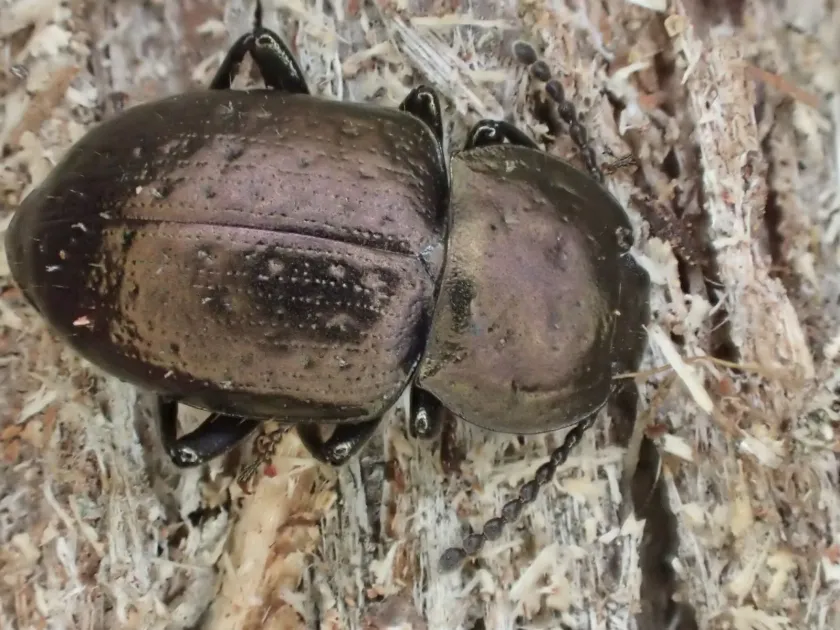
Description
How to identify
Adelium abbreviatum is a species of beetle belonging to the family Tenebrionidae, commonly known as darkling beetles. These insects are well-adapted to varied environmental conditions, often thriving in agricultural landscapes where organic matter and crop roots are available.
The adult beetles are characterized by a robust, elongated body with a dark, often dull or slightly metallic cuticle. Their morphology is designed for resilience, allowing them to remain active in diverse soil types while seeking shelter during the day.
Larval stages of this beetle are sclerotized and possess a rigid, cylindrical shape, typically yellowish-brown in color. They reside within the soil profile, where they spend most of their developmental life cycle, consuming underground organic material.
The biology of this species involves complete metamorphosis, consisting of egg, larval, pupal, and adult stages. The female lays eggs directly into the soil, ensuring that the emerging larvae have immediate access to food sources near host plants.
These insects exhibit nocturnal behavior, with adults often being found under debris or soil clods during daylight hours, while larval stages remain concealed beneath the soil surface, making them difficult to detect without proper monitoring.
What it damages
The primary damage caused by Adelium abbreviatum occurs during the larval stage, when they feed on the roots and underground stems of various crops, including cereals and maize. This feeding behavior often leads to the destruction of the root system.
Seedlings are particularly vulnerable to attack, as minor feeding damage can compromise the entire root structure, causing the young plant to wither, turn yellow, and eventually die. This often results in patchy crop stands.
Beyond direct mechanical injury, the feeding wounds created by the larvae serve as entry points for soil-borne pathogens, including bacteria and fungi, which can exacerbate root rot and further reduce plant vigor.
Adult beetles may occasionally consume surface foliage, but their economic impact is usually overshadowed by the destructive habits of the subterranean larvae, which can be particularly severe during dry seasons.
In high-density infestations, the loss of root function significantly impacts the overall health of the crop, limiting nutrient uptake and resulting in substantial reductions in yield if left unmanaged.
Control measures
Management of Adelium abbreviatum requires an integrated approach focusing on mechanical interventions and preventative chemical control to maintain populations below economic thresholds.
Effective tillage practices, such as deep plowing, play a crucial role in disrupting the habitat of soil-dwelling larvae, exposing them to environmental stressors and predators that significantly reduce their survival rate.
Seed treatments using systemic insecticides are highly recommended as a primary line of defense. These treatments provide a protective zone around the germinating seed and roots, preventing larval feeding during the most susceptible early growth stages.
Crop rotation and field hygiene are vital components of sustainable management, as they reduce the continuity of food sources required by the beetle to sustain its population cycle over consecutive years.
- Regular soil sampling to monitor larval density.
- Control of weeds that serve as alternative hosts.
- Application of entomopathogenic fungi to suppress soil populations.
Taxonomy
- Latin name
- Adelium abbreviatum
- Order
- Coleoptera (beetles)
- Family
- Tenebrionidae
- EPPO code
- ADLMAB
Discussion
No discussions yet — be the first.