
Perileptus areolatus
Perileptus areolatus
Description
How to identify
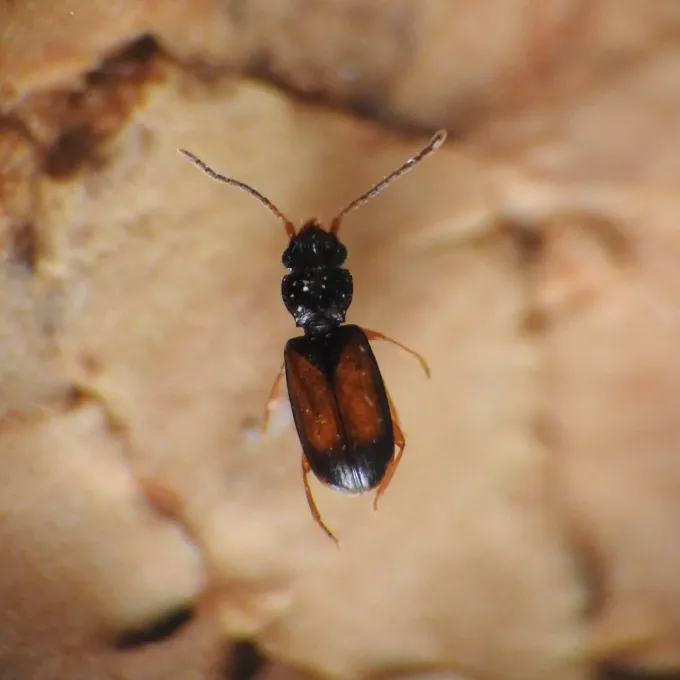
Perileptus areolatus is a species of ground beetle belonging to the family Carabidae, order Coleoptera. These small insects are highly specialized, often inhabiting riparian zones and moist soil environments.
The morphology of this beetle includes a flattened body structure and distinctive punctured elytra, which provide a unique appearance compared to other members of the Carabidae family.
As a predatory species, it possesses well-developed mandibles. While primarily carnivorous, its behavior in agricultural settings can become problematic under specific environmental conditions.
The lifecycle includes complete metamorphosis, passing through egg, larval, pupal, and adult stages. The larval stage is particularly elusive, residing within the upper soil horizons.
Field identification requires specialized entomological equipment, as distinguishing it from closely related species based on morphological features alone can be challenging.
What it damages
In agricultural systems, Perileptus areolatus is often observed as a sporadic pest. Damage occurs primarily when the beetle's primary food source is limited, leading it to feed on plant tissues.
They typically target the roots and subterranean stems of young seedlings. This feeding activity disrupts the vascular system of the plant, hindering water and nutrient uptake.
Severe infestations can lead to thinning stands, where young plants wilt or die shortly after germination, causing significant yield losses in affected fields.
The damage is usually concentrated in low-lying, damp areas of the field, where soil moisture levels remain consistently high, favoring the beetle's development.
The combined effect of mechanical damage and the entry of secondary pathogens through the feeding wounds can weaken the plant, leading to stunted growth.
When it appears
The seasonal activity of Perileptus areolatus is heavily dependent on soil temperature and moisture, which dictate the emergence and feeding habits of the adults.
During early spring, as soil temperatures rise, adults emerge from their overwintering sites, coinciding with the germination phase of many agricultural crops.
Throughout the summer, activity is regulated by soil moisture; the beetles migrate deeper into the soil or toward protected areas during periods of extreme heat or dryness.
Autumn marks the transition toward overwintering, as individuals seek refuges within field debris or deep soil crevices to withstand the winter months.
Their population dynamics are synchronized with the cropping cycle, making them a recurring concern in fields where environmental conditions remain stable across seasons.
Signs of infestation
Early warning signs of Perileptus areolatus presence include visible wilting of young seedlings despite adequate irrigation, suggesting subterranean root damage.
Inspection of the soil around the base of affected plants often reveals small holes or surface trails created by the movement of these active beetles.
Excavating the root zone may show typical scarring or necrotic feeding wounds on the primary roots and stems of the seedlings.
The use of pitfall traps remains the most effective diagnostic tool for monitoring beetle activity and confirming their presence within the crop area.
In cases of high infestation, visible patches of stunted or missing plants become apparent throughout the field, indicating active feeding colonies.
Control measures
Effective management of Perileptus areolatus focuses on integrated pest management (IPM) strategies, starting with sound agronomic practices.
Improving soil drainage and structure can significantly reduce the attractiveness of the field to this moisture-loving species, effectively managing their population.
Deep plowing during autumn and spring tillage operations can disrupt overwintering sites and larval development, reducing the overall pressure on future crops.
Chemical control is feasible through the use of systemic seed treatments, which provide essential protection to the plant during its most vulnerable seedling stage.
- Rotate sensitive crops with resistant varieties.
- Maintain clear field borders to reduce refugia.
- Monitor soil moisture levels closely.
- Apply insecticides only when thresholds are exceeded.
Taxonomy
- Latin name
- Perileptus areolatus
- Order
- Coleoptera (beetles)
- Family
- Carabidae
- EPPO code
- PRLPAR
Discussion
No discussions yet — be the first.