
Perigona nigriceps
Perigona nigriceps
Description
How to identify
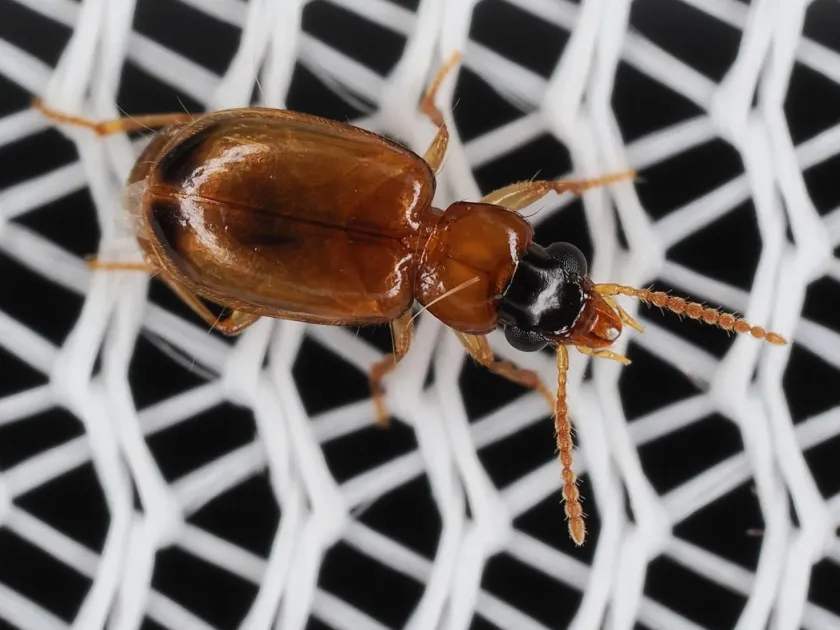
Perigona nigriceps belongs to the ground beetle family (Carabidae) within the order Coleoptera. Adult specimens are small beetles, typically measuring between 3 to 4 mm in length.
The insect possesses a distinctive shiny appearance, with the head and pronotum usually being dark or black, while the elytra exhibit a brownish-brown coloration.
A key characteristic of this species is its well-developed wings, which enable the beetles to actively disperse over significant distances, including into greenhouses and open fields.
The larvae of this species predominantly inhabit the upper layers of the soil, where high humidity levels are maintained to support their development.
In their natural habitat, these beetles are often found hiding beneath plant debris or within soil cracks, which makes them difficult to spot during routine inspections.
What it damages
This pest is primarily associated with damage to greenhouse crops, including vegetables and ornamental plants, where it thrives in the favorable microclimate.
Both adult beetles and their larvae are capable of damaging delicate parts of young shoots, germinating seeds, and plant roots, leading to stunted growth.
Significant damage is observed when population densities are high, as the insects collectively attack the root collars of plants, often causing wilting and eventual plant death.
Beyond direct mechanical damage, the presence of this pest facilitates the entry of secondary fungal and bacterial pathogens through micro-wounds in plant tissues.
Crops cultivated in protected environments face the highest risk due to consistently warm temperatures, which accelerate the reproductive cycle of Perigona nigriceps.
When it appears
Activity begins with the arrival of spring warmth, as soil temperatures reach the threshold required for adults to emerge from their overwintering sites.
In greenhouse conditions, this pest can remain active year-round, as heated facilities provide ideal conditions for all stages of the life cycle.
Population peaks are frequently recorded during the summer months when high humidity and temperature levels favor intensive breeding.
As temperatures decline in autumn, the beetles tend to migrate toward protected areas, such as compost heaps or deeper soil layers, to overwinter.
Regular monitoring is recommended throughout the growing season, utilizing sticky traps to detect adult migration early.
Signs of infestation
An initial sign of infestation is the appearance of characteristic feeding damage, such as excavated patches on seedlings or the roots of young plants.
Upon inspecting the soil around affected plants, one may observe small beetles rapidly moving if the substrate is disturbed.
Sudden localized wilting of plants, which cannot be attributed to a lack of water, often points toward root system damage caused by the larvae.
The presence of adults on light traps during evening hours serves as an indicator of an increasing population of this species within the agroecosystem.
- Damaged plant seedlings.
- Adults found under mulch or debris.
- Wilting despite sufficient soil moisture.
Control measures
The primary control strategy involves strict adherence to good agricultural practices, including thorough soil disinfection in greenhouses prior to planting.
It is essential to promptly remove plant debris and weeds, which serve as natural shelters and breeding grounds for Perigona nigriceps.
The use of biological control agents, such as entomopathogenic nematodes or fungi-based products, has proven highly effective against larval stages.
In cases of massive outbreaks, the application of registered insecticides on specific crops is permitted, provided that pre-harvest intervals are strictly followed.
Continuous monitoring using pheromone or light traps allows for effective population control before it reaches the economic injury level.
Taxonomy
- Latin name
- Perigona nigriceps
- Order
- Coleoptera (beetles)
- Family
- Carabidae
- EPPO code
- PRGNNI
Discussion
No discussions yet — be the first.