
Peranabrus
Peranabrus
Description
How to identify
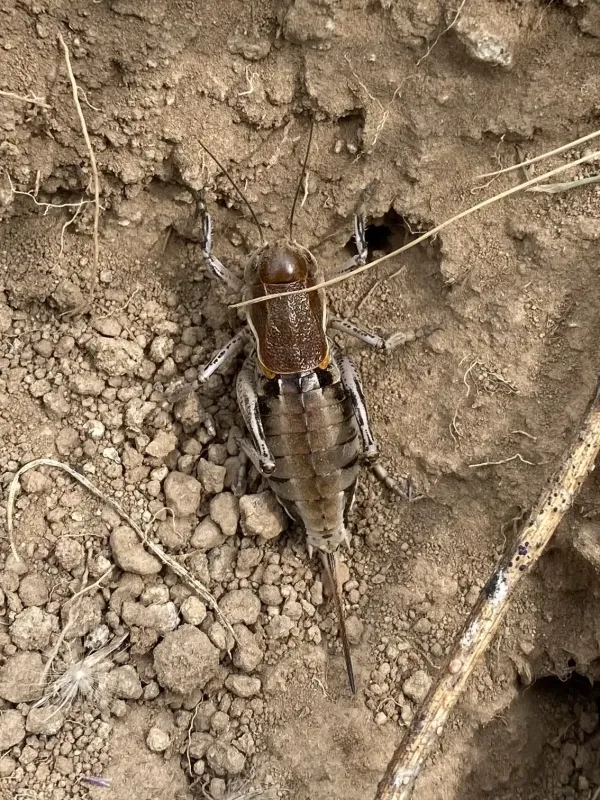
Peranabrus, specifically the species Peranabrus scabricollis, belongs to the family Tettigoniidae (bush crickets). It is a robust insect often referred to as the coulee cricket due to its habitat and physical appearance.
The adult insect has a heavy, armored body covered in coarse granulations and tubercles, which provides a rugged appearance. Its color ranges from dark brown to black, aiding in camouflage within dry soil and vegetation.
Wings in this species are significantly reduced, rendering the insect flightless. Consequently, locomotion is limited to crawling or hopping, which restricts their natural dispersal range to local areas.
Sexual dimorphism is prominent; females are typically larger than males and possess a long, sword-shaped ovipositor adapted for depositing eggs deep within the soil surface.
The life cycle involves incomplete metamorphosis. Nymphs resemble miniature adults and undergo several molting stages, gradually increasing in size before reaching the final adult form.
What it damages
Peranabrus is a generalist feeder that poses a significant threat to various cereal crops, including wheat, barley, and rye, by consuming both foliage and developing grain heads.
Besides cereals, the pest often targets forage crops such as alfalfa and clover. High-density populations can devastate pastures, leading to significant economic losses for livestock farmers.
During periods of extreme infestation, these insects may encroach upon vegetable fields, where they are capable of stripping young plants entirely, leaving little chance for recovery.
The pest's dietary versatility allows it to thrive in diverse environments, though it shows a marked preference for succulent plant tissues when they are available during their peak activity.
The cumulative damage is severe because these insects often aggregate, causing localized patches of complete crop failure rather than thin damage across a large area.
When it appears
The biological cycle of Peranabrus is strictly regulated by seasonal temperature and moisture variations in the soil, where their eggs remain dormant throughout the winter.
Nymphs typically hatch in early spring, coinciding with the initial growth stages of winter wheat and other spring cereals, which provides them with immediate food sources.
Development proceeds throughout late spring and early summer. Adults are usually observed in peak numbers during mid-summer, when mating and egg-laying activities occur.
As autumn approaches, the adults perish, and the population persists only in the egg stage, buried in the soil, which serves as a protective layer against freezing conditions.
Environmental conditions play a crucial role in population dynamics; dry springs often favor higher survival rates for emerging nymphs, leading to larger infestations.
Signs of infestation
Early identification of an infestation is often detected by observing irregular, ragged edges on leaves of cereal plants, which is a classic symptom of bush cricket feeding.
A notable sign is the development of circular or patchy areas within a field where plants appear eaten down to the ground, indicating a cluster of feeding insects.
During the day, Peranabrus can be hard to spot due to their dark coloration, but they are often found near the base of plants or hiding under debris during the cooler hours of the morning.
- shredded foliage on cereal stalks;
- missing grain heads on wheat;
- frass (excrement) visible on plants;
- mass aggregation along field margins.
Surveillance should be intensified near uncultivated areas, fence lines, and grasslands, which often serve as primary breeding grounds before the insects move into crops.
Control measures
Tillage practices are among the most effective cultural controls; deep plowing disrupts the soil, exposing eggs to the surface where they die from desiccation or predation.
Maintaining clean borders around fields by removing weeds and tall grass reduces the available harborages that the insects use during their early developmental stages.
Chemical control involving insecticides is necessary when scouting indicates that pest numbers exceed the economic injury level for the specific crop.
Barrier treatments, including the use of baited sprays or insecticidal dusts along field edges, are effective at stopping the migration of insects from adjacent rangelands.
Biological control through the preservation of natural habitats for predators such as birds and ground beetles can help keep local populations under natural pressure.
Taxonomy
- Latin name
- Peranabrus
- Order
- Orthoptera (locusts)
- Family
- Tettigoniidae
- EPPO code
- PERASP
Discussion
No discussions yet — be the first.