
Yew flat mite
Pentamerismus taxi
Description
How to identify
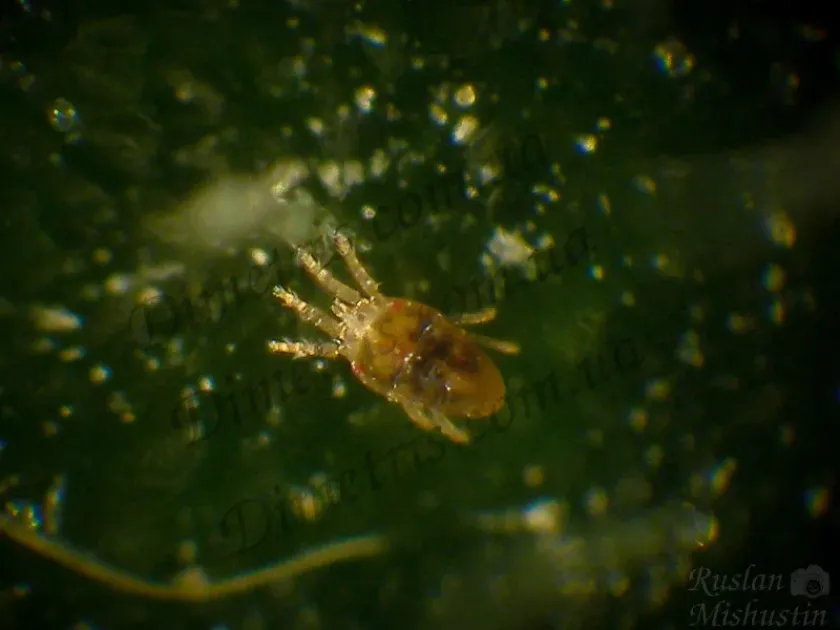
The yew flat mite (Pentamerismus taxi) is a microscopic mite belonging to the Tenuipalpidae family, often referred to as false spider mites. Adults are characterized by their flattened, bright red bodies, which provide excellent camouflage against the bark and needles of the host plant.
This pest is noted for its extremely small size, making it very difficult to detect during standard visual inspections. They are generally found residing on the underside of needles or near the needle base.
The life cycle involves egg, larva, protonymph, deutonymph, and adult stages. Under favorable warm conditions, the female can produce multiple generations, leading to rapid population growth within a short timeframe.
Unlike common spider mites, the yew flat mite does not produce dense webbing. This lack of visible silk often causes gardeners to overlook the infestation until significant damage has already occurred.
For accurate identification, professional horticulturists utilize magnification tools to examine the needle axils, where mites and their translucent eggs often aggregate.
What it damages
The primary host for this mite is the English yew (Taxus baccata), although it can impact various ornamental yew species used in landscaping and topiary art.
The mites feed by piercing the epidermal tissues of the needles and extracting cellular contents, which disrupts the tree's physiological processes.
Damage occurs in both young nursery stock and mature landscape trees, often going unnoticed until the symptoms become severe and irreversible for the affected tissues.
Intensive feeding leads to a decline in photosynthetic capacity, which weakens the plant and makes it more susceptible to environmental stress and secondary pathogen attacks.
Persistent infestation over several seasons causes significant aesthetic decline, leading to sparse foliage and branch dieback, which is particularly detrimental to high-value ornamental trees.
When it appears
Mite activity typically begins in early spring, as temperatures rise consistently above the threshold required for the pest to emerge from its overwintering state.
The peak period of development occurs during the summer months, when hot and dry weather conditions optimize the rate of reproduction and spread across the canopy.
In greenhouses, nurseries, or milder climates, the yew flat mite can remain active throughout the year, with continuous overlapping generations infesting the foliage.
As autumn approaches and temperatures drop, activity levels decrease, and adult females seek shelter in bark crevices or at the base of needles to survive the winter.
Effective monitoring should be consistent throughout the growing season, with increased vigilance during prolonged heatwaves which tend to trigger population explosions.
Signs of infestation
The first observable sign of infestation is a gradual discoloration of the foliage, where needles lose their deep green hue and begin to appear yellowish or bronze.
Visible stippling, consisting of tiny light-colored dots on the surface of the needles, indicates feeding sites where the mites have extracted cellular fluids.
Heavy infestations frequently lead to premature needle drop, causing the tree to look thin or ragged, significantly reducing the density and quality of the canopy.
Using a hand lens, observers can often identify the small red mites themselves, their discarded skins (exuviae), and clusters of eggs tucked into the base of the needles.
- Yellowing or bronzing of yew needles
- Premature shedding of foliage
- Loss of canopy density and vigor
- Tiny stippling marks on the needle surface
Control measures
Management primarily involves the application of specialized acaricides, selecting products that target all mobile life stages and, if possible, the egg stage.
To avoid the development of pesticide resistance, it is crucial to rotate chemical agents that utilize different modes of action within an integrated pest management program.
Cultural control measures, such as overhead irrigation or regular syringing of the foliage, can help reduce mite populations, as these pests thrive in dry environments.
Pruning out and destroying heavily infested branches can help limit the spread of the colony and reduce the overall pest pressure within the garden or nursery.
Preventative treatments during the early growth stages are recommended to keep mite numbers below the threshold of economic or aesthetic damage.
Taxonomy
- Latin name
- Pentamerismus taxi
- Order
- Mites
- Family
- Tenuipalpidae
- EPPO code
- PENUTX
Discussion
No discussions yet — be the first.