
Oregon flat mite
Pentamerismus oregonensis
Description
How to identify
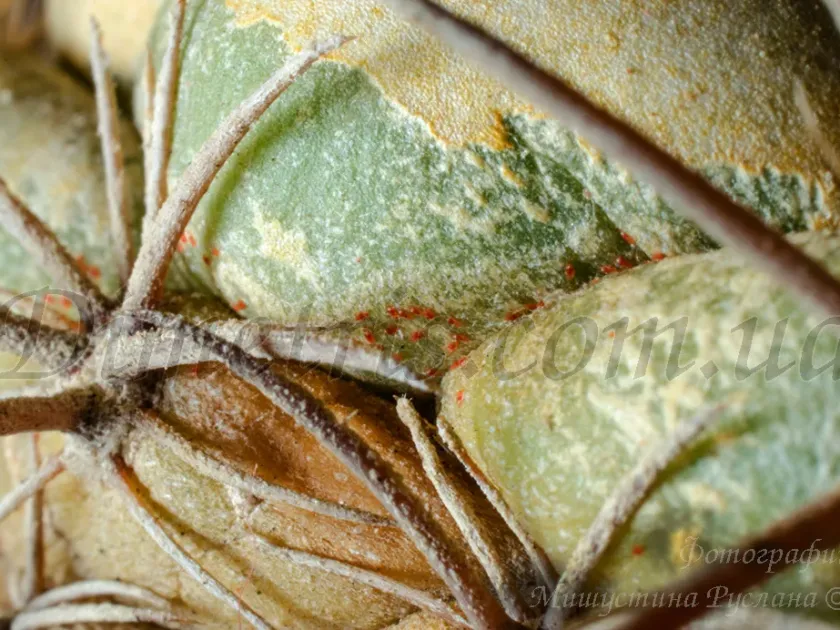
The Oregon flat mite (Latin: Pentamerismus oregonensis) is a tiny member of the Tenuipalpidae family, often referred to as false spider mites.
Adult mites are microscopic, possess a flattened body, and typically exhibit a reddish or dark red coloration, making them blend in with bark or needles.
Unlike common spider mites, they do not produce silk webs, which makes their presence stealthy and often goes unnoticed until significant damage occurs.
Identification is best achieved using a 10x or higher magnification hand lens to inspect the crevices of the plant bark and the base of the needles.
Taxonomically, they belong to the order Trombidiformes, undergoing a life cycle that includes egg, larva, two nymphal stages (protonymph and deutonymph), and adult.
What it damages
This pest primarily attacks coniferous plants, showing a strong preference for members of the Cupressaceae family, including arborvitae, juniper, and false cypress.
The mites feed by piercing the plant cells and extracting sap, which disrupts the photosynthetic ability of the needles and stresses the host plant.
In nursery and landscape settings, the damage can be severe, leading to stunted growth, loss of foliage, and a decline in the aesthetic quality of the plants.
The mites tend to aggregate on the underside of needles or near the stem, where they are protected from environmental extremes and predator insects.
Left unchecked, heavy infestations can cause extensive needle drop and eventually lead to the death of branches or entire young trees.
When it appears
The activity of these mites usually begins in early spring as temperatures rise, typically when they consistently stay above 10-12 degrees Celsius.
Warm and dry weather conditions are highly favorable for their reproduction, allowing populations to explode within just a few weeks during the summer.
As autumn approaches and temperatures drop, adult females seek shelter in bark crevices or under needle scales to enter diapause for the winter.
Drought stress on host plants during the summer significantly increases their susceptibility, making them more attractive targets for feeding mites.
Multiple generations can occur throughout the growing season, necessitating ongoing vigilance during the warmer months of the year.
Signs of infestation
The first signs of infestation often include a change in needle color, shifting from a healthy green to a dull, grayish-brown or bronze appearance.
Close inspection reveals small, pale, or whitish stippling marks on the needles, which indicate areas where the mites have extracted cellular contents.
As damage progresses, the foliage becomes brittle, turns yellow, and eventually sheds, leaving the branches bare or sparse in heavily infested areas.
The plants may take on a dusty or unkempt appearance due to the accumulation of mite waste, cast-off skins, and general plant tissue decline.
In severe cases, the overall vigor of the plant is noticeably reduced, and growth of new shoots is significantly inhibited compared to healthy specimens.
Control measures
Regular monitoring of susceptible conifers, particularly during hot and dry spells, is essential for the early detection of mite populations.
Cultural management involves providing adequate irrigation to minimize plant stress and using water sprays (syringing) to increase humidity, which discourages mite activity.
Chemical control requires the application of specific acaricides, as standard insecticides often fail to target these specific arachnids effectively.
- Application of avermectin-based products to suppress mite populations.
- Systemic or contact acaricides applied in accordance with the product labels.
- Rotating chemical classes to mitigate the development of resistance in the mite population.
Effective treatment requires thorough coverage of the entire plant canopy, ensuring that chemical solutions reach the interior branches and needle bases.
Taxonomy
- Latin name
- Pentamerismus oregonensis
- Order
- Mites
- Family
- Tenuipalpidae
- EPPO code
- PENUOR
Discussion
No discussions yet — be the first.