
Flat red mite
Pentamerismus erythreus
Description
How to identify
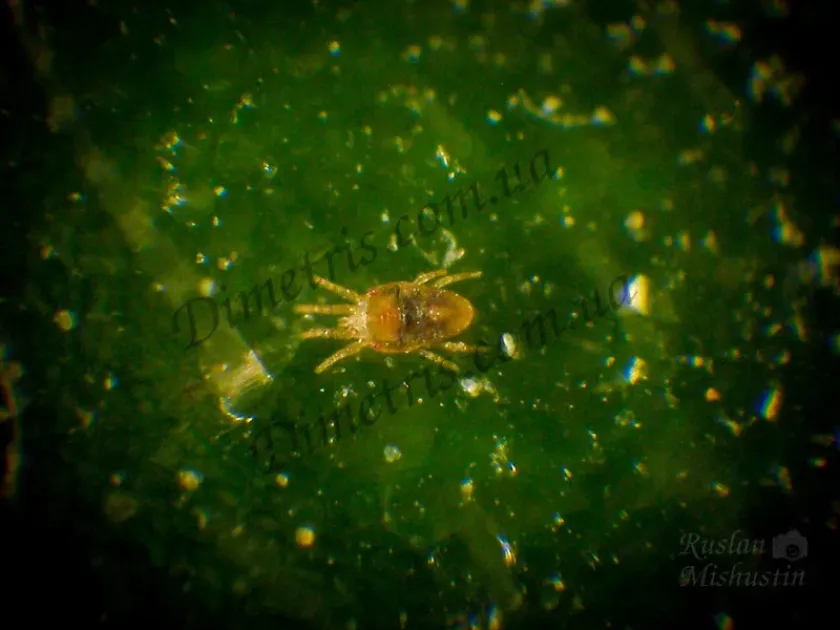
The flat red mite (Pentamerismus erythreus) belongs to the Tenuipalpidae family, commonly known as false spider mites. These are tiny, flattened, red-colored arthropods.
They lack the ability to produce visible webbing, which distinguishes them from common spider mites. Their flattened morphology allows them to reside in narrow crevices of tree bark and beneath bud scales.
The life cycle progresses through eggs, larvae, nymphs, and adults. These mites are known for their ability to reproduce rapidly under favorable warm and dry weather conditions.
Females are usually slightly larger than males, and both are best observed with the aid of a hand lens or a microscope due to their minute size.
They overwinter as fertilized females, hidden in bark fissures or protected spots on woody plants, waiting for the return of favorable temperatures in the spring.
What it damages
The flat red mite primarily attacks various fruit trees, including apples, pears, and plums, as well as several ornamental plants and conifers.
By feeding on the plant tissue, they suck out the cell sap. This activity directly reduces the plant's ability to photosynthesize effectively, stunting its growth.
Severe infestations can cause premature leaf drop and weakening of the plant, making it more susceptible to environmental stress and secondary infections.
In ornamental nurseries, the presence of these mites results in discolored and distorted foliage, leading to significant aesthetic and economic losses.
The damage is cumulative; if left unmanaged, the repeated feeding over several seasons can lead to severe dieback of branches and reduced crop yield.
Signs of infestation
Early symptoms include pale yellow or white speckling on leaves, often concentrated near the midrib or veins where the mites congregate to feed.
Leaves affected by high mite populations may turn bronze or brown, start to curl, and dry up, which is a classic sign of sap-sucking damage.
Look for microscopic red specks on the bark or leaf undersides, which indicate the presence of active or overwintering colonies of the pest.
General plant vigor decline, characterized by shorter internodes and smaller leaf sizes, often indicates a chronic infestation of flat red mites.
The absence of webbing is a key diagnostic feature, helping differentiate this pest from more common web-spinning spider mite species.
Control measures
Effective management begins with cultural practices, such as removing old bark and debris where the mites hibernate during the winter months.
Regular monitoring of the garden using a magnifying glass is essential for detecting the pest early before it reaches economic injury levels.
Acaricides specifically formulated to control mites should be used when populations cross the threshold, ensuring thorough coverage of all woody parts.
Integrated Pest Management (IPM) strategies, including the introduction of predatory mites, provide a sustainable way to keep populations below damaging levels.
Rotating different chemical classes of acaricides is crucial to preventing the development of pesticide resistance in the mite population.
Taxonomy
- Latin name
- Pentamerismus erythreus
- Order
- Mites
- Family
- Tenuipalpidae
- EPPO code
- PENUER
Discussion
No discussions yet — be the first.