
Peltodytes rotundatus
Peltodytes rotundatus
Description
How to identify
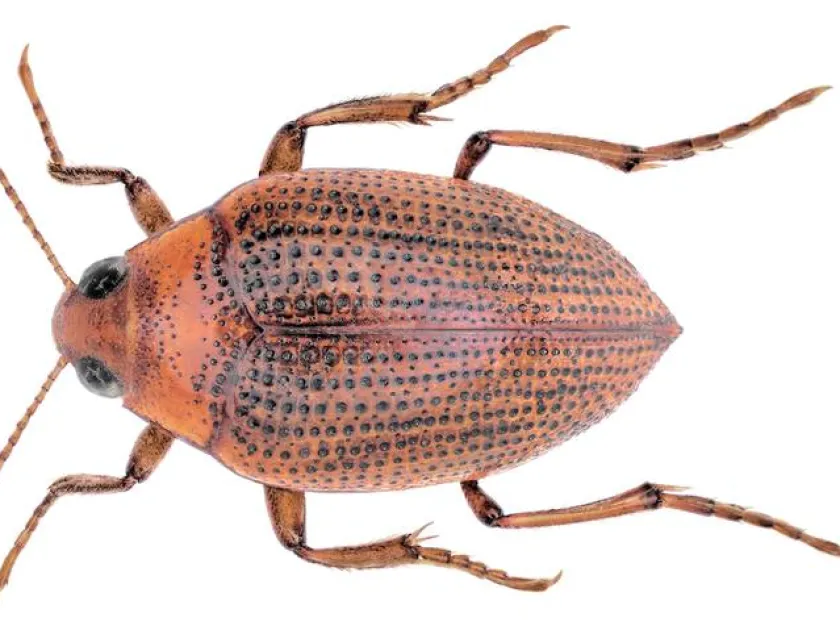
Peltodytes rotundatus belongs to the Haliplidae family, commonly known as crawling water beetles. These beetles are characterized by their small, oval, and highly convex bodies, usually ranging from 3 to 4 mm in length.
The key morphological trait of this species, and the family as a whole, is the presence of very large, plate-like hind coxae that cover the majority of the abdomen. They typically exhibit a yellowish-brown coloration with distinctive black spots on the elytra.
Larvae are elongated and often possess long, filamentous processes or setae, which assist in their movement and concealment within aquatic vegetation. They are equipped with mandibulate mouthparts designed for chewing.
These beetles spend most of their life cycle in the water, relying on their swimming legs to navigate. They are typically found in still or slow-moving freshwater environments with abundant algae and water plants.
As members of the order Coleoptera, their biology is specialized for an aquatic existence, where they interact closely with submerged plant communities throughout their development.
What it damages
Peltodytes rotundatus primarily feeds on various species of submerged aquatic plants, including filamentous algae and higher aquatic flora. They are considered pests when they infest nurseries or aquatic plant cultivation facilities.
The larvae are particularly destructive, as they graze on the leaf epidermis and may bore into the leaf tissues. This feeding behavior disrupts the plant's photosynthesis and impairs its overall vigor.
Adult beetles contribute to damage by creating small irregular holes or notches in the leaves. When populations are high, the cumulative damage can cause significant aesthetic and structural degradation of the plants.
The mechanical damage caused by these beetles serves as an entry point for secondary infections, such as bacterial or fungal rots, which often lead to premature decay and plant death.
In aquaculture and ornamental pond settings, severe infestations can lead to substantial economic losses by reducing the quality and marketability of the plants grown.
When it appears
The life cycle of the crawling water beetle is highly temperature-dependent. Activity usually commences in early spring as water temperatures rise, allowing the overwintering adults to emerge.
Reproduction takes place throughout the warmer summer months. Females deposit eggs on the surfaces of aquatic plants, where the larvae hatch and begin feeding immediately.
There are typically three larval instars before the insect reaches the pupation stage. Pupation occurs outside the water in damp soil or among moist vegetation along the water's edge.
The species overwinters as an adult, often retreating into the substrate of the pond or hiding in sheltered crevices near the water body to survive the colder dormant period.
Peak population densities and, consequently, peak damage levels are observed mid-summer, when the environmental conditions are optimal for both larval development and plant growth.
Signs of infestation
The most noticeable sign of an infestation is the presence of small, irregular holes or ragged edges on the leaves of aquatic plants. This is usually caused by both larval and adult feeding.
Careful observation of the submerged vegetation often reveals the beetles themselves. They can be seen swimming with a jerky motion or resting on the undersides of leaves.
Accumulation of plant debris and excrement near damaged areas is a common indicator of significant feeding activity. This may also coincide with a decrease in the overall health of the plant.
Yellowing or chlorosis of leaves, followed by necrosis, often occurs after heavy feeding. If left untreated, the damaged portions may wilt and become detached from the plant structure.
In ponds with poor water clarity, the reduction of floating or submerged leaf density is a primary visual symptom that an infestation of Peltodytes has established itself.
Control measures
Effective management begins with regular maintenance, such as removing excess algae and debris from the water body to reduce available breeding and feeding habitats for the beetles.
Biological control is highly effective in balanced ecosystems. Introducing insectivorous fish, such as carp or tench, can significantly reduce beetle populations without harming the aquatic environment.
For smaller ornamental ponds, physical removal of adults using fine-mesh nets is a practical and safe method to control populations before they reach damaging levels.
Chemical intervention is generally discouraged in aquatic systems due to the risk of collateral damage to fish, amphibians, and other non-target organisms. Prevention through habitat management is preferred.
Supporting local predator populations, including dragonflies and water bugs, helps maintain natural balance and keeps the population of crawling water beetles in check.
Taxonomy
- Latin name
- Peltodytes rotundatus
- Order
- Coleoptera (beetles)
- Family
- Haliplidae
- EPPO code
- PLDTRO
Discussion
No discussions yet — be the first.