
Brychius elevatus
Brychius elevatus
Description
How to identify
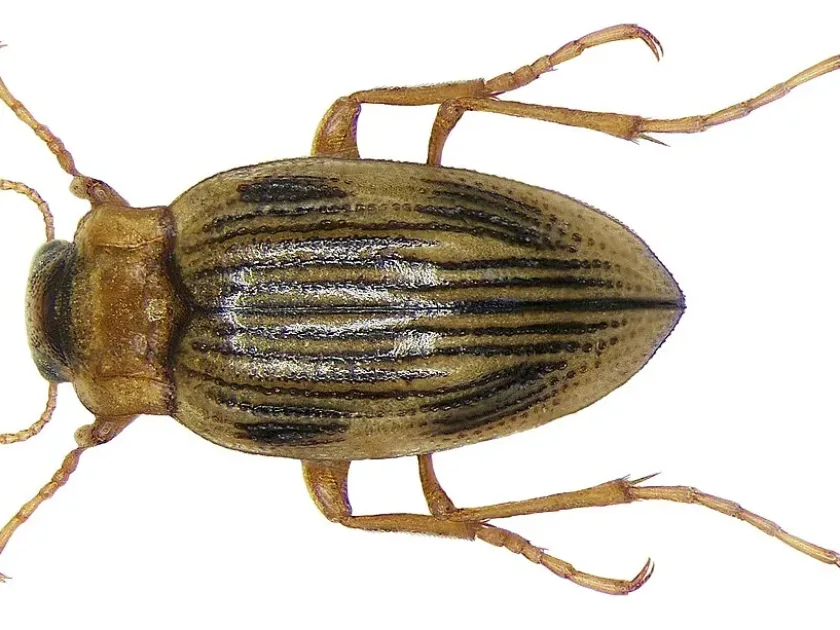
Brychius elevatus is a small aquatic beetle belonging to the Haliplidae family. These insects are characterized by a streamlined body, typically measuring 3–4 mm in length, which is well-adapted for life in aquatic environments.
The body coloration is usually yellowish-brown with dark mottled spots, providing camouflage among filamentous algae and aquatic vegetation. Unlike many other water beetles, their life cycle is completely tied to aquatic environments.
The larvae are slender and possess specialized mouthparts used for feeding on plant tissues. Both larvae and adults are capable of breathing underwater through specialized mechanisms, allowing them to inhabit both stagnant and flowing water bodies.
Adults are capable of flight, facilitating the colonization of new aquatic areas. This mobility makes them a potentially persistent pest if favorable conditions, such as dense aquatic vegetation and specific water chemistry, are present.
Systematically, they are recognized as specialized hydrobionts. While they are not major agricultural pests, their ability to inhabit irrigation systems makes them a subject of interest in agricultural entomology when they interact with sensitive crops.
What it damages
Damage caused by Brychius elevatus involves both adults and larvae feeding on the succulent tissues of aquatic and semi-aquatic plants. They use their mouthparts to pierce the plant surface, often causing localized scarring.
The economic harm is most pronounced in plant nurseries that cultivate aquatic species or in agricultural settings where field crops are exposed to irrigation water harboring these insects. Feeding damage reduces the aesthetic and physiological quality of the plants.
Injured plant tissues are more susceptible to fungal pathogens and water-borne bacteria. These secondary infections can lead to premature decay of shoots, negatively impacting the growth rate and overall health of the vegetation.
Feeding patterns are usually localized. A single plant may show multiple puncture marks, but widespread destruction is rare unless the population density becomes extremely high due to favorable environmental factors.
The primary concern for agronomists is the presence of these beetles in irrigation channels, where they can survive and eventually impact crops planted in water-logged fields, such as rice paddies or specific experimental agricultural zones.
Control measures
Control strategies for Brychius elevatus focus on habitat management. The most effective approach is the regular maintenance of water bodies and irrigation canals to remove excessive aquatic weeds that serve as food and breeding grounds.
Hydrological management, such as manipulating water levels during the peak breeding season, can disrupt the beetle's development. By exposing aquatic vegetation to air temporarily, the survival rate of the larvae is significantly reduced.
Chemical control is rarely the first choice and should only be employed in nursery environments where damage threshold levels are exceeded. Only insecticides approved for use in or near aquatic systems should be utilized to avoid environmental contamination.
Biological control relies on maintaining a healthy ecosystem balance. Encouraging predators such as dragonfly nymphs and aquatic predatory bugs helps regulate beetle populations naturally, minimizing the need for direct intervention.
- Removal of excessive aquatic weeds in irrigation systems.
- Water level manipulation to disrupt larval development.
- Monitoring of insect populations near sensitive crops.
- Targeted application of insecticides in closed systems only.
Taxonomy
- Latin name
- Brychius elevatus
- Order
- Coleoptera (beetles)
- Family
- Haliplidae
- EPPO code
- BYCHEL
Discussion
No discussions yet — be the first.