
Haliplus
Haliplus
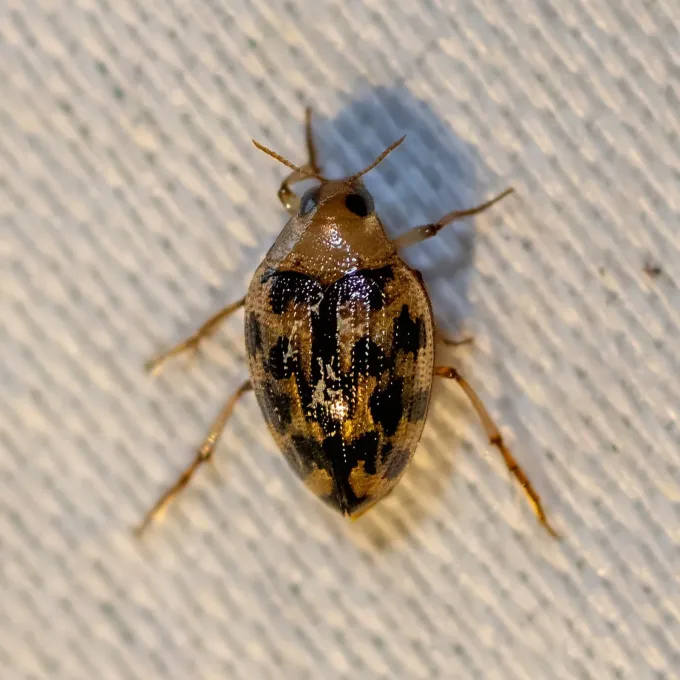
Description
How to identify
Crawling water beetles (family Haliplidae) are small insects measuring between 2 and 5 mm in length, characterized by an oval and convex body shape. Their coloration typically ranges from yellowish to reddish-brown, featuring distinct black spots on the elytra.
A key diagnostic feature of this family is the extremely large hind coxae that cover a significant portion of the abdomen. Unlike diving beetles (Dytiscidae), Haliplus beetles move through the water rather awkwardly using alternating leg strokes rather than synchronized swimming motions.
These beetles have the ability to remain submerged for extended periods by storing oxygen under their elytra. The larvae of Haliplus beetles possess elongated bodies equipped with various projections, which aid in camouflage among aquatic vegetation.
Systematically, these insects belong to the order Coleoptera. Hundreds of species have been described worldwide, primarily inhabiting stagnant or slow-moving water bodies.
Adults and larvae lead a predominantly herbivorous lifestyle, distinguishing them from many other predatory water beetles. This behavior allows them to pose a threat to specific agricultural crops grown in aquatic environments.
What it damages
The primary damage caused by members of the genus Haliplus occurs in water bodies used for cultivating rice, lotus, or other aquatic forage crops. Larvae feed on the tissues of various algae and higher aquatic plants.
During mass outbreaks, these beetles can damage young shoots of cultivated plants by consuming the epidermis and tunneling through soft tissues. This results in stunted plant growth and partial tissue degradation.
Haliplus beetles pose a specific risk to nurseries growing aquatic plant stock. The injuries caused by the larvae create entry points for various fungal and bacterial infections.
Although they rarely destroy entire plantations, their feeding activity reduces overall productivity and the commercial value of the produce. Infestation in water bodies requires prompt population density monitoring.
In agro-ecosystems, the presence of Haliplus often indicates a disruption in biological balance or an excessive growth of aquatic vegetation, which serves as a food source for the insects.
When it appears
Haliplus activity begins in early spring as soon as water temperatures rise. At this time, overwintering adults emerge from the bottom substrate to begin active feeding.
The breeding season occurs in late spring and early summer. Females deposit eggs directly onto aquatic plants, inserting them into plant tissues or placing them in stem crevices.
The development of a single generation takes from a few weeks to a couple of months depending on the water temperature. Summer months see a peak in larval numbers, which are the most voracious stage.
In the autumn, as water temperatures drop, the beetles prepare for winter diapause. They move to the bottom and bury themselves in sediments, where they spend the winter in a state of dormancy.
The number of generations per season depends on the climatic zone, though in most regions, one or two generations of the pest successfully develop.
Signs of infestation
A visual indicator of pest presence is the appearance of specific small holes on the leaves and stems of aquatic plants, often arranged along the veins.
With a careful inspection of submerged plant parts, one can spot the small larvae, which often blend in with the vegetation background. Larvae frequently congregate in colonies.
Gradual yellowing and wilting of specific plant areas indicate that the larvae have begun feeding on internal tissues. When plants are physically disturbed, the beetles quickly detach and dive deeper into the water.
On the water surface near infestation sites, damaged plant fragments may sometimes be observed floating after active larval feeding.
The presence of a large number of small beetles swimming near the surface or among algae is a clear signal to begin control measures.
Control measures
The primary method of control is agrotechnical management, including the regular clearing of water bodies of excess weed vegetation, which serves as a substrate for egg-laying.
Biological control methods involve utilizing natural enemies of Haliplus, such as predatory fish or aquatic insect entomophages, which can regulate population numbers.
The use of insecticides in water bodies requires extreme caution due to the high sensitivity of other aquatic organisms. Only products approved for aquatic cultures should be used.
Lowering the water level in nurseries for a short period can help mechanically collect the pests or limit their food supply. Crop rotation in rice paddies is an essential preventive measure.
Monitoring population levels using light traps in the evening can help detect beetle migration early and prevent the infestation of new water body sections.
Taxonomy
- Latin name
- Haliplus
- Order
- Coleoptera (beetles)
- Family
- Haliplidae
- EPPO code
- HLPLSP
Discussion
No discussions yet — be the first.