
Crawling water beetle
Peltodytes
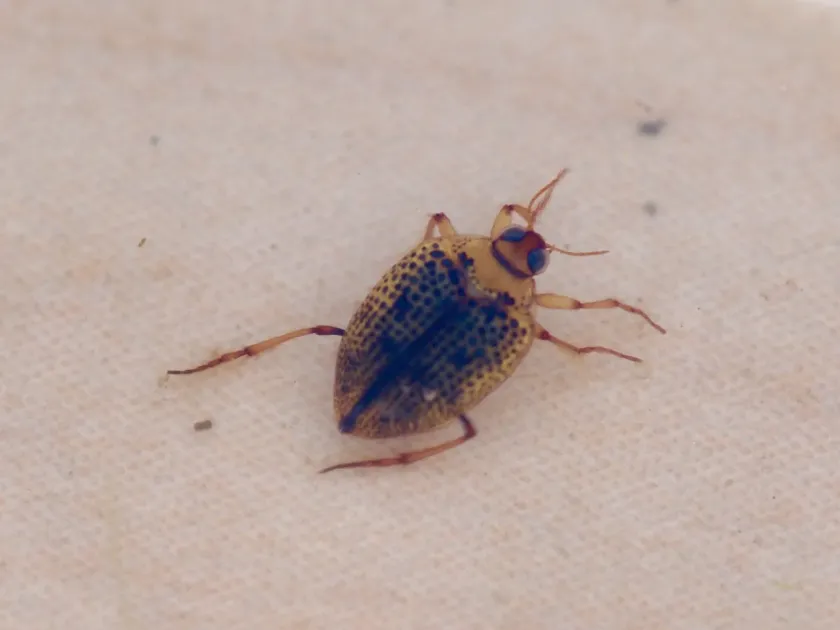
Description
How to identify
Peltodytes is a genus of crawling water beetles belonging to the family Haliplidae, within the order Coleoptera. These small, aquatic insects are commonly found in standing or slow-moving water bodies, often located in the vicinity of agricultural fields.
Physically, they are characterized by an oval, convex body shape and distinctively large dark spots on their elytra (wing cases). Their coloration is typically yellowish to light brown, which serves as effective camouflage among aquatic vegetation.
A key morphological feature of Peltodytes is the presence of large plates on the hind coxae, which cover the hind femora. These plates enable the beetles to store air bubbles beneath their wings, facilitating extended periods of underwater activity.
The larvae are elongated and often covered in numerous hair-like or spine-like appendages. They develop exclusively in aquatic environments, favoring areas dense with algae and various types of higher aquatic plants.
Adult beetles are capable of flight, which allows them to colonize new irrigation canals, ponds, and water sources. From an agronomic perspective, their presence in water distribution systems is a factor to consider for integrated pest management.
What it damages
The primary damage caused by Haliplidae, including Peltodytes, occurs through the consumption of aquatic and marginal vegetation. While larvae feed primarily on algae, they can shift their diet to include crop tissues when agricultural fields are flooded or poorly drained.
Damage is most notable in rice paddies or other crops grown in saturated conditions. The beetles and larvae may feed on root systems or submerged stems, which weakens the plant and stunts overall vegetative development.
Intensive feeding results in localized physical damage to the plant epidermis. These micro-lesions serve as entry points for secondary pathogens, such as fungi and bacteria, which can lead to larger infections that significantly compromise crop health.
In hydroponic setups, these beetles represent a potential threat, as they can feed on the delicate root structures of seedlings. Such damage can lead to growth delays and measurable reductions in yield efficiency.
While Peltodytes is rarely a primary pest of cereal crops, its ability to thrive in irrigation systems necessitates monitoring. High populations in canal networks can lead to increased pest pressure on adjacent agricultural fields.
When it appears
The life cycle of Peltodytes is heavily influenced by water temperature. Adult activity typically commences in early spring as water bodies warm up, providing the necessary thermal energy for metabolic processes and reproduction.
Oviposition is staggered throughout the growing season. Females lay eggs directly onto aquatic plants, ensuring that emerging larvae have immediate access to their preferred food source.
Larval population density peaks in mid-summer when aquatic plant biomass is at its maximum. During this period, their feeding activity is most intense, posing a greater risk of crop interaction.
By autumn, larvae pupate and emerge as adults. These beetles then prepare for overwintering by burying themselves in substrate or sheltering in plant debris, remaining dormant until the following spring season.
Climatic conditions dictate the severity of infestations; warmer, longer summers may allow for multiple generations per year, significantly increasing the pressure on water-dependent agricultural ecosystems.
Signs of infestation
The main sign of Peltodytes presence is the appearance of shredded or chewed areas on submerged plant stems. These marks often manifest as irregular spots or longitudinal grooves created by the larval mouthparts.
Adult beetles can be detected by visually inspecting the water surface or using a dip net for hydro-biological sampling. Their unique, slightly jerky swimming style is a reliable way to identify them in the field.
Secondary signs of infestation include the discoloration of affected plant tissues. Browning or necrosis at the site of feeding indicates that the plant's structural integrity has been compromised and may be suffering from secondary pathogenic infection.
In rice field surveys, one should inspect the roots near the water line. If the roots appear ragged, depleted, or underdeveloped compared to healthier areas, this suggests active feeding by beetle larvae.
General growth retardation in areas with poor water turnover can also be an indirect indicator of high beetle population density within the farm's irrigation infrastructure.
Control measures
Effective management of Peltodytes involves an integrated approach, starting with the maintenance of irrigation channels. Removing excessive aquatic vegetation reduces the available food source and habitat, naturally lowering beetle populations.
Cultural practices, such as periodic drying of rice paddies or water level manipulation, can effectively disrupt the life cycle of the larvae and force adult beetles to migrate away from the cultivation zone.
Biological control relies on maintaining healthy populations of natural predators, such as fish and predatory aquatic insects within the irrigation system. Promoting ecosystem diversity helps keep the beetle population below the economic injury level.
In cases of severe outbreaks, selective insecticides approved for aquatic use may be applied. It is critical to select agents that have minimal impact on non-target aquatic fauna and degrade rapidly in water.
- Regular monitoring of adult populations during the spring.
- Mechanical clearing of algae and aquatic weeds from canals.
- Adherence to proper irrigation and crop rotation schedules.
- Usage of selective, eco-friendly pesticides only when necessary.
Taxonomy
- Latin name
- Peltodytes
- Order
- Coleoptera (beetles)
- Family
- Haliplidae
- EPPO code
- PLDTSP
Discussion
No discussions yet — be the first.