
Peltodytes caesus
Peltodytes caesus
Description
How to identify
Peltodytes caesus belongs to the Haliplidae family, which is part of the Coleoptera order. These are small aquatic beetles, typically ranging in size from 3 to 4 millimeters.
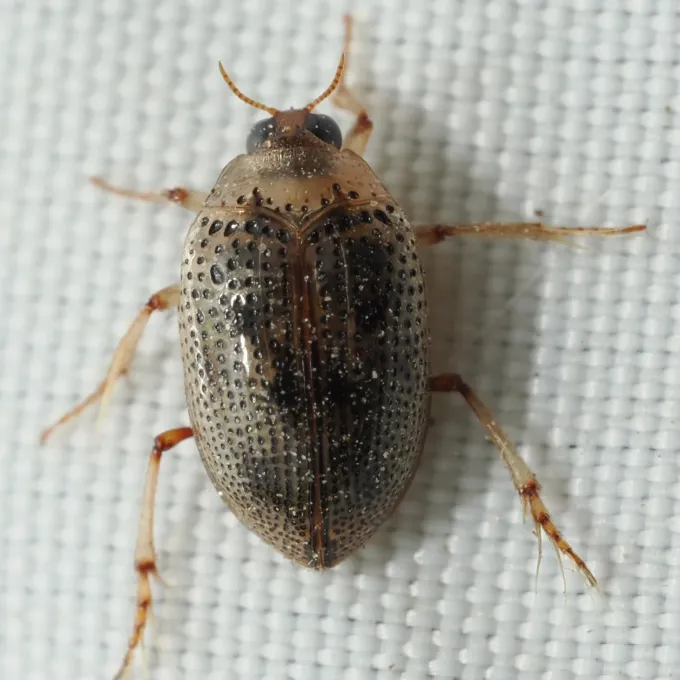
The insect's body has a rounded, convex shape, colored in yellowish-brown tones with characteristic dark spots on the elytra. They can be identified by their disproportionately large hind coxae, which conceal part of the abdomen.
The larvae of this pest are characterized by an elongated body, often covered with various protrusions and bristles, giving them an exotic appearance. They lead a sedentary lifestyle, living in the water column or on aquatic plants.
The beetles possess excellent swimming abilities, using their hind legs, which are equipped with swimming hairs, to navigate. Adult individuals are also capable of active flight between water bodies.
The species is a typical representative of hydrobionts, inhabiting stagnant or slow-flowing waters, where dense aquatic vegetation provides them with a necessary food base.
What it damages
The primary damage is caused to aquatic agricultural crops, such as rice, as well as plants growing in irrigation systems. Both adult individuals and larvae feed on the tissues of various aquatic plants.
The pest damages young shoots and leaves by eating the epidermis and creating holes. This leads to the weakening of the plant and disruption of photosynthesis processes.
Mass concentrations of larvae pose a special danger, as they are capable of significantly reducing the density of cultural plantings in flooded paddies within a short period of time.
Damaged tissues become entry points for secondary infections, including fungal and bacterial diseases, which exacerbate the overall crop damage.
Furthermore, intensive feeding on young seedlings can lead to the complete death of the plant at early stages of development, which is critical in rice cultivation.
When it appears
The activity period of this species falls within the spring-summer season when water temperatures become optimal for larval development and beetle reproduction.
Adult beetles overwinter by burrowing into the silt at the bottom of water bodies or hiding in coastal vegetation, where they are capable of withstanding low temperatures.
In spring, as the water warms, the beetles transition to active feeding and egg-laying on the surface of aquatic plants, marking the beginning of the damage cycle.
The highest level of harmfulness is observed in mid-summer when the population of second and third-instar larvae peaks.
By autumn, the population density gradually decreases due to the insects preparing for the winter diapause period.
Signs of infestation
The first sign of the pest's presence is the presence of lacy, eaten leaves on the water surface in areas where rice or other crops are grown.
- Appearance of small circular holes on leaf blades.
- Yellowing of leaf edges in areas of intensive larval feeding.
- Presence of the beetles themselves on the water surface during field inspections.
- Stunted plant growth compared to healthy areas.
During visual inspection of plants, one can notice specific damage to the epidermis, which looks like light spots or stripes.
The presence of larvae in the root zone or on the underside of leaves is direct proof of the area's infestation by this species.
Control measures
To control the population of Peltodytes caesus, the most effective methods are agrotechnical, aimed at disrupting the pest's habitat conditions in water bodies.
Periodic draining of water in paddies and drying the soil contribute to larval mortality and disrupt the insect's development cycle during critical phases.
The use of biological control agents, such as entomopathogenic fungi or bacterial preparations, shows good results in reducing the population without harming the environment.
Chemical treatment with insecticides is used very rarely and only in cases of threshold pest density, as aquatic ecosystems are extremely sensitive to toxic substances.
An important role is played by maintaining the cleanliness of irrigation canals and removing weeds that serve as a reservoir for the reproduction of harmful organisms.
Taxonomy
- Latin name
- Peltodytes caesus
- Order
- Coleoptera (beetles)
- Family
- Haliplidae
- EPPO code
- PLDTCA
Discussion
No discussions yet — be the first.