
Pelophila borealis
Pelophila borealis
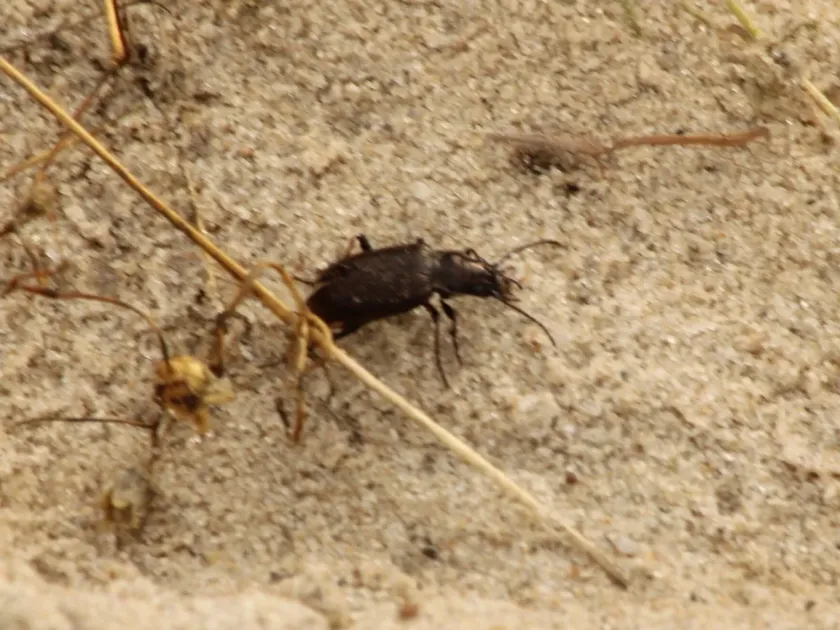
Description
How to identify
Pelophila borealis is a member of the Carabidae family, commonly known as ground beetles, within the order Coleoptera. It is a medium-sized beetle typically exhibiting a dark bronze or black coloration with a distinct metallic sheen.
The insect possesses an elongated body structure typical of active predators, although this species can exhibit phytophagous behavior under specific conditions in northern latitudes. Its sensory organs are well-developed, allowing the adults to navigate effectively in moist soil environments.
The larvae of Pelophila borealis are campodeiform, highly mobile, and feature a dark head capsule with strong mandibles. They lead a secretive lifestyle within the soil, which makes early detection by agricultural specialists quite challenging.
A notable feature of this species is its adaptation to low temperatures and high humidity. This allows the pest to dominate in the agroecosystems of tundra and forest-tundra zones, where other ground beetle species may struggle to thrive.
For accurate identification, it is recommended to use pitfall traps or sweep nets during the early morning or evening hours. The species prefers open areas with loose, organic-rich soil.
What it damages
Although biologically classified as a predator, Pelophila borealis can cause damage to seedlings and underground plant parts when natural food sources are scarce, especially in northern cropping systems.
Crops at risk include cereals, vegetables, and perennial grasses grown in harsh northern conditions. Both adults and larvae can feed on the epidermis of young stems and delicate root systems.
The most severe damage occurs during the early spring period when the soil is just thawing and the natural prey base for ground beetles is still limited. At this stage, plants are highly vulnerable to any physical feeding pressure.
Root system damage leads to reduced water and mineral uptake, causing sprouts to yellow and show stunted growth. In extreme cases, this can lead to complete stand loss in affected patches of the field.
Mass aggregations of the pest in fields result in thinning of the crop stand, requiring agronomic interventions such as reseeding or supplementary fertilization to promote recovery and survival of the remaining plants.
When it appears
The activity of Pelophila borealis begins immediately after snowmelt when topsoil temperatures reach positive values. Peak emergence of adults typically occurs during May and June.
The beetle's life cycle is closely linked to soil moisture levels. Maximum population density is often observed in years with above-average rainfall, which provides ideal conditions for larval development.
The species completes one generation per season. Adults can be found until late autumn, eventually entering diapause in deep soil layers or under plant residues when persistent frosts begin.
The peak of larval damage usually occurs in the second half of the summer, as they feed actively in preparation for pupation. It is during this time that close monitoring of the plant root collar is essential.
Weather conditions significantly dictate reproductive rates. Prolonged droughts can drastically suppress the population, as the species is highly sensitive to the humidity level of its environment.
Signs of infestation
The presence of this pest can be identified by specific signs, such as stunted sprouts with small bite marks or darkened patches at the point where the stem meets the soil surface.
A characteristic sign is the presence of small tunnels or disturbed soil surrounding the base of damaged plants. Moist soil in these areas often appears loosened, and affected plants can be easily pulled from the ground.
During visual inspections in the evening, beetle aggregations may be spotted on the soil surface. Soil-based pitfall traps placed a few centimeters deep are also an effective monitoring tool.
If patchy wilting of seedlings is observed along with the discovery of mobile larvae in the soil, there is a high probability of Pelophila borealis activity.
Specialists recommend conducting population counts during the early stages of vegetation, as timely diagnosis allows for a 20-30% reduction in yield losses through rapid and targeted agronomic responses.
Control measures
Management of Pelophila borealis relies heavily on agronomic practices. Deep autumn tillage is highly effective as it disturbs larval habitats and exposes them to the surface, where they become easy prey for birds.
Implementing crop rotation helps disrupt the pest's reproductive cycle. Rotating with fallow periods or less attractive crops for ground beetles provides excellent results in controlling population numbers.
Chemical control is justified only when the economic threshold of damage is exceeded. In such cases, approved soil-applied insecticides or seed treatments are utilized to protect the vulnerable young plants.
- Adhering to optimal sowing dates.
- Managing weeds at field margins.
- Applying mineral fertilizers to boost root growth.
- Using biological control agents based on entomopathogenic fungi.
An integrated pest management (IPM) system, combining cultural techniques and biological agents, is the most preferred approach to maintaining ecological balance in northern agricultural regions.
Taxonomy
- Latin name
- Pelophila borealis
- Order
- Coleoptera (beetles)
- Family
- Carabidae
- EPPO code
- PPHLBO
Discussion
No discussions yet — be the first.