
Patrobus atrorufus
Patrobus atrorufus
Description
How to identify
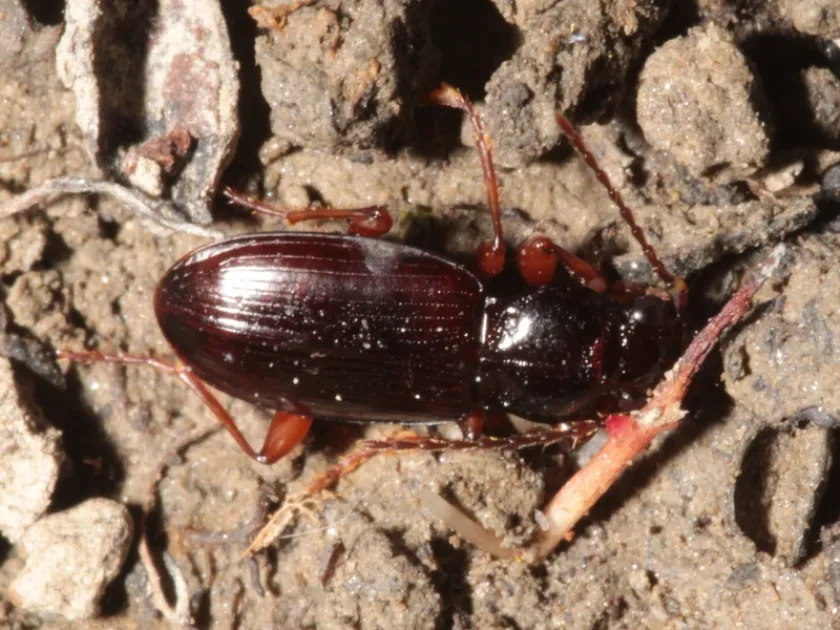
Patrobus atrorufus is a small ground beetle belonging to the Carabidae family and the Coleoptera order. Adult beetles measure approximately 7 to 10 mm in length.
Their bodies are characterized by a dark brown to reddish-brown coloration. The elytra typically feature distinct longitudinal striations, which is a common trait among many ground beetles.
These insects are primarily nocturnal, preferring moist, shady environments. During the day, they often seek refuge under plant debris, soil clods, or in the upper layers of the topsoil.
The larvae possess well-developed mouthparts, allowing them to feed on a varied diet, including organic matter and, in some cases, the roots of developing plants.
This species is widely distributed across Europe and parts of Northern Asia, thriving in temperate climates where moisture levels are consistently high.
What it damages
While many ground beetles act as beneficial predators, Patrobus atrorufus can become a pest when population densities are high, damaging agricultural crops.
The beetle primarily targets cereal crops, impacting both winter and spring wheat and barley during the critical seedling germination phase.
Both adults and larvae can damage germinating seeds, tender roots, and the plant stem at the root crown, often leading to total seedling failure.
The damage is particularly noticeable in fields with high soil moisture, which provides an ideal habitat for the proliferation of this beetle species.
Such injuries during the early development stage significantly reduce plant vigor and can lead to thin, uneven crop stands if not properly managed.
When it appears
The activity period for Patrobus atrorufus begins in early spring, once soil temperatures become warm enough to sustain biological activity.
Peak population levels and feeding activity are usually observed during the summer months, coinciding with the rapid vegetative growth phase of crops.
As autumn approaches, activity levels decline as the beetles prepare for overwintering, retreating into deeper soil layers or dense vegetation remains.
Their life cycle is highly dependent on humidity; therefore, years with increased rainfall often see a corresponding rise in the beetle's population density.
Reproduction occurs in the soil, where eggs are laid in moist conditions, allowing larvae to emerge and thrive on available food sources in the rhizosphere.
Signs of infestation
The first indicator of a Patrobus atrorufus infestation is often the appearance of sparse, patchy crop stands where seedlings fail to develop.
Upon inspecting the root zone, farmers may find visible bite marks on the roots or complete destruction of the root crown area of the affected plant.
The presence of large numbers of beetles under mulch or crop debris during the day is a strong indicator of a high local population.
Using a flashlight during the night can reveal the presence of adult beetles on the soil surface, confirming their involvement in crop damage.
When sudden wilting or yellowing of young crops occurs without signs of foliar diseases, soil sampling around the root base is essential for diagnosis.
Control measures
Controlling Patrobus atrorufus requires a combination of agricultural practices that disrupt their preferred moist and protected habitat.
Deep plowing and proper soil cultivation are highly effective, as they destroy larval environments and expose adult beetles to adverse conditions.
Maintaining clean fields by removing weeds and post-harvest crop residues reduces shelter sites, making the field less hospitable for the beetles.
Using systemic insecticidal seed treatments can provide necessary protection for young crops, ensuring they reach a stage where they can withstand minor damage.
- Implementing crop rotation to break the pest's reproductive cycle.
- Ensuring high-quality seedbed preparation for rapid germination.
- Clearing field margins and removing heavy plant debris.
- Applying soil-applied insecticides only when population thresholds are exceeded.
Taxonomy
- Latin name
- Patrobus atrorufus
- Order
- Coleoptera (beetles)
- Family
- Carabidae
- EPPO code
- PTBSAT
Discussion
No discussions yet — be the first.