
Patrobus
Patrobus
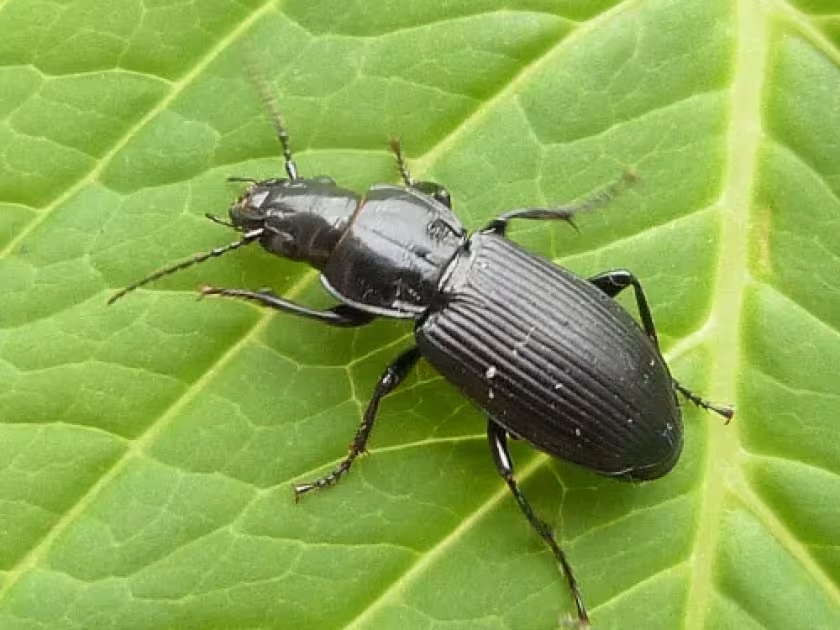
Description
How to identify
The genus Patrobus belongs to the ground beetle family (Carabidae) of the order Coleoptera. These insects are typically medium-sized with an elongated body, often displaying a metallic or dark luster characteristic of many carabid species.
Adults possess developed mandibles and distinct antennae, facilitating their movement through soil surfaces and leaf litter. The head and pronotum are clearly separated, which serves as a key morphological feature for field identification.
The life cycle involves complete metamorphosis: egg, larva, pupa, and imago. Larvae lead a cryptic lifestyle, primarily inhabiting the upper soil layers, where they are adapted to foraging in high-moisture conditions.
Most species of this genus prefer humid habitats, frequently found in fields near water bodies, woodlands, or areas with excessive moisture where the soil is rich in organic matter.
While many ground beetles are beneficial entomophages, some representatives may show phytophagous traits, potentially damaging germinating seeds, which necessitates monitoring by agronomists.
What it damages
The harm caused by these insects is often facultative. Primary damage to crops occurs during the early spring, when soil pest populations may increase, and crop seedlings possess the most vulnerable root systems.
Patrobus can damage cereal grain crops during the germination phase. The beetles may feed on the embryo of the seed, leading to sparse crop stands and reduced plant density across the field.
Damage to the root collar of young vegetable crops grown in open ground with high moisture levels is also possible, as these beetles find suitable microhabitats in such environments.
Economic damage increases when crop rotation is neglected and crop residues are left in the field, as these serve as shelters for the adult beetles during the off-season.
Beyond direct tissue consumption, the presence of these insects in high numbers often serves as an indicator of poor agronomic conditions, requiring adjustments to moisture and soil sanitation.
When it appears
Adult activity peaks in the spring, during the germination period of major agricultural crops, as soil temperatures consistently rise.
During the summer, activity levels decrease slightly; however, beetles remain active, seeking shelter from daytime heat deep within the soil or under debris, emerging only at night.
A second peak in imago activity occurs in the autumn as the insects prepare for hibernation. During this time, they may congregate near winter crop fields, posing a threat to young seedlings.
Hibernation takes place at the imago stage, directly in the soil or within dense plant residues, allowing them to successfully survive low winter temperatures.
The occurrence of these insects in fields is directly linked to hydrothermal conditions: rainy summers and moist autumns contribute to population increases and extend the period of potential harm.
Signs of infestation
The primary sign of the pest's presence is the appearance of thin or patchy stands in fields immediately following the emergence of cereal crop sprouts.
Upon inspecting damaged seeds with a magnifying lens, one can observe characteristic gnawing marks from the beetles' mouthparts, such as excavated cavities in the embryo and endosperm regions.
After rain, surface movement trails may be visible on the soil, and individuals themselves can be spotted if nocturnal monitoring is performed using lights.
An indirect sign is the presence of numerous soil cracks, which act as conduits for beetles moving between deeper soil layers and the surface.
For species confirmation, the use of Barber pitfall traps installed in field rows is recommended, allowing for an accurate assessment of the dominant carabid population on the site.
Control measures
The primary control measure is strict adherence to crop rotation, which prevents the accumulation of pest populations in the topsoil layer.
High-quality primary soil tillage, including deep plowing, destroys hibernation sites and significantly reduces beetle and larva numbers before sowing.
The use of high-quality seed treatments with systemic insecticides provides reliable protection for seedlings during the most critical development period.
- Removal of post-harvest crop residues.
- Timely weed control to eliminate alternative food sources.
- Water regime management in waterlogged areas.
The application of chemical pest control is justified only when the economic threshold of damage is exceeded, based on density counts per square meter.
Taxonomy
- Latin name
- Patrobus
- Order
- Coleoptera (beetles)
- Family
- Carabidae
- EPPO code
- PTBSSP
Discussion
No discussions yet — be the first.