
Paranchus albipes
Paranchus albipes
Description
How to identify
Paranchus albipes is a species of ground beetle belonging to the family Carabidae within the order Coleoptera. It is a small, agile insect recognized for its swift movement and elongated, dark-colored body.
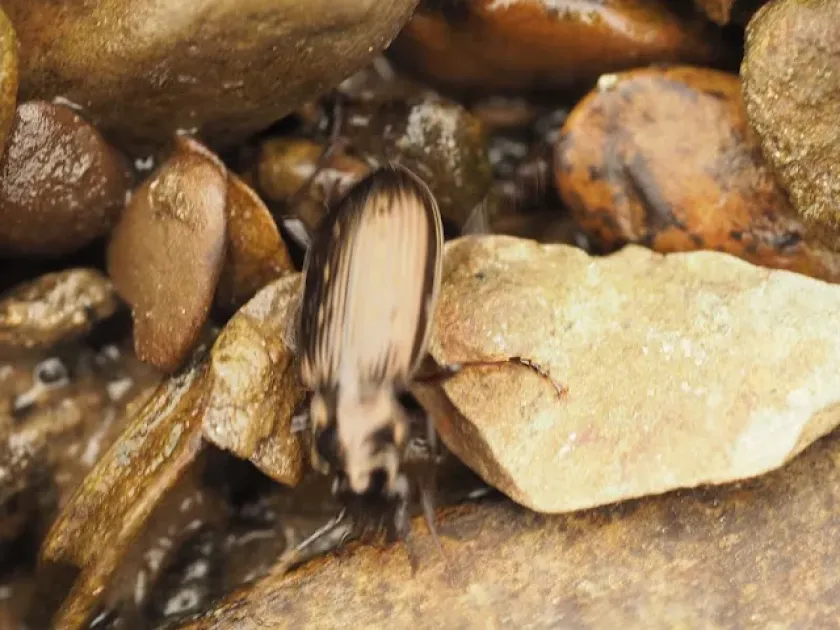
Adult beetles typically measure between 7 and 9 millimeters in length. Their cuticle is generally dark, ranging from deep brown to black, often exhibiting a slight metallic luster that serves as effective camouflage.
The defining morphological feature of this species is its light-colored, whitish-yellow legs, from which it derives its specific epithet albipes. The antennae are filiform, characteristic of predatory carabid beetles.
The larvae are campodeiform with well-developed legs and strong mandibles adapted for hunting and moving through soil. They lead a secretive, subterranean existence, dwelling in the top layers of the earth.
The life cycle involves complete metamorphosis (holometabolism), consisting of egg, larval, pupal, and adult stages. Hibernation usually occurs at the adult stage, sheltered within the soil or under organic debris.
What it damages
While most Carabidae are considered beneficial predators of other insects, Paranchus albipes can exhibit omnivorous tendencies, causing damage to agricultural crops when natural prey is scarce.
The most susceptible crops include young cereal shoots, maize, sugar beets, and various vegetable seedlings. Beetles often target the seeds and emerging sprouts in early growth stages.
Damage is primarily caused by adult beetles gnawing on the stem bases of young plants. This girdling effect often results in the wilting and eventual death of the seedlings, leading to reduced stand density.
Furthermore, these feeding sites provide entry points for secondary pathogens, such as fungi and bacteria, which can exacerbate the stress on the plant and further reduce potential crop yield.
The threat is most significant during early planting seasons when the crops are at their most vulnerable phase and lack the structural integrity to withstand heavy feeding pressure.
When it appears
Adult activity initiates in early spring as soon as soil temperatures reach a threshold that supports insect movement and foraging. This timing often aligns with the emergence of young crop seedlings.
Peak activity generally occurs during May and June, corresponding with the mating season and egg-laying period. During these months, the risk to vulnerable agricultural crops is at its maximum.
The larval stage remains active throughout the warm summer months, residing in the soil profile. They continue to feed on organic matter and small soil-dwelling invertebrates.
As temperatures drop in autumn, the beetles transition into a state of diapause. They burrow deeper into the soil or seek shelter under thick leaf litter to survive the winter months.
Field observations indicate that population spikes are often linked to wet and mild spring conditions, which favor higher survival rates for the young generations of beetles.
Signs of infestation
The primary diagnostic sign of a Paranchus albipes infestation is the sudden thinning of crop stands without obvious signs of common foliar diseases.
Closer examination of the base of the stems will reveal characteristic chewing marks, often accompanied by necrotic or darkened tissues where the beetle has fed on the plant.
Presence of the pest can be confirmed by conducting nocturnal surveys or checking fields after rainfall, when the beetles are most likely to be found on the surface of the soil.
The use of pitfall traps, consisting of containers buried flush with the ground level, is an essential tool for quantifying the pest population density and determining the threshold for intervention.
Gaps in the field where seedlings fail to establish properly or show signs of leaning are strong indicators that the area should be monitored for ground-dwelling insect activity.
Control measures
Effective management of Paranchus albipes requires a robust integrated pest management strategy that emphasizes long-term field health alongside necessary chemical interventions.
- Implement diverse crop rotations to disrupt the beetle's life cycle.
- Practice thorough tillage, including stubble cultivation and deep fall plowing, to destroy overwintering sites.
- Maintain weed-free field margins to eliminate refugia where beetles congregate.
- Use systemic seed treatments to provide early-season protection to germinating seedlings.
- Apply registered insecticides during the peak activity season only if economic thresholds are exceeded.
Chemical control should be applied judiciously, favoring treatments that minimize impact on non-target beneficial species. Timing applications for early morning or late evening often yields the best results.
Agrotechnical approaches, such as ensuring optimal seeding rates and favorable environmental conditions for rapid germination, help crops transition past the vulnerable seedling stage quickly.
Continuous field monitoring remains the most critical factor for success. By tracking population trends, farmers can intervene precisely when and where it is needed to prevent crop loss.
Taxonomy
- Latin name
- Paranchus albipes
- Order
- Coleoptera (beetles)
- Family
- Carabidae
- EPPO code
- PAASAL
Discussion
No discussions yet — be the first.