
Paranchus
Paranchus
Description
How to identify
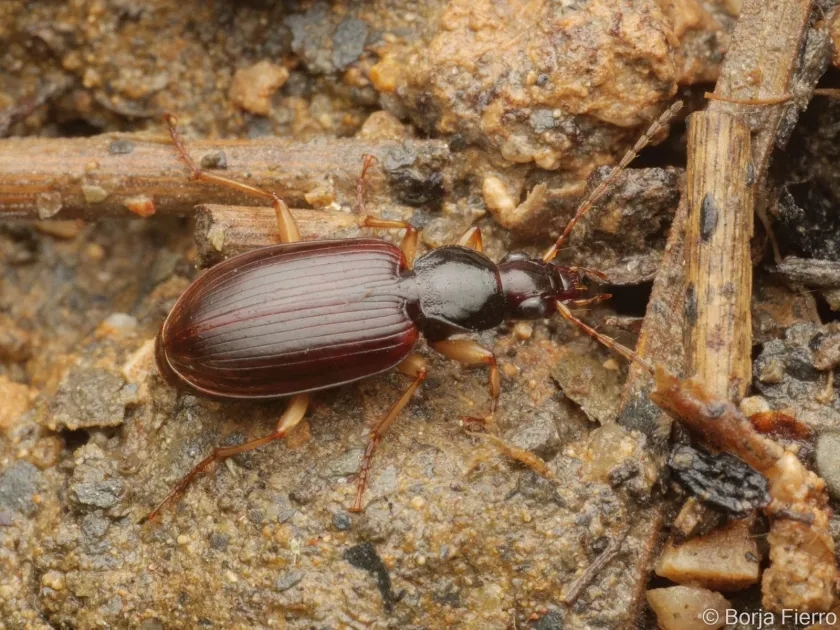
Paranchus (Paranchus albipes) is a small ground beetle belonging to the family Carabidae, commonly found in various agricultural environments and field edges.
The adult beetle is typically 7–9 mm long, with a dark, often black or dark brown body that exhibits a slight metallic sheen characteristic of the Carabidae family.
One of the most notable features for identification is the pair of yellowish-brown legs and antennae, which stand out against the darker main body color.
They possess a streamlined, elongated body shape that allows them to move swiftly through soil crevices, leaf litter, and vegetation in search of prey or shelter.
Although they are often considered opportunistic feeders, their morphology is well-adapted for a semi-predatory lifestyle in both wet and cultivated habitats.
What it damages
While many carabids act as beneficial predators, Paranchus may occasionally turn to feeding on agricultural crops when their preferred food sources are scarce.
The primary concern arises during the seedling stage of cereal and vegetable crops, where the beetles may nibble on tender stalks or germinating seeds.
Larvae are generally more destructive than adults, as they often dwell in the soil and feed on the roots, which can stunt plant growth and reduce overall yield.
Damage usually occurs in patches where soil moisture levels are higher, allowing the beetles to thrive and concentrate their feeding activities.
Significant infestations can lead to poor stand establishment, forcing farmers to consider replanting or applying supplementary protective treatments.
When it appears
The activity of Paranchus is closely linked to the soil temperature and seasonal moisture, with adults appearing early in the spring as soil warms up.
The peak activity period frequently coincides with the germination and emergence stages of spring-sown crops, making them the most vulnerable time for damage.
During the warmer summer months, the beetles tend to hide in deeper soil layers or dense vegetation to avoid dehydration and extreme heat.
As autumn approaches, the beetles become active again while searching for suitable hibernation sites, often within crop residues or organic matter.
They successfully overwinter in the soil, ensuring the population remains resilient and can re-emerge the following spring when conditions are favorable.
Signs of infestation
A primary indicator of Paranchus activity is the sudden wilting of young seedlings despite adequate soil moisture, which often signals root or stem damage.
Close observation at the base of the plant may reveal mechanical damage or chewed tissue, which is typical of ground beetle feeding activity.
Sparse or thinning rows in the field, particularly in low-lying or damp areas, are often a strong sign that soil-dwelling pests are present.
Digging around the roots of affected plants may reveal the presence of beetles or their larvae, confirming them as the cause of the observed plant distress.
The presence of empty seed husks or partially destroyed seeds during germination checks provides additional evidence of pest feeding at the early crop stage.
Control measures
Integrated pest management strategies focusing on soil health and crop rotation are the most effective ways to suppress Paranchus populations naturally.
Deep autumn tillage disrupts the overwintering sites of the beetles, significantly reducing the number of adults that survive to the next season.
Seed treatments with appropriate systemic insecticides are highly recommended to protect vulnerable seedlings from both soil-dwelling pests and early-season insect attacks.
Maintaining a clean field free of excessive weeds and crop residues removes favorable habitats and prevents the concentration of beetles in the growing area.
- Use certified seed treated with insecticides.
- Practice regular crop rotation to break pest life cycles.
- Ensure rapid and uniform seed germination through proper soil preparation.
Taxonomy
- Latin name
- Paranchus
- Order
- Coleoptera (beetles)
- Family
- Carabidae
- EPPO code
- PAASSP
Discussion
No discussions yet — be the first.