
Paradromius linearis
Paradromius linearis
Description
How to identify
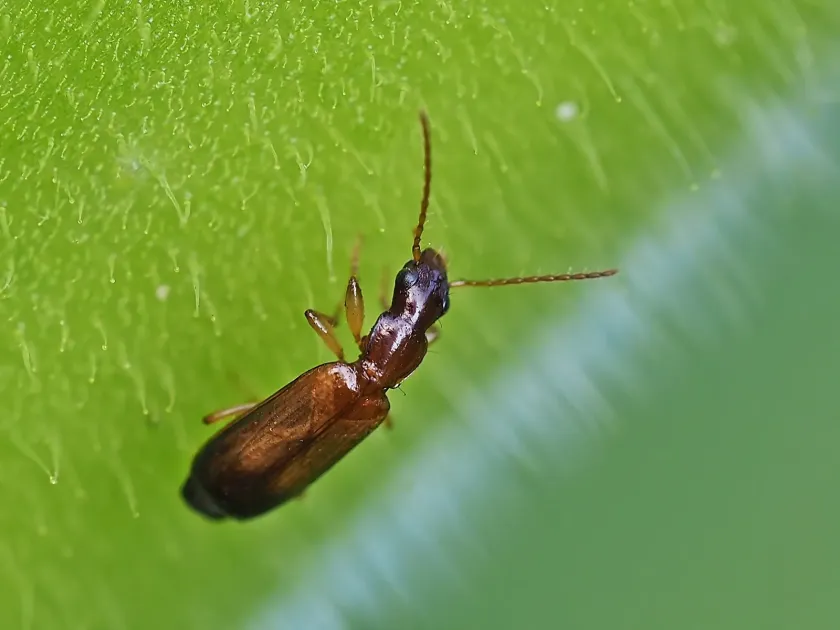
Paradromius linearis is a species of ground beetle (family Carabidae) belonging to the order Coleoptera. These beetles are characterized by a small, slender, and elongated body, typically measuring 4 to 6 millimeters in length.
The coloration of these beetles ranges from light brown to reddish-brown, often featuring a distinct dark spot on the elytra. They possess well-developed wings, enabling them to migrate efficiently between habitats.
While historically categorized as entomophagous predators, these beetles can exhibit phytophagous behavior under specific environmental conditions, potentially damaging various agricultural crops.
The beetle features a robust, chewing mouthpart apparatus, which allows it to access and consume plant tissues, particularly in the leaf axils and spikelets of cereal plants.
The larvae lead a cryptic lifestyle, predominantly residing in the upper soil layers or within plant debris, which often makes early detection during routine field inspections difficult.
What it damages
The primary hosts for this pest are cereal crops such as wheat, barley, rye, and oats. Damage is most significant during the milk and dough stages of grain development.
The beetles consume the contents of the developing kernels, which leads to reduced grain weight, lower crop quality, and economic losses for the farmer.
Besides cereals, the pest can be found on perennial grasses and certain row crops, where it seeks shelter or alternative food sources during periods of high temperature.
In dry years, the pest pressure increases as the beetles are forced to switch from their natural prey to succulent plant tissues to maintain their water and nutrient balance.
Feeding on young shoots during the tillering stage can weaken the plant's structural integrity and increase its susceptibility to secondary fungal diseases.
When it appears
The emergence of adult beetles from overwintering sites begins in early spring when soil temperatures reach approximately 8 to 10 degrees Celsius.
The peak activity of the beetles typically coincides with the active growth phase of winter cereals, at which time they migrate onto the fields for feeding and reproduction.
Throughout the summer, one or two generations may develop, depending on local climate conditions, with the highest population densities often occurring in June and July.
As autumn temperatures drop, the beetles move to overwintering locations, such as deep soil cracks, hedge bottoms, or layers of leaf litter, where they enter diapause.
The life cycle involves complete metamorphosis (egg, larva, pupa, adult), with the adult stage being the most common form for surviving the winter months.
Signs of infestation
The presence of the pest is indicated by hollowed-out grains in the ears, which manifest as irregular, unsightly damage to the grain skin and interior.
Leaf damage appears as small, localized scrapings or punctures, which may eventually develop into necrotic spots due to the secondary invasion of pathogens.
During morning field inspections, one can often find adult beetles hiding in the plant axils or feeding directly on the maturing grain heads.
A reduction in the thousand-kernel weight and the presence of shriveled grains are common indirect indicators that a population of these beetles is active in the crop.
The presence of beetle excrement on the leaf sheaths and stems is a reliable diagnostic sign of the intensity of the infestation in a specific area.
Control measures
Effective cultural control measures include deep autumn plowing, which disrupts overwintering habitats and destroys the larvae present in the soil layers.
Maintaining a diverse crop rotation and managing weeds within and surrounding the fields significantly reduces the available refugia for the pest population.
Chemical control should be implemented only when infestation levels exceed the economic threshold, using recommended insecticides from the pyrethroid or organophosphate groups.
The use of high-quality systemic seed treatments can provide protection for the crops during the critical early growth stages against initial infestation.
- Regular monitoring using yellow sticky traps or soil sampling.
- Optimizing planting times to avoid peak emergence periods.
- Promoting natural predator habitats to keep beetle populations in check.
Taxonomy
- Latin name
- Paradromius linearis
- Order
- Coleoptera (beetles)
- Family
- Carabidae
- EPPO code
- PDROLI
Discussion
No discussions yet — be the first.