
Asian palm civet
Paradoxurus hermaphroditus
Description
How to identify
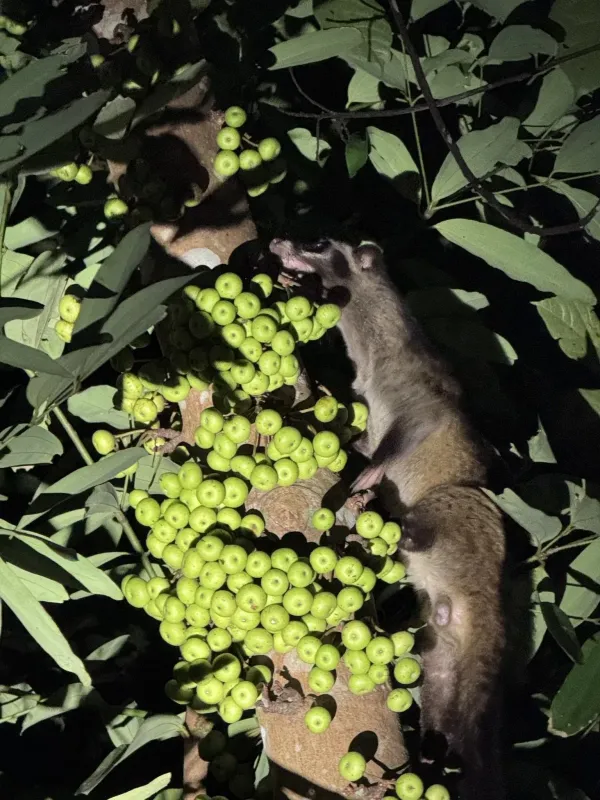
The Asian palm civet (Paradoxurus hermaphroditus) is a member of the Viverridae family, belonging to the order Carnivora. It is a small, cat-like animal weighing between 2 and 5 kg with a body length of 50-60 cm.
The animal is covered in coarse, greyish-brown fur with distinctive dark longitudinal stripes on its back and spots on its face. A long, prehensile tail aids in movement through tree canopies.
Primarily nocturnal and arboreal, this species possesses an acute sense of smell and excellent night vision, allowing it to navigate agricultural landscapes efficiently.
Breeding occurs throughout the year, with females typically giving birth to litters of 2-4 offspring. Sexual maturity is reached within a year, enabling rapid population growth in favorable conditions.
While ecologically important as seed dispersers in forest settings, they are increasingly recognized as agricultural pests in tropical regions due to their dietary habits.
What it damages
The most significant economic damage caused by the Asian palm civet is to coffee plantations, as it selects the ripest, highest-quality coffee cherries to consume.
In addition to coffee, they are major pests in fruit orchards. They frequently attack crops such as mangoes, bananas, papayas, guavas, and rambutans, causing severe losses to the marketable harvest.
They are known to damage tree bark and young shoots, which can retard the growth of long-term crops and create wounds that are susceptible to secondary fungal infections.
Furthermore, they often intrude upon farmsteads to prey on domestic poultry, posing a secondary threat to livestock farmers located near forested areas.
The damage is most severe during the peak fruiting season, as the animals are attracted to the high sugar content of mature fruits, leading them to strip entire branches overnight.
Signs of infestation
A primary indicator of civet presence is the discovery of droppings that contain undigested coffee beans or fruit seeds. These are often found in conspicuous locations.
Feeding signs include partially eaten fruits found on branches or on the ground, often with only the skin or half of the fruit consumed. Claw marks on tree trunks are also common.
The presence of large amounts of fallen, semi-ripe, or rejected fruit beneath trees serves as evidence of the animal's selective feeding behavior in the canopy.
Nocturnal noise, such as scrambling on rooftops or through dense foliage, is a frequent sign for farmers monitoring their crops at night.
A sudden decline in harvest volume, particularly on edge-rows of plantations adjacent to forests, is a classic sign of civet activity that requires attention.
Control measures
Physical exclusion is highly effective, such as placing smooth metal sleeves around tree trunks to prevent the civets from climbing up into the canopy.
Utilizing motion-activated deterrents, such as high-intensity lights or sound devices, can disrupt the nocturnal feeding habits of these animals and encourage them to move elsewhere.
Good orchard management, including the regular removal of fallen fruit, is essential to minimize the attractiveness of the plantation to scavenging animals.
In areas with high population pressure, live-trapping using fruit-based lures can be employed, followed by the relocation of the animals to distant habitats.
Maintaining clear perimeters around the farm and using electric fencing can provide a robust barrier against the entry of civets into highly valuable fruit production areas.
Taxonomy
- Latin name
- Paradoxurus hermaphroditus
- Family
- Viverridae
- EPPO code
- PARDHE
Discussion
No discussions yet — be the first.