
Binturong
Arctictis binturong
Description
How to identify
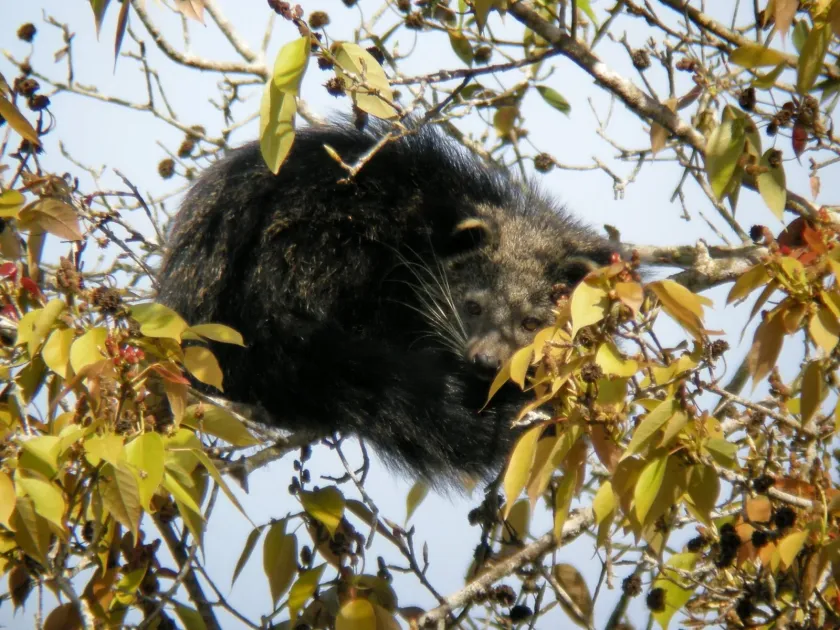
The binturong (Arctictis binturong) is a unique mammal of the Viverridae family, known for being one of the few Old World carnivores with a prehensile tail.
Physically, it is a sturdy animal covered in coarse, black hair, often with white-tipped hairs, and features long, prominent whiskers and tufted ears.
Though belonging to the order Carnivora, the binturong is primarily an arboreal creature, spending most of its life in the canopy layers of tropical forests.
Its diet is omnivorous, with a very strong preference for fruit, which is the primary reason it may occasionally interact with agricultural landscapes.
The species is rare and elusive, possessing a distinct musky scent often compared to buttered popcorn, which helps in identifying its presence in an area.
What it damages
The binturong causes damage primarily by foraging for fruits in orchards, leading to direct yield loss and reduced marketability of the produce.
Beyond fruit consumption, the binturong can inflict mechanical damage on branches and young shoots while navigating trees using its heavy body and claws.
Trees that provide succulent, high-sugar fruits are most prone to visits, as the animal selectively harvests the ripest produce available.
The destruction is usually localized, but recurring visits to specific productive trees can weaken the plant's overall vigor over time.
Additionally, improper harvesting or damage to fruit skins creates openings for pathogenic fungi and insects, secondary pests that further degrade the fruit quality.
When it appears
Binturong activity is not governed by strict seasonal migrations; rather, it correlates with the phenological cycles of fruit trees in the tropical environment.
Peak activity in agricultural plots typically occurs during the harvest season when fruit availability is at its highest across the landscape.
Because the animal is strictly nocturnal, its foraging patterns are confined to nighttime hours, requiring nocturnal monitoring to assess potential threats.
Biological cycles of the binturong remain consistent regardless of agricultural practices, making its presence in orchards highly dependent on proximity to wild habitats.
In drier periods, when wild food sources are scarce, binturongs may be more inclined to venture into gardens and plantations to seek out alternative food sources.
Signs of infestation
Evidence of a binturong's presence includes characteristic claw markings on the bark of trees, indicating the climbing path taken to reach the canopy.
Observation of fruit scraps under trees, displaying distinct tooth marks, serves as a clear indicator of feeding activity by a large mammalian visitor.
The characteristic musky, popcorn-like scent is a reliable field sign that can help identify if a binturong has been active in the vicinity recently.
Droppings found near the base of fruit trees, which often contain seeds from eaten fruits, serve as definitive proof of the animal's feeding activity.
- Deep claw marks on trunks
- Partially eaten fruit on the ground
- Distinctive musky scent
- Droppings containing fruit seeds
- Broken twigs in the upper canopy
Control measures
Mitigation strategies for binturongs are centered on non-lethal deterrents, as the species is often subject to conservation concern in many regions.
Installing metal collars or baffles around the trunks of valuable fruit trees is a highly effective way to physically prevent climbing.
The use of motion-activated acoustic repellents can successfully discourage the animal from lingering in orchards without harming it.
Pruning branches that overhang fences or connect with nearby forest trees can disrupt the travel paths that binturongs use to enter plantations.
Working with local wildlife management agencies for relocation is the recommended course of action if a specific individual causes persistent economic damage.
Taxonomy
- Latin name
- Arctictis binturong
- Family
- Viverridae
- EPPO code
- ARTIBI
Discussion
No discussions yet — be the first.