
African civet
Civettictis
Description
How to identify
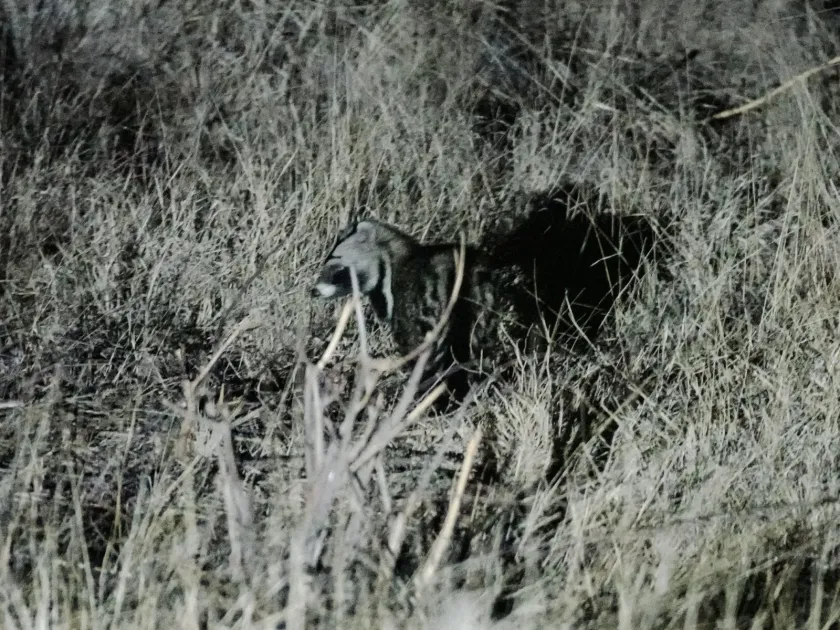
The African civet (Civettictis civetta) is a large member of the Viverridae family. It is easily recognized by its distinctive coarse, spotted fur and the dark mask covering its eyes, which is typical of nocturnal carnivores.
These animals are primarily nocturnal, meaning they operate under the cover of darkness. They possess an exceptional sense of smell, allowing them to locate ripe fruit and vegetables on a farm with high precision.
An adult civet can weigh up to 20 kilograms. Their robust body and strong limbs allow them to easily navigate through dense vegetation and climb obstacles that might stop smaller animals.
Although they belong to the order Carnivora, they are omnivorous in nature. This dietary flexibility allows them to switch easily to crops when natural prey is scarce, making them a recurring problem for farmers.
They are known to be territorial, and once a farm is established as a reliable food source within their home range, they will return repeatedly unless deterred by effective measures.
What it damages
African civets cause significant damage to melon patches, specifically watermelons and melons. They bite through the thick rinds to access the sweet, watery flesh, ruining the entire fruit for market sale.
Maize crops are also prone to damage during the milk stage of development. Civets trample plants and chew on the ears, leading to substantial yield losses across large cultivation areas.
Orchards, particularly those with low-hanging fruits, suffer from civet activity. They consume fallen fruit and often damage trees in their attempt to reach produce, creating entry points for secondary pathogens.
Their movement across the field results in physical destruction of crops. By trampling tender shoots and digging in the soil, they can cause long-term damage to the plant root systems.
Secondary damage occurs because the damaged produce begins to rot quickly, which in turn attracts swarms of fruit flies, beetles, and various fungal infections that can spread to healthy crops.
When it appears
Civet activity peaks during the ripening season of the cultivated crops. When sugar content in the fruit reaches its maximum, the scent becomes a powerful attractant for these animals.
During the dry season, when natural water sources in the wild become limited, civets turn to farm crops as their primary source of hydration. This makes them especially aggressive during drought periods.
Nighttime is their main operational window. From dusk until dawn, they actively patrol their territory, which makes visual surveillance by the farmer difficult without special equipment.
Reproductive cycles can also influence their presence. When females have cubs, their demand for food increases significantly, leading to more frequent and bolder raids on agricultural lands.
Environmental changes, such as habitat loss or severe weather, can push civets closer to human settlements, turning previously safe areas into zones of high pest activity.
Signs of infestation
The most telltale sign of a civet raid is the presence of partially eaten melons. The damage looks like deep, ragged bite marks, as they are not clean cutters but rather aggressive chewers.
Look for flattened areas within maize fields where the civets have traveled. You will often find remnants of cobs with characteristic tooth marks scattered on the ground.
Fecal deposits found along fence lines or farm trails are a definitive way to identify the presence of these animals. Their droppings often contain indigestible seeds from the fruit they have consumed.
Auditory cues are another sign; the sound of movement in the brush combined with the alarm calls of domestic poultry is a classic indicator that a predator is nearby.
On muddy or sandy soil, paw prints are easy to spot. A civet’s print is distinct, showing five toes, which differentiates it from the typical domestic dog or cat footprints found on farms.
Control measures
A physical barrier is the most reliable defense. Installing a sturdy, high-quality fence that is buried at least 20–30 cm into the ground prevents civets from digging underneath.
Motion-activated lighting is an excellent non-lethal deterrent. Civets are sensitive to sudden bright light at night, and it will often scare them away before they can cause damage to the crop.
Keep the field perimeter clear of tall grass and dense thickets. Eliminating hiding spots makes the area less attractive to civets, who rely on stealth to conduct their raids.
Using commercial scent-based repellents can provide temporary relief, although it should be combined with other measures, as animals may eventually become accustomed to the odor.
Keeping livestock guardian dogs is a proven method of protection. The dog’s presence and territorial scent act as a natural and highly effective barrier against most nocturnal predators.
Taxonomy
- Latin name
- Civettictis
- Family
- Viverridae
- EPPO code
- CIVTSP
Discussion
No discussions yet — be the first.