
Asian palm civet
Paradoxurus
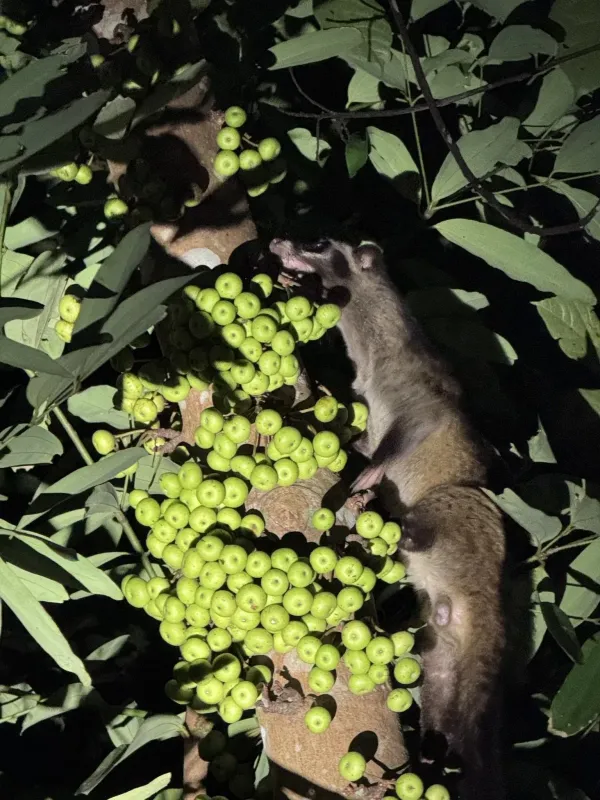
Description
How to identify
The Asian palm civet (Paradoxurus hermaphroditus) is a small mammal belonging to the Viverridae family, part of the order Carnivora, widely distributed across Asia.
Physically, it is a cat-sized animal with a coarse, greyish-brown coat, distinctive black mask markings, and a long, prehensile tail adapted for climbing.
They are primarily nocturnal and arboreal, spending most of their time in forest canopies, which allows them to easily access orchard fruits and coffee berries.
Although they are biologically carnivores, they have a highly diverse diet, frequently consuming fruits and berries, which brings them into direct conflict with farmers.
Their secretive nocturnal habits make it difficult for farm managers to observe them directly during daylight inspection hours, often leaving only traces of their presence.
What it damages
The primary agricultural concern is their impact on coffee plantations, where they select the ripest and most high-quality cherries to consume, causing major yield losses.
In addition to coffee, they are known to damage a variety of orchard fruits including mangoes, papayas, and rambutans by biting into or partially consuming the crops.
When feeding on cocoa pods, they can cause mechanical injury, allowing secondary fungal infections to penetrate the fruit and degrade the quality of the raw material.
Physical movement through tree crowns can result in broken branches and damaged shoots, potentially slowing the vegetative growth of younger or more sensitive plants.
Because they actively forage for the best fruits, the economic impact is amplified by the loss of high-premium produce intended for international export markets.
When it appears
Pest activity is strongly correlated with the ripening stage of agricultural crops, peaking during harvest seasons when the scent and sugar content of fruits are highest.
Since the species does not hibernate, they remain present in the agricultural ecosystem year-round, switching between cultivated crops and wild forest food sources.
Signs of infestation
The most reliable sign of presence is the discovery of droppings under trees, which often contain intact, undigested coffee seeds or fruit pits commonly referred to as scat.
Damaged fruit found on the ground with characteristic small bite marks and partially eaten flesh indicates the nocturnal activity of civets within the orchard.
Scratches on the bark of tree trunks or branches provide evidence of the animal's movement as it navigates through the canopy to reach the preferred fruit zones.
Control measures
Physical barriers, such as protective tree netting or trunk bands, are highly effective at restricting the animal's ability to climb and access the fruit canopy.
The installation of automated light and ultrasonic deterrents can disrupt nocturnal behavior and make the plantation environment less hospitable for foragers.
Sanitation practices, including the prompt removal of fallen fruit and the elimination of organic waste, significantly reduce the incentive for civets to visit the area.
Natural scent-based repellents can be used to create a defensive perimeter around the plantation, helping to discourage civets from entering the crop area.
In cases of high infestation, humane cage trapping followed by relocation of the individuals to deep forest habitats is the most ethical and effective solution.
Taxonomy
- Latin name
- Paradoxurus
- Family
- Viverridae
- EPPO code
- PARDSP
Discussion
No discussions yet — be the first.