
Baboons
Papio
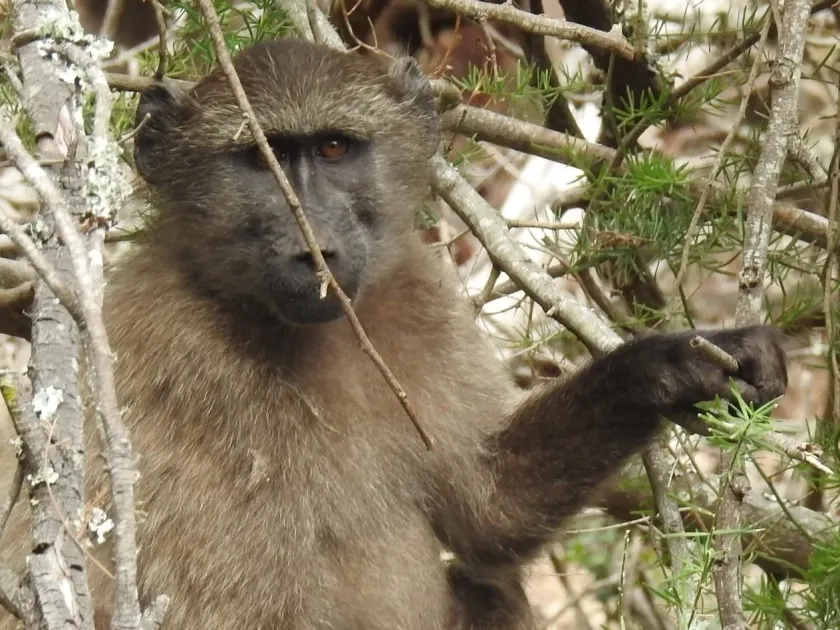
Description
How to identify
Baboons (genus Papio) are large primates from the Cercopithecidae family, characterized by significant sexual dimorphism. Adult males can reach impressive sizes, making them a serious threat to agricultural lands.
These animals are known for their high intelligence, complex social structure, and ability to coordinate group actions. They quickly adapt to human presence, which makes managing them on farms a persistent challenge.
Physically, baboons possess elongated muzzles, powerful jaws with sharp canines, and thick fur. Their agility allows them to easily overcome fences and climb tall trees to access food sources.
They have excellent eyesight, which helps them detect human approach long before they are spotted themselves. Their gregarious nature makes their raids on crop fields unpredictable and difficult to contain.
Crucially, baboons demonstrate good memory regarding travel routes and food locations, which turns their seasonal raids into a systematic issue for farmers in their natural range.
What it damages
Baboons are omnivorous pests whose activities cause massive losses to maize, sorghum, millet, and fruit tree plantations. They are known for trampling crops and consuming a significant portion of the harvest.
They pose a specific risk during the maturation stage of cobs and fruits. Baboons can destroy an entire maize field in a single night by pulling up plants or snapping the stalks to feed.
Beyond direct crop destruction, these primates damage farm infrastructure, including irrigation pipes and fencing. They are also attracted to vegetable crops like potatoes and root vegetables, which they dig out of the soil.
In addition to direct consumption, baboons leave behind significant debris, rendering the remaining harvest unsuitable for sale or storage. Their presence can also lead to the spread of plant diseases through fecal contamination.
Systemic damage caused by a baboon troop can lead to total profit loss, forcing farmers to implement extreme measures to protect their agricultural plots.
When it appears
Baboon activity in fields is directly correlated with the maturation phases of staple agricultural crops. The peak of damage usually coincides with the milk stage of grain development.
During drought seasons, when natural forage in the wild becomes scarce, primates become particularly aggressive and more frequently raid irrigated agricultural lands.
Their raids typically occur during the early morning or late evening hours when solar activity is low, providing them with favorable conditions for foraging.
The appearance of these pests often follows a cyclical pattern, matching the natural biological cycles of reproduction and migration of troops in search of food.
Seasonal monitoring requires agronomists to understand crop phenology alongside the behavior patterns of local primate populations within the specific region.
Signs of infestation
The presence of baboons is indicated by distinctive footprints in the soil, which resemble human handprints but feature well-defined pads and long fingers.
A typical sign is the presence of half-eaten stalks and cobs scattered throughout the field. Plants often appear pulled up by the roots or trampled along the troop's path of movement.
Damage to trees is identified by broken branches and gnawed bark. Fruits are often plucked in an immature state, making them completely useless for human consumption.
- Audible signals—sharp barks or screams used by the troop leader when a threat is identified.
- Feces left near the field borders or in specific feeding areas.
- Destroyed fencing, netting, or damaged automated gates and sensors.
Observation of bird behavior can also serve as an alert: when baboons approach, birds often make loud, distressed alarm calls, signaling the movement of the primates across the area.
Control measures
Effective protection against baboons requires a multifaceted strategy, as they quickly habituate to static deterrent methods.
Constructing robust physical barriers, including high-voltage electric fencing, is the most effective, albeit costly, method for crop protection.
The use of visual and auditory deterrents, such as predator effigies, noise cannons, and laser systems, provides only temporary relief and requires frequent repositioning to remain effective.
Field guarding with the assistance of specialized dog breeds plays a significant role in timely detecting and driving primate troops away from field boundaries.
In some regions, managed noise methods are permitted, but consistency in the protection strategy is the key to success in minimizing harvest losses.
Taxonomy
- Latin name
- Papio
- Family
- Cercopithecidae
- EPPO code
- PAPOSP
Discussion
No discussions yet — be the first.