
Vervet monkey
Chlorocebus pygerythrus
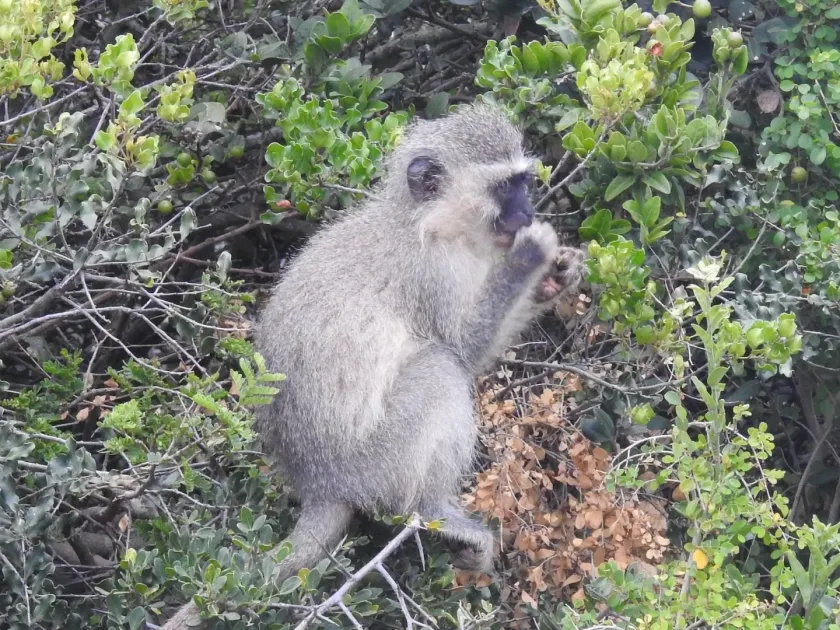
Description
How to identify
The vervet monkey (Chlorocebus pygerythrus) is a primate species from the Cercopithecidae family that is frequently categorized as an agricultural pest in parts of Africa. Adults typically weigh between 3 and 6 kilograms and possess a distinct greenish-grey coat and a dark face.
These monkeys are highly social creatures, living in groups that can include up to 50 individuals. This gregarious behavior allows them to perform organized raids on farmland, making them difficult to manage for local farmers.
Vervets are known for their high intelligence, which enables them to quickly adapt to various deterrent methods. They are diurnal, spending their days between foraging in the wild and raiding agricultural fields in the early morning and late evening.
Their reproductive cycle ensures a high survival rate of offspring, keeping populations stable. When natural predators are absent near human settlements, their numbers can grow, leading to increased pressure on surrounding fields.
With their agility in trees and on the ground, vervet monkeys are difficult to intercept. They move swiftly across landscapes, often scouting fields for the most attractive crops before launching a group attack.
What it damages
Vervets are omnivorous, but in farming regions, they specialize in consuming cereal crops such as maize, sorghum, and millet. They often raid fields when the grain is in the milky stage, causing significant loss of yield.
Fruit plantations are also highly vulnerable. Vervets frequently damage banana, mango, and citrus trees by consuming unripe fruit, effectively ruining the harvest for commercial sale.
Beyond actual consumption, a significant amount of damage occurs through trampling. As the troupe moves through a field, they often break stalks and damage the soil, leading to widespread destruction of the crop stand.
Their behavior of partially eating fruit and discarding the rest creates a mess that can attract secondary pests and diseases, rendering the remaining harvest unsalable due to lack of quality.
Root crops like potatoes and sweet potatoes are not safe either. Vervets use their hands to dig up these plants, disrupting the root systems and often damaging the entire row in the process of searching for food.
Signs of infestation
The most immediate sign of a vervet monkey presence is the distinct group chatter and alarm calls. These sounds often echo across fields, indicating the location and movement of the troop.
Maize stalks broken at the base or midway through the stem are a classic indicator of a monkey raid. Discarded husks and half-eaten cobs left scattered on the ground confirm the identity of the intruder.
Fruit trees will show signs of damage including partially eaten fruit and remnants of peel on the orchard floor. Monkeys often pluck fruit and carry it to nearby cover, leaving tell-tale debris along their escape routes.
Disturbed soil and small craters in the ground indicate where monkeys have been foraging for tubers or roots. These patches of torn-up earth are easily visible compared to the surrounding undisturbed soil.
Well-worn paths through dense crops are also common. These trails, created by the repeated movement of the group, show the routes they prefer to take when entering and leaving the field to stay hidden.
Control measures
Effective control of vervet monkeys requires an integrated pest management strategy. Electric fencing is considered one of the most effective physical barriers to keep monkeys out of specific crop areas.
Visual and acoustic deterrents, such as motion-activated sensors that play predator sounds or strobe lights, provide temporary protection. To remain effective, these devices must be rotated frequently to prevent the monkeys from habituating to them.
Using trained dogs for field patrols is a highly effective way to manage monkey populations. The presence of a predator consistently discourages troops from returning to the same area.
Chemical repellents applied to the edges of fields can make the crops less appealing to the monkeys. These products often rely on bitter tastes or smells that the monkeys find unpleasant, discouraging them from feeding.
Good agricultural practices, such as harvesting crops as soon as they reach maturity and clearing brush from field borders, are essential. Removing cover reduces the monkeys' sense of security, making the area less attractive for raiding.
Taxonomy
- Latin name
- Chlorocebus pygerythrus
- Family
- Cercopithecidae
- EPPO code
- CLCSPY
Discussion
No discussions yet — be the first.