
Macaque
Macaca
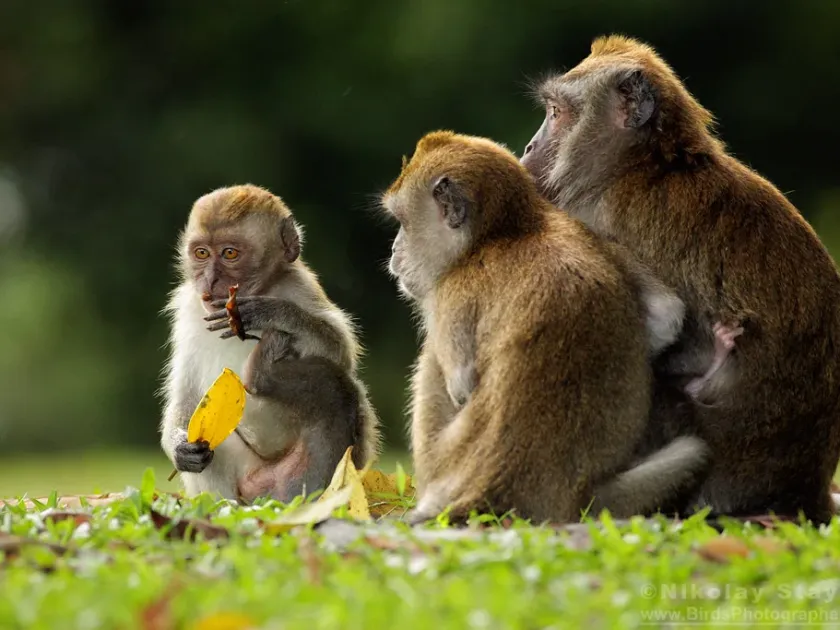
Description
How to identify
Macaques (genus Macaca) belong to the order Primates and the family Cercopithecidae. They are highly intelligent, social animals known for their complex behavior and agility.
These primates possess well-developed limbs and sharp teeth, which they use both for foraging and for destroying crop structures during their feeding activities.
Macaques exhibit rapid learning capabilities, allowing them to understand human agricultural practices and identify the most vulnerable times for crop raids.
They live in troops with structured social hierarchies, which facilitates coordinated group movements when invading plantations for food.
Their adaptability to various environments, including areas near human settlements, makes them persistent pests in many tropical agricultural regions.
What it damages
Macaques significantly impact fruit orchards by harvesting or damaging various fruits such as mangoes, papayas, and citrus crops, often consuming unripe fruit.
Cereal crops like corn and rice are frequently targeted; macaques crush plants during movement and strip cobs or panicles before they reach full maturity.
In palm oil plantations, these primates damage young seedlings and growing tips, causing substantial loss in plant productivity and long-term development.
The damage caused is not limited to food loss, as macaques also destroy irrigation lines, plastic covers, and trellises used in intensive cultivation systems.
The cumulative effect of their presence often leads to substantial economic losses, forcing farmers to implement expensive protective measures to save their yields.
Signs of infestation
Clear evidence of macaque activity includes discarded, partially eaten fruits left on the ground or stuck in the canopy, showcasing distinct teeth marks.
Well-worn pathways through fields where crops have been trampled or flattened by the weight of a passing troop are definitive signs of a recent visit.
Vocalizations, such as loud shrieks or territorial calls heard during early morning or evening, are common indicators of a troop working in the area.
Young trees with snapped branches or ripped bark often point to damage caused by macaques during their foraging or playful activities in the orchard.
The sudden disappearance of fruit from reachable branches, even when the rest of the tree appears healthy, often signals a visit from a local troop.
Control measures
Electric fencing remains the most effective deterrent, providing a physical and painful barrier that macaques quickly learn to avoid throughout the season.
Acoustic deterrents that broadcast alarm calls or predator sounds can disrupt the troop's confidence and discourage them from entering the plantation.
Human patrolling, sometimes supported by trained dogs, is an effective traditional method to drive troops away from agricultural fields during peak harvest.
Buffer zones consisting of less attractive vegetation or physical traps can serve as secondary defensive layers for large-scale agricultural operations.
- Installing high-tensile wire fences with electrification.
- Using reflective materials to create visual disturbances for the troop.
- Implementing regular monitoring and early warning systems on the farm.
- Rotating deterrent methods frequently to prevent animal adaptation.
Taxonomy
- Latin name
- Macaca
- Family
- Cercopithecidae
- EPPO code
- SIMISP
Discussion
No discussions yet — be the first.