
Rhesus macaque
Macaca mulatta
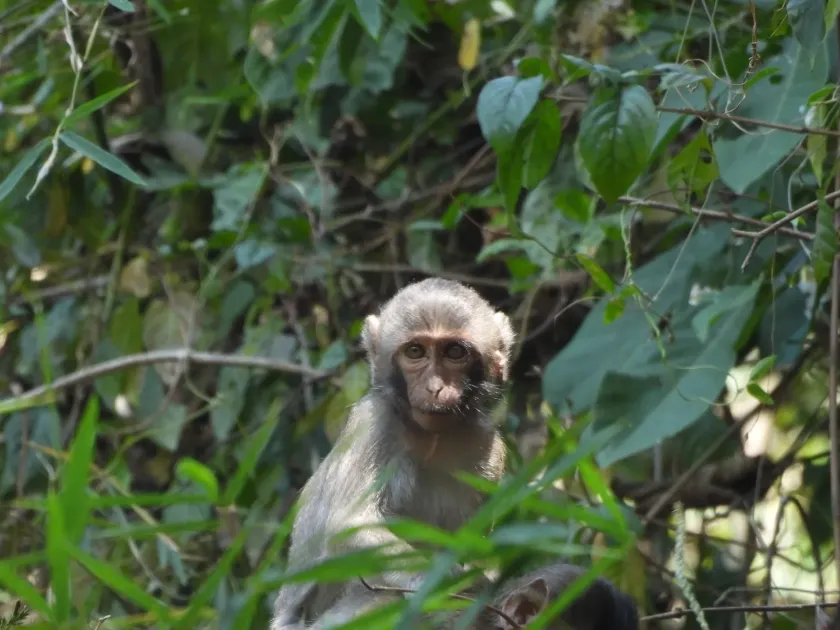
Description
How to identify
The rhesus macaque (Macaca mulatta) is a highly adaptable primate species from the Cercopithecidae family, known for its intelligence and social structure.
Adult macaques are robust animals with brownish-grey fur, a prominent tail, and a face characterized by a lack of fur, which makes them easily recognizable.
They typically live in complex social groups called troops, which allows them to effectively forage and explore agricultural areas for food sources.
Their physical agility enables them to climb trees and traverse fields quickly, making them difficult to catch or deter once they have invaded a plantation.
Understanding their behavior is critical, as they are capable of learning and developing strategies to bypass human-made deterrents over time.
What it damages
Rhesus macaques are opportunistic feeders that target a wide range of crops, including cereals, legumes, and various fruit-bearing orchard trees.
They cause significant direct losses by consuming parts of the yield and extensive indirect losses by damaging the plants themselves while foraging.
In maize fields, macaques often strip the husks from cobs and consume the grain, leaving the remaining parts susceptible to rot and secondary pests.
Their destructive feeding habits often result in broken branches and uprooted young plants, which negatively impacts the long-term productivity of the farm.
Economic damage is often severe because they select the most mature and high-quality produce, effectively destroying the most valuable portion of the harvest.
When it appears
Crop raiding behavior is highly seasonal, primarily coinciding with the ripening phases of grains and the fruiting periods of orchard crops.
During the peak of the dry season, when natural food sources in the surrounding forest habitats become scarce, macaques increase their visits to human farms.
These animals are diurnal and usually conduct their raids during the early morning hours or before dusk when they are most active in foraging.
The presence of water sources within or near the fields also increases the likelihood of consistent daily visits from macaque troops.
There is no specific off-season, as they adapt their diet to whatever plant material is seasonally available in the agricultural environment.
Signs of infestation
The most evident sign of a macaque infestation is the presence of partially consumed fruits and discarded plant matter littering the ground.
Tracks and footprints left in soft soil, particularly near the edges of fields, are strong indicators of troop movement patterns.
Broken limbs and twigs in orchard trees, accompanied by damage to the bark, are common physical signs caused by the climbing activities of macaques.
Maize crops often show clear signs of manual intervention, with torn husks and missing kernels that are typical of primate foraging behavior.
Increased alarm calls from local birds and domestic animals can serve as a warning system, indicating the proximity of a primate troop to the fields.
Control measures
Integrated pest management strategies are essential, focusing on a combination of physical barriers, repellents, and consistent human presence.
Electric fencing is one of the most effective solutions, providing a strong deterrent that keeps troops from entering specific high-value cultivation areas.
Visual and auditory deterrents, including strobe lights or motion-activated sound devices, can be used but often need to be moved to avoid habituation.
- Clearing vegetation around field borders to reduce concealment for the monkeys.
- Employing guardian dogs to monitor the perimeter of the agricultural land.
- Using individual protective nets or covers for high-value fruit trees.
Coordinated community efforts are often required to successfully manage the impact of macaques, as they move across large landscapes between farm plots.
Taxonomy
- Latin name
- Macaca mulatta
- Family
- Cercopithecidae
- EPPO code
- SIMIRH
Discussion
No discussions yet — be the first.