
Japanese macaque
Macaca fuscata
Description
How to identify
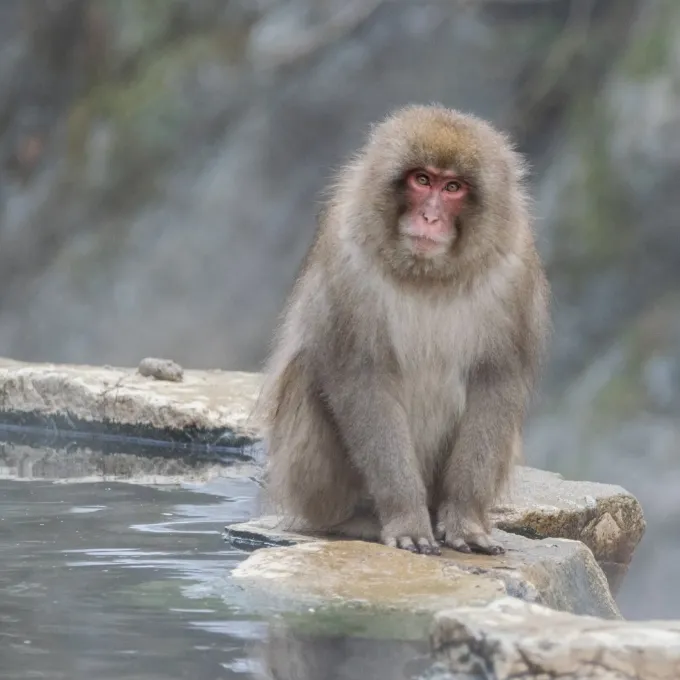
The Japanese macaque (Macaca fuscata) is a primate belonging to the Cercopithecidae family. They are medium-sized animals known for their thick brown-gray coats, which are evolutionary adaptations to cold climates.
Adult macaques typically weigh between 8 and 14 kilograms. They are highly intelligent, social animals that live in organized troops, making them difficult to manage using simple deterrents.
Physically, they are characterized by pink faces and short tails. Their dexterity and agility allow them to climb trees and travel on the ground with equal ease, facilitating their access to farm fields.
Macaques display high levels of problem-solving skills, meaning they can often bypass standard mechanical obstacles by learning how to manipulate gate latches or find weaknesses in fencing.
They are primarily diurnal, meaning they spend the daylight hours searching for food, which coincides with the time when crops are most vulnerable to being raided.
What it damages
Japanese macaques are significant agricultural pests in Japan, where they cause severe damage to fruit orchards including apples, pears, and citrus fruits. They selectively pick the ripest produce.
Vegetable crops are also heavily impacted; macaques frequently raid fields of corn, soy, potatoes, and other root crops. They often pull up plants, causing destruction that far exceeds what they consume.
In addition to eating fruits, macaques frequently break branches while climbing trees. This structural damage reduces the long-term productivity of the orchards and requires extensive pruning or recovery time.
The habit of carrying food in their cheek pouches allows them to store and transport significant quantities of stolen produce to nearby woods, maximizing the damage within a short timeframe.
Farmers often experience recurring losses as troops learn that specific fields provide a steady supply of nutritious and easily accessible food, leading to persistent raids throughout the season.
Signs of infestation
Signs of infestation include partially eaten fruits scattered around the base of trees. Macaques often take one bite of a fruit before discarding it if they find another that appears more attractive.
Distinct physical indicators include trampled pathways through fields, broken crop stems, and uprooted vegetables that have been left abandoned by the raiding animals.
Orchards often show signs of mechanical damage to branches and trunks where heavy individuals have climbed, sometimes leaving behind fur stuck to the bark or foliage.
The presence of loud vocalizations, including shrieks and grunts, is a common indicator that a troop is nearby, alerting farmers that an intrusion is underway.
Excavated soil patches are common where macaques have been digging for roots or tubers, leaving irregular pits and disrupted soil structure throughout the affected beds.
Control measures
Effective defense against macaques typically requires high, sturdy fencing combined with electric wire, which is necessary to prevent them from climbing over the barriers.
Acoustic and visual deterrents, such as gas cannons, flashing lights, or recorded primate alarm calls, are used as temporary solutions, although macaques often habituate to these if not rotated frequently.
The use of trained guard dogs to patrol orchard perimeters is one of the most effective traditional methods for keeping troops away from vulnerable crops.
Good orchard sanitation, including the prompt removal of fallen or rotting fruit, is essential, as these resources attract macaques and encourage them to return to the site regularly.
Integrated pest management strategies often involve collaboration with local government to monitor troop numbers and implement professional exclusion zones where agricultural impact is highest.
Taxonomy
- Latin name
- Macaca fuscata
- Family
- Cercopithecidae
- EPPO code
- MCCAFU
Discussion
No discussions yet — be the first.