
Wandering Glider
Pantala flavescens
Description
How to identify
The Wandering Glider (Pantala flavescens) belongs to the order Odonata, family Libellulidae. It is a cosmopolitan species famous for its long-distance migration capabilities.
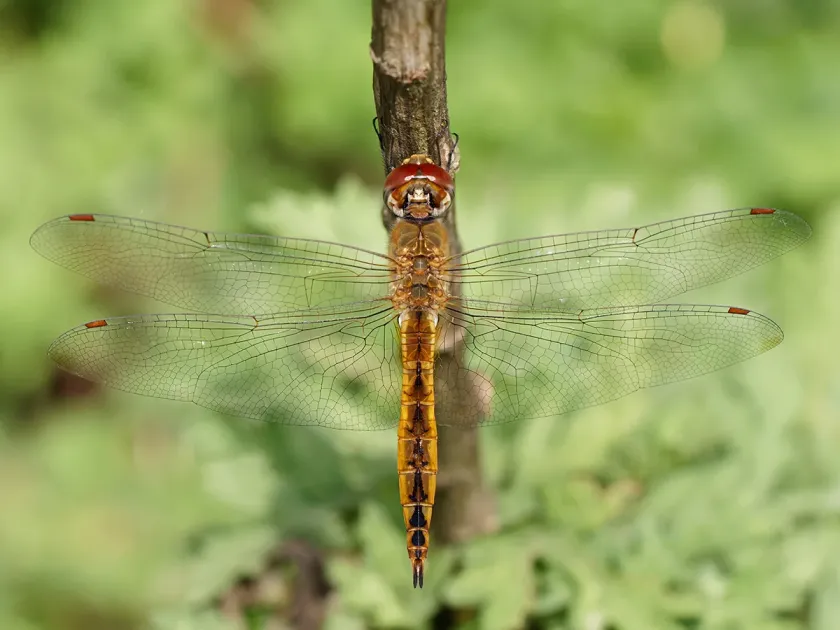
Adults have a yellowish-brown body, reaching lengths of 45–50 mm, with a wingspan of up to 80 mm. The wings are clear, often displaying a yellowish tint at the base.
Nymphs develop in freshwater habitats, preferring temporary or stagnant water bodies, including rice paddies and artificial reservoirs, where they act as aquatic predators.
Identification is aided by their distinct coloration and rapid flight pattern over agricultural fields during peak migration or breeding seasons.
The life cycle is closely synchronized with rain patterns, allowing the species to exploit short-lived water sources for rapid reproduction and larval development.
What it damages
The primary concern regarding this species involves rice cultivation. While adults are not phytophagous, the aquatic nymphs are voracious predators.
In agroecosystems, high densities of nymphs can consume fish fry or other beneficial invertebrates, significantly impacting integrated rice-fish farming productivity.
Large swarms of adults can interfere with field operations, although they do not cause direct mechanical or nutritional damage to the rice plants themselves.
The presence of large populations of nymphs necessitates management strategies, especially in areas where aquaculture is combined with crop production.
Economic damage is primarily indirect, stemming from competition for resources and the predation of beneficial aquatic organisms within agricultural water systems.
When it appears
The activity of this species is highly dependent on climate, particularly rainfall patterns that facilitate the filling of potential breeding water bodies.
In tropical and subtropical regions, mass emergence typically coincides with the onset of the wet season, which provides ideal breeding conditions.
Larvae develop very quickly, allowing for multiple generations per year, provided there is consistent water availability in the paddy fields.
Seasonality is strongly linked to the irrigation schedule of crops, as managed flooding creates the perfect environment for their reproductive cycle.
During dry seasons or cooler periods, the activity decreases as the population migrates to more favorable geographic locations.
Control measures
Managing the Wandering Glider rarely requires heavy chemical intervention, as broad-spectrum insecticides would disrupt the broader ecological balance.
The most effective management technique is the precise control of water levels in rice paddies, including controlled drainage to eliminate larval habitats.
Biological control, such as stocking fish species that prey on dragonfly larvae, is a sustainable way to keep populations below economic thresholds.
Avoiding the use of persistent insecticides is critical to preserve other beneficial entomophagous insects that help regulate actual crop-damaging pests.
Early monitoring of standing water during the initial stages of larval development allows farmers to intervene with cultural practices before the emergence of adults.
Taxonomy
- Latin name
- Pantala flavescens
- Family
- Libellulidae
- EPPO code
- PNALFL
Discussion
No discussions yet — be the first.