
Globe skimmer
Pantala
Description
How to identify
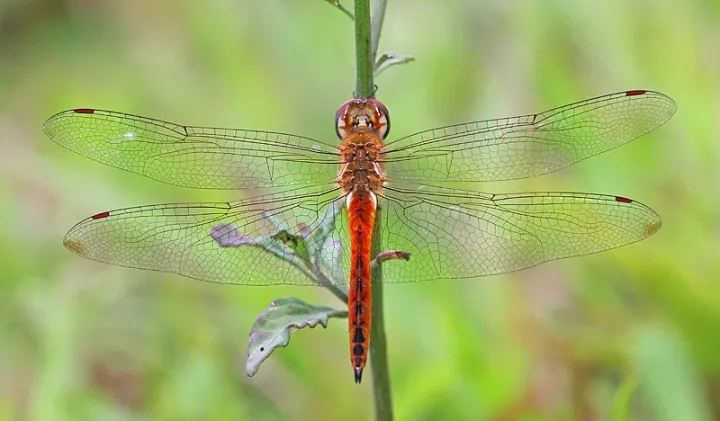
The globe skimmer (Pantala flavescens) is a member of the dragonfly family Libellulidae, widely recognized for its incredible, long-distance migration across global oceans.
Adult dragonflies typically have a wingspan of up to 9 centimeters, with a golden-yellow body that serves as a trademark appearance for this cosmopolitan species.
Their flight capabilities allow them to travel thousands of miles, often following global wind patterns and weather systems that precede seasonal changes.
Scientifically, they are classified as opportunistic predators rather than agricultural pests, playing a crucial role in maintaining ecological balance.
Understanding their taxonomy helps agronomists distinguish between beneficial fauna and actual crop pests that require management.
What it damages
The globe skimmer does not cause any damage to agricultural crops. They are purely insectivorous and do not feed on plant tissues, seeds, or roots.
As active predators, they consume a variety of small flying insects, including those that might be considered agricultural nuisances, thereby assisting in pest control.
The aquatic naiads live in temporary pools and small water bodies, feeding on small invertebrates found in the water without harming submerged plants.
There are no economic thresholds for this insect, and they should be encouraged in farming environments as natural assistants in crop protection.
Mistaken identification of these beneficial insects as pests can lead to unnecessary use of chemical pesticides that could harm the natural predators of harmful insects.
When it appears
The emergence of adults is highly dependent on precipitation and temperature, as they require temporary water sources to complete their rapid reproductive cycle.
Migration events are often seen in late spring or summer, correlating with the movement of monsoon or rainy season weather patterns across different regions.
Their development cycle is exceptionally fast compared to other dragonflies, allowing them to capitalize on transient habitats created by heavy rainfall.
Increased activity is typically observed during daylight hours when temperatures are high enough to support their active hunting behavior.
Seasonal patterns can vary significantly based on geographic location, as they inhabit nearly all tropical and temperate regions of the world.
Signs of infestation
Observation of high numbers of large, golden-winged dragonflies hovering over irrigation channels and fields is the primary sign of their presence.
Monitoring water in field drainage or irrigation systems may reveal the presence of their naiads, which are efficient hunters in the water.
A notable decrease in small flying pest populations in areas with high dragonfly density serves as an indicator of their effective predatory activity.
The absence of crop damage despite high dragonfly numbers confirms their non-pest status and beneficial role in the field.
Field managers often use the presence of dragonflies as a bio-indicator for the overall health and biodiversity of the farming site.
Control measures
There are no control measures for the globe skimmer because they are highly beneficial insects that act as natural predators of smaller pests.
Farmers are encouraged to minimize the use of non-selective broad-spectrum insecticides that could inadvertently eliminate these helpful natural enemies.
Implementing integrated pest management (IPM) practices helps conserve the habitats required for these dragonflies, such as clean irrigation ponds and buffer zones.
Preservation of biodiversity in the agricultural landscape is the best strategy to maintain a stable population of globe skimmers on your property.
No agricultural budget or effort should be allocated toward the control of this species, as they are partners in sustainable agricultural practices.
Taxonomy
- Latin name
- Pantala
- Family
- Libellulidae
- EPPO code
- PNALSP
Discussion
No discussions yet — be the first.