
Panagaeus
Panagaeus
Description
How to identify
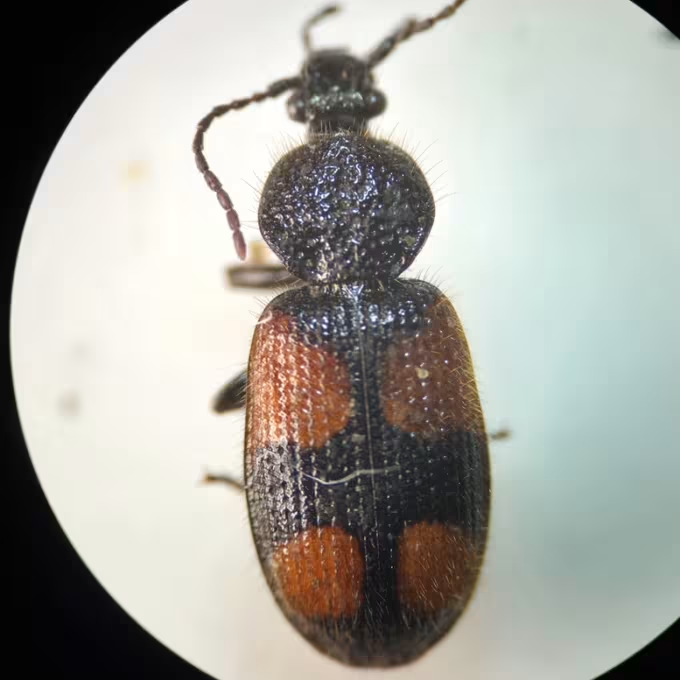
Panagaeus is a genus of ground beetles (Carabidae) in the order Coleoptera. These beetles are easily identified by their distinct appearance, featuring a black background on the elytra adorned with vibrant orange or red spots, which serves as a warning signal.
Adult beetles typically measure between 10 to 15 millimeters in length. Their bodies have an oval shape, and the surface is often covered with dense, fine hairs, giving them a slightly matte appearance. Their head possesses powerful mandibles adapted for a predatory lifestyle.
The larvae are elongated and slightly flattened, often displaying a lighter coloration with darker chitinized plates. They lead a cryptic life, predominantly residing within the soil substrate or under decomposing organic matter near the base of plants.
The life cycle involves complete metamorphosis, including egg, larva, pupa, and adult stages. Adult beetles typically overwinter in the soil or under leaf litter, becoming active as soon as temperatures rise during the early spring.
Although the vast majority of ground beetles are beneficial predators, certain Panagaeus species can occasionally exhibit phytophagous behavior, feeding on young plant tissues when their usual prey items are scarce.
What it damages
The primary damage caused by Panagaeus is observed on young seedlings of cereal, legume, and various vegetable crops. When natural prey populations are low, these beetles may shift their diet to include young vegetative plant parts.
Significant danger is posed during the germination phase, as the beetles feed on tender stems or cotyledons. This mechanical damage often leads to the rapid death of young seedlings, significantly thinning the crop stand.
In cases of high population density, these beetles can destroy large sections of a field, often requiring farmers to perform reseeding. Damage is particularly noticeable in fields adjacent to wooded areas or uncultivated borders.
Beyond direct mechanical injury, the presence of these beetles can lead to plant stress. The wounds created by their feeding often serve as entry points for secondary infections, such as pathogenic fungi and bacteria.
The severity of the damage is highly dependent on environmental conditions. Dry periods often drive these insects to feed more aggressively on succulent plant tissues to obtain the necessary moisture for their survival.
Signs of infestation
The main sign of pest presence is the appearance of ragged holes or missing tissue on leaves and stems of emerging seedlings. Distinctive 'windows' or perforations in the cotyledons are clear indications of nocturnal beetle activity.
Visual inspection of the soil around the base of plants during early morning hours often reveals the beetles hiding in soil crevices. Excavating the root zone can also expose larvae that may be damaging underground stems.
The sudden wilting of individual plants, without any signs of root rot or systemic disease, is often a classic symptom that a pest has been feeding on the plant's vascular tissue or base.
The presence of insect frass (droppings) on the soil surface surrounding damaged plants is a further indicator of their activity. Farmers are advised to set pitfall traps if such signs are identified to confirm the identity of the pest.
- Thinning of seedling stands.
- Feeding holes on the edges of young leaves.
- Visible damage at the stem base near the soil surface.
Control measures
Effective management of Panagaeus relies heavily on crop rotation and timely mechanical soil cultivation. Deep autumn plowing disrupts overwintering sites, significantly reducing the population that emerges in the following spring.
Treating seeds with systemic insecticides before planting serves as a highly effective preventive measure, ensuring that young seedlings are protected during their most vulnerable stage of development.
When monitoring indicates that the population has crossed the economic threshold, foliar application of approved contact-stomach insecticides is necessary. Treatments are most effective when applied in the evening hours when beetles are active.
Maintaining clean fields by controlling weeds is essential, as it reduces the attraction of the area to these pests. By limiting shelter and alternative food sources, the fields become less favorable for the beetle population.
Promoting the presence of natural enemies, such as insectivorous birds and predatory insects, is a core element of an integrated pest management (IPM) program that helps keep population numbers within sustainable limits.
Taxonomy
- Latin name
- Panagaeus
- Order
- Coleoptera (beetles)
- Family
- Carabidae
- EPPO code
- PNAASP
Discussion
No discussions yet — be the first.