
Rose spinning sawfly
Pamphilius stramineipes
Description
How to identify
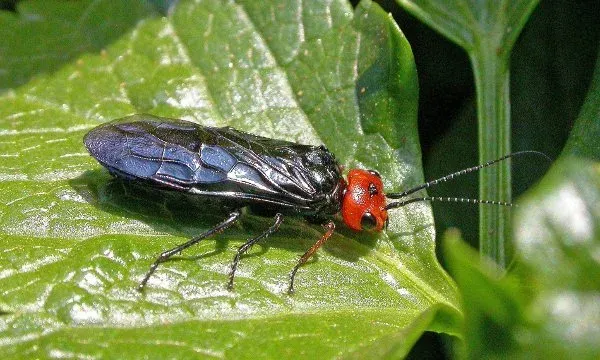
The rose spinning sawfly (Pamphilius stramineipes) belongs to the family Pamphiliidae. The adult sawfly is a small insect with a black body and transparent wings, typically measuring about 10 mm in length.
The larvae are cylindrical, yellow-green in color, and lack abdominal legs. This is a key identification feature distinguishing them from other common rose sawfly species found in gardens.
The life cycle consists of one generation per year. During the winter, the larvae remain in the soil inside earthen cells, pupating in the spring when temperatures rise.
Adults emerge in late spring, during the blooming season of roses. They feed on nectar and pollen, causing no visible damage to the plants themselves.
Females deposit eggs on the underside of leaves, usually near the veins. Once hatched, larvae immediately begin constructing shelters, which is why they are called "spinning" sawflies.
What it damages
This pest exclusively targets roses (Rosa spp.). Larvae are highly voracious and can cause significant foliage loss in a relatively short period if left untreated.
The feeding larvae consume the leaf tissue, leaving behind only the veins or creating large, irregular holes. This leads to severe skeletonization of the plant's foliage.
Heavy infestation weakens the plant, reducing its ability to photosynthesize and accumulate nutrients for the winter, which can lead to winterkill in severe cases.
The loss of foliage affects the overall aesthetics of the rose bushes, making them look ragged and unhealthy by mid-summer.
If the infestation is repeated over multiple seasons, the weakened rose bush may fail to bloom entirely and may eventually die back.
Signs of infestation
The most distinctive sign is the leaf-rolling behavior. Larvae use silk to roll or fold the leaf edges inward, creating a protective "tube" or "cigar-like" shelter.
Inside these rolled leaves, one can find the larvae and their dark, granular excrement. The presence of webbing is a diagnostic indicator of a sawfly colony.
Leaves that are not completely rolled may show partial skeletonization or drying edges, turning brown and brittle due to the larvae eating the green tissue.
Defoliated sections of the plant are highly visible. As the larvae grow, they consume more leaf area, causing the damage to spread rapidly across the bush.
In cases of severe infestation, the entire plant may appear blighted, with many leaves curled, tied together with silk, and showing significant tissue loss.
Control measures
Manual removal is effective for small rose gardens. Simply inspect the bushes frequently and crush or remove any rolled leaves that contain larvae.
Cultivation of the soil beneath the bushes during late summer and autumn disrupts the larvae's earthen chambers, exposing them to predators and freezing temperatures.
Chemical control involving systemic insecticides is necessary for widespread infestations. These products are absorbed by the plant, ensuring the larvae ingest the poison while feeding inside their shelters.
Biological control methods, including the use of Bacillus thuringiensis or natural predators like parasitic wasps, can help manage populations without harming beneficial insects.
- Regular monitoring during May and June;
- Prompt disposal of infested leaf material;
- Balanced fertilization to improve plant vigor;
- Timed application of insecticides for maximum efficacy.
Taxonomy
- Latin name
- Pamphilius stramineipes
- Order
- Hymenoptera
- Family
- Pamphiliidae
- EPPO code
- PAMPSR
Discussion
No discussions yet — be the first.