
Web-spinning sawflies
Acantholyda
Description
How to identify
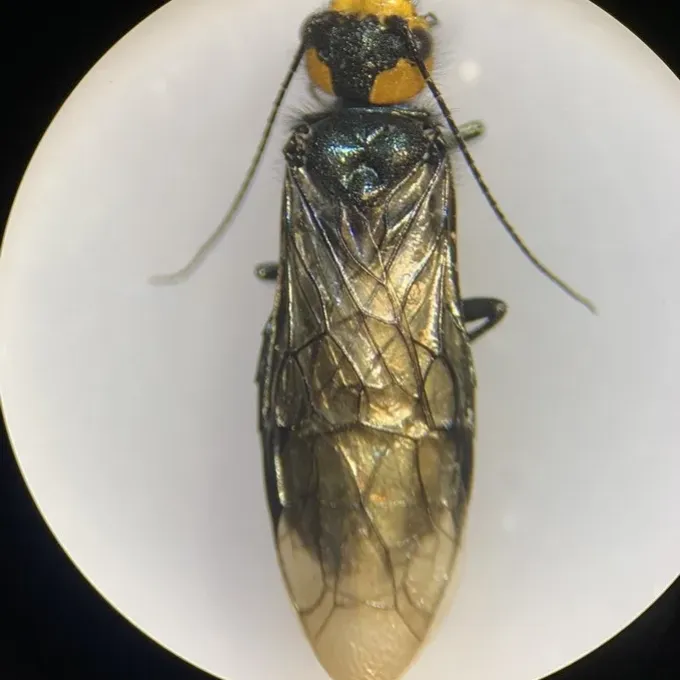
Web-spinning sawflies (Acantholyda) are a genus of insects belonging to the Pamphiliidae family. These insects are characterized by a broad waist, typical of the suborder Symphyta, and lack a constricted abdomen.
The larvae, often referred to as leaf-rollers or web-spinners, have a cylindrical body with prominent thoracic legs. Unlike butterfly caterpillars, they lack prolegs, which is a key diagnostic feature for identification.
Adults are medium-sized insects with a robust appearance, often featuring distinctive yellow, orange, or black patterns. They are strong fliers and are most active during warm spring days.
The life cycle involves pupation within the soil. Larvae burrow into the ground to create an earthen cell, where they overwinter as prepupae until the following spring season.
This genus is highly specialized, and taxonomists identify different species primarily based on the specific host plants and the architectural style of their silk-spun nests on pine needles.
What it damages
Web-spinning sawflies primarily attack various species of pine (Pinus), including Scots pine and Siberian pine. They are recognized as significant pests in forest management and commercial timber production.
The larvae cause damage by feeding on the needles, often leaving only the bases or completely consuming them. This results in significant defoliation that weakens the tree's health and vitality.
Severe infestations can lead to stunted growth and reduced timber yield. Repeated defoliation over several consecutive years may eventually result in the mortality of young or stressed trees.
Trees damaged by web-spinning sawflies often become susceptible to secondary infestations by bark beetles and wood-boring insects, which can cause further destruction to the forest stand.
The aesthetic value of trees in parks and nurseries is heavily compromised by the presence of silk nests and the loss of foliage, necessitating rapid intervention to prevent further spread.
When it appears
The emergence of adults typically occurs in the spring, synchronized with the flushing of new needles on host conifers. This ensures that the larvae have an immediate food source.
Egg-laying takes place shortly after mating, with females placing eggs on needles. The larval development period lasts throughout the summer months as they grow and expand their webs.
By late summer or early autumn, the larvae reach maturity. They then drop to the forest floor and enter the soil to begin their overwintering stage as prepupae.
In some environmental conditions, the insect may remain in a state of diapause for more than one year. This survival strategy makes it difficult to predict population outbreaks accurately.
Pupation occurs in the spring, just before the cycle repeats. Understanding these seasonal milestones is critical for the timing of silvicultural monitoring and control efforts.
Signs of infestation
The most diagnostic sign is the presence of silk tubes or webs spun around needles. These nests protect the larvae from predators and provide a stable environment for feeding.
Accumulated larval excrement, appearing as small dark pellets, often gathers inside or below the silk nests. This is a clear indicator of active feeding activity within the tree canopy.
Damaged trees show sparse or yellowing foliage, especially in the upper crown. Upon closer inspection, one can see needles that have been partially or entirely chewed off by the larvae.
The silk webbing often gathers debris and dead needles, making the nests quite visible against the green foliage. These nests are often clumped together on specific branches during high-density infestations.
A sudden decline in tree vigor without other visible causes should prompt an investigation for the presence of web-spinning sawflies, as their nests can sometimes be located high in the canopy.
Control measures
Chemical control involving systemic insecticides is effective when applied during the early larval stages. Proper timing is essential to ensure maximum efficacy before significant damage occurs.
Biological control methods, such as the use of Bacillus thuringiensis or specific viral pathogens, offer a sustainable alternative that minimizes impact on non-target beneficial insect populations.
Forest management strategies, including the maintenance of diverse stands and the removal of highly infested trees, can help reduce the overall population pressure in forest areas.
Encouraging natural predators, including parasitic wasps and insectivorous birds, is a key component of integrated pest management (IPM) to maintain natural balance in the ecosystem.
Regular monitoring through pheromone traps or visual inspections of needle growth allows for the early detection of outbreaks, enabling targeted and efficient control measures.
Taxonomy
- Latin name
- Acantholyda
- Order
- Hymenoptera
- Family
- Pamphiliidae
- EPPO code
- ACATSP
Discussion
No discussions yet — be the first.