
Rose-leaf rolling sawfly
Pamphilius inanitus
Description
How to identify
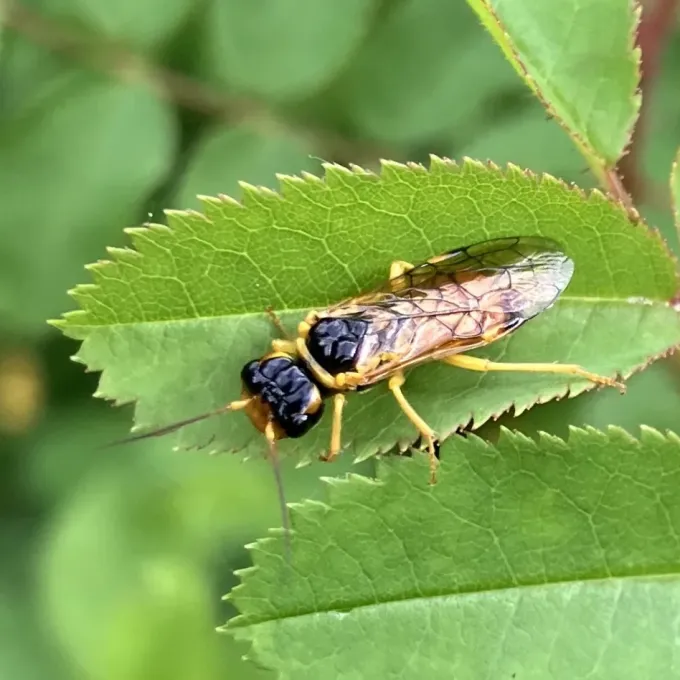
The rose-leaf rolling sawfly (Pamphilius inanitus) is a member of the Hymenoptera order, specifically the Pamphilidae family. The adult insect is a small sawfly, typically measuring 9 to 12 mm in length, characterized by a dark body with yellow markings on the abdomen and legs.
The larvae are false caterpillars, which go through several developmental stages. Initially, they are pale or yellowish in color, later becoming darker. The head capsule is distinctly brownish, which serves as a key identifying feature when inspecting infested plant parts.
The life cycle is closely linked to the climatic conditions of the region and the physiological state of the host plant. Adults emerge in spring when temperatures rise consistently above 15°C. Females deposit their eggs on the leaves, where the larvae hatch and begin their feeding cycle.
The name "leaf rolling" is derived from the larvae's unique behavior of building protective tubes. Using silk secretions and parts of the leaf, the larva constructs a tight, rolled structure. This "shell" provides an effective refuge from predators and environmental hazards.
The pest overwinters in the soil as a pre-pupa within an earthen cell at a shallow depth. Pupation occurs in the spring, followed by the emergence of adults, which marks the beginning of a new generation. This cycle makes soil-based management strategies particularly important.
What it damages
The primary host for the rose-leaf rolling sawfly is the Rosa genus. These insects attack both ornamental garden roses and wild species, focusing their feeding activities on the foliage, which is essential for the plant's metabolic health and bloom development.
Larvae feed primarily on the soft leaf tissues, creating holes and consuming the leaf margins. This damage reduces the overall photosynthetic capacity of the rose bush, leading to stunted growth and a general decline in the plant's health over the season.
Beyond direct consumption, damaged leaves become susceptible to secondary infections, such as fungal pathogens. The weakened plant structure is less capable of resisting diseases, often resulting in necrotic spots, premature leaf drop, and overall poor vigor.
In cases of severe infestation, the sheer number of larval tubes can make a bush appear completely defoliated. Since the larvae favor young, succulent leaves and shoot tips, they can damage the plant's apical meristems, causing stunted or deformed new growth.
The aesthetic impact is significant for garden roses, as the presence of rolled, dried leaves ruins the intended floral display. In commercial or large-scale rose gardens, this damage can lead to reduced flowering potential and the need for costly intensive interventions.
Signs of infestation
The most distinctive sign of infestation is the presence of leaves rolled into tight, silk-bound tubes. These "shelters" are usually located on the ends of shoots or along the edges of the leaf, acting as the primary visual indicator of the sawfly's presence.
Careful observation of the area around the tubes often reveals larval frass (waste), appearing as small, dark pellets. This residue may be trapped in the silk or scattered on healthy leaves below the infested area, signaling active feeding nearby.
As the larvae consume the tissues within their protective tubes, the affected leaves gradually turn brown, wilt, and eventually die. A heavily infested bush will have a scorched, untidy appearance due to the abundance of withered, rolled foliage throughout the canopy.
Upon closer inspection, the systematic manner in which the leaf is rolled can distinguish this damage from that of other leaf-eating pests. Once you unroll one of these structures, the dark-headed larva is usually revealed, confirming the identity of the culprit.
A decline in the overall health of the rose bush, marked by sparse foliage and diminished flowering, is often observed when the population density of the sawfly is high. If left unchecked, the damage spreads throughout the rose collection as adults reproduce.
Control measures
Effective management begins with early detection and regular monitoring. For small garden settings, manual removal and destruction of the rolled leaves is the most direct and environmentally friendly method, as it eliminates the larvae before they can pupate.
When the infestation is widespread, chemical control may be necessary. Systemic insecticides, such as those containing imidacloprid, are highly effective because they are absorbed by the plant tissues and reach the larvae even inside their protective leaf rolls.
It is crucial to time applications to coincide with the larval hatch period. Treating before the larvae complete their protective tubes ensures better coverage and efficacy of the insecticides, especially if contact-based products are being used.
Agrotechnical practices play a significant role in long-term control. Deep cultivation or loosening of the soil beneath the rose bushes in late autumn or early spring can disrupt the overwintering chambers, exposing pre-pupae to the elements and natural predators.
- Regular weekly inspection of rose shoots for early signs of rolling.
- Promoting the presence of natural enemies like predatory wasps.
- Removing and destroying all fallen leaves at the end of the season.
- Ensuring proper plant nutrition to help roses recover from leaf loss.
Taxonomy
- Latin name
- Pamphilius inanitus
- Order
- Hymenoptera
- Family
- Pamphiliidae
- EPPO code
- PAMPIN
Discussion
No discussions yet — be the first.