
Rose web-spinning sawfly
Pamphilius balteatus
Description
How to identify
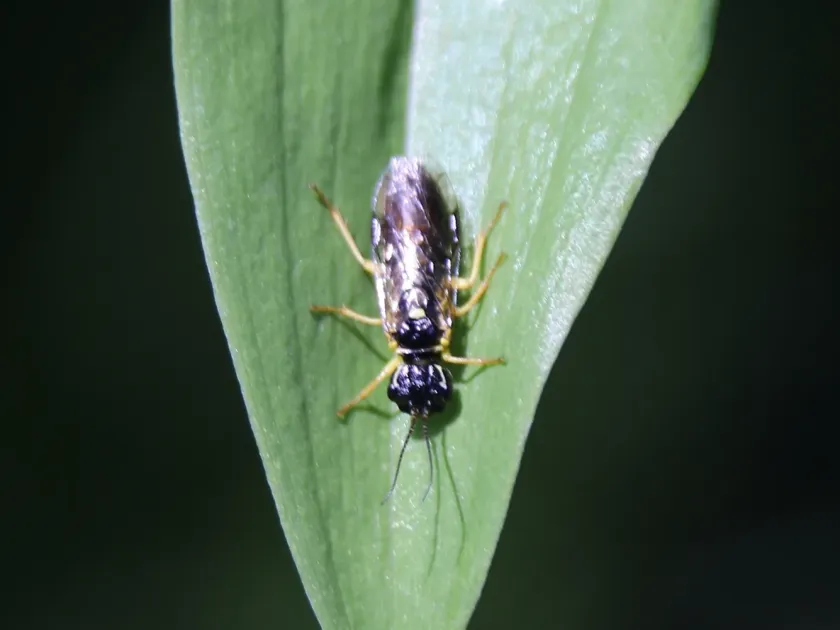
The rose web-spinning sawfly (Pamphilius balteatus) belongs to the family Pamphiliidae within the order Hymenoptera. The adult is a small sawfly with a black, shiny body and clear, patterned wings.
The larvae are cylindrical, yellowish-green in color with a dark head capsule. A key identification feature is the absence of abdominal prolegs and the presence of thread-like appendages at the end of the body.
The species has a univoltine life cycle, meaning there is one generation per year. The larvae overwinter in the soil at a depth of 10-15 centimeters, where they remain in diapause until spring.
Adult emergence typically coincides with the bud break of host plants. After mating, females deposit eggs on the underside of leaves, usually in small, dispersed groups.
Young larvae begin their life by spinning small webs to create protective shelters, which allows them to remain hidden from predators while they feed on the surrounding foliage.
What it damages
The primary host plants for this pest include members of the Rosaceae family. Roses and wild rose (dog rose) shrubs are particularly susceptible to infestations.
Larvae feed exclusively on leaves, consuming the lamina and leaving behind irregular holes or jagged edges. In cases of high density, they can cause significant defoliation of the host plant.
The aesthetic value of rose bushes is compromised as leaves curl, turn brown, and wither prematurely. This stress can reduce the vigor of the plant and suppress its flowering potential.
Persistent feeding damage can leave the plant weakened and more susceptible to secondary environmental stressors or opportunistic pathogenic infections.
While damage is often localized to individual branches, rapid expansion can occur in dense rose plantings if the infestation is left unmanaged during the early spring period.
Signs of infestation
The most visible indicator of an infestation is the presence of curled or rolled leaves held together by fine, silken webbing. These structures serve as both homes and feeding grounds for the larvae.
Examination of the foliage often reveals small black spots, which are larval frass (excrement) trapped within the silk webbing. The presence of these pellets is a reliable sign of active feeding.
Distorted leaves that turn brown or brittle are clear signs that the sawfly larvae have been active. The destruction of leaf tissue often follows the vein patterns or leaves large, ragged gaps.
Early season scouts should focus on the terminal growth of rose stems, as newly hatched larvae are most likely to establish their first webs on young, tender tissues.
In cases of severe infestation, the accumulation of webbed nests and dead leaf tissue becomes highly noticeable against the healthy green backdrop of the rose bush.
Control measures
Mechanical control is highly effective for home gardeners. This involves manually inspecting rose bushes and removing the webbed, curled leaves, which kills the larvae before they mature.
Cultivating the soil around the base of rose bushes in the fall or early spring can disrupt the overwintering larvae, exposing them to environmental elements or predators.
Chemical control using systemic insecticides is an option for large-scale infestations. Applications should target the early larval stages before the protective webs become too dense to penetrate.
Biological control methods, including the use of entomopathogenic nematodes or bacterial sprays, offer a more environmentally friendly approach, especially when protecting flowering plants.
Maintaining strong plant health through proper fertilization and irrigation helps roses recover faster from minor defoliation caused by the web-spinning sawfly activity.
Taxonomy
- Latin name
- Pamphilius balteatus
- Order
- Hymenoptera
- Family
- Pamphiliidae
- EPPO code
- PAMPBA
Discussion
No discussions yet — be the first.