
Palm scale
Palmaspis phoenicis
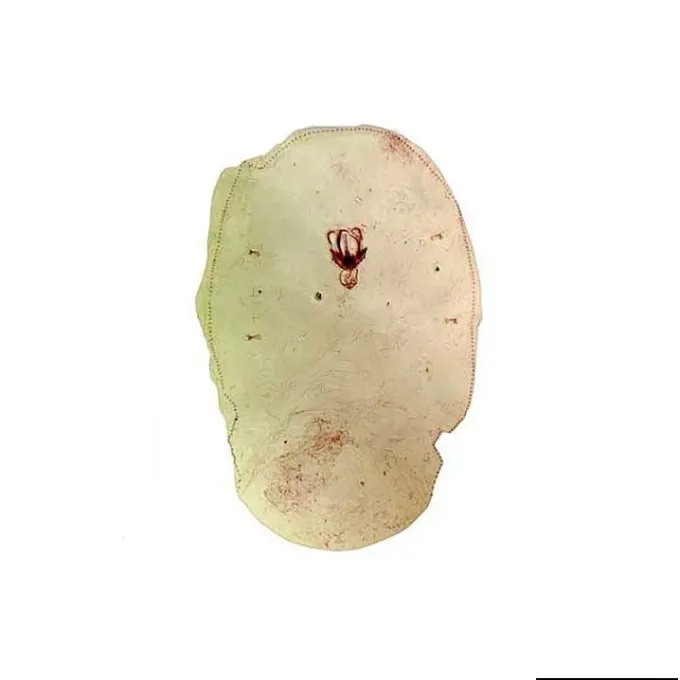
Description
How to identify
Palm scale (Palmaspis phoenicis) is a species of scale insect belonging to the family Asterolecaniidae. It is a specialized pest that primarily targets palm trees and related monocots.
Adult females are characterized by a protective, wax-like shell that is usually brown or tan. This shell serves as a shield against environmental factors and many contact insecticides.
The insect life cycle includes a mobile crawler stage. These larvae are tiny and pale, moving across the plant to find a suitable feeding site before settling down permanently.
Males are rarely seen; they are small, winged, and do not feed, focusing entirely on reproduction to continue the population cycle.
Due to their size and shape, which often mimics natural plant textures, Palmaspis phoenicis can easily go unnoticed until a significant colony has already formed.
What it damages
The primary hosts of this scale insect are various species of Arecaceae (palms). It is frequently found on date palms and ornamental species in greenhouses and indoor environments.
The pest uses its piercing-sucking mouthparts to extract sap from plant tissues, leading to nutrient loss and reduced vitality of the host plant.
Heavy infestations can result in the thinning of foliage, stunted growth, and the yellowing of leaf tissues near the areas where the scales are attached.
In addition to direct physiological damage, the honeydew secreted by these insects provides a substrate for sooty mold, which inhibits photosynthesis.
If left unmanaged, the scale infestation can lead to branch dieback and, in severe cases, the eventual decline or death of the palm tree.
Signs of infestation
The most common sign of infestation is the appearance of small, raised, bump-like structures on the palm petioles and leaf stalks.
Affected plants often exhibit signs of stress, such as poor development of new leaves, wilting, and a loss of the deep green color characteristic of healthy foliage.
The presence of a sticky, shiny residue on the leaves or the surface underneath the plant is a clear indication that scale insects are active and feeding.
Dark, soot-like fungal growth on the leaves is a secondary symptom caused by the accumulation of insect honeydew, further indicating a major pest problem.
Close inspection of the base of the leaves and the midribs often reveals clusters of the pests, which remain stationary for the majority of their adult life.
Control measures
Immediate quarantine of the affected plant is essential to prevent the spread of the crawlers to healthy plants in the collection.
Systemic insecticides, particularly those containing imidacloprid or similar active ingredients, are highly effective as they are absorbed by the plant and kill the pests from within.
For minor infestations, physical removal using a soft brush or a cotton swab soaked in rubbing alcohol can be sufficient to reduce the pest numbers.
Timing of chemical treatments is critical; repeated applications are necessary to target the newly hatched crawlers, which are the most susceptible life stage.
Regular monitoring, ensuring good plant hygiene, and maintaining adequate light and ventilation are key preventative strategies against scale insect outbreaks.
Taxonomy
- Latin name
- Palmaspis phoenicis
- Order
- Hemiptera (bugs, aphids, leafhoppers)
- Family
- Asterolecaniidae
- EPPO code
- ASTLPH
Discussion
No discussions yet — be the first.