
Palm scale
Palmaspis inlabefacta
Description
How to identify
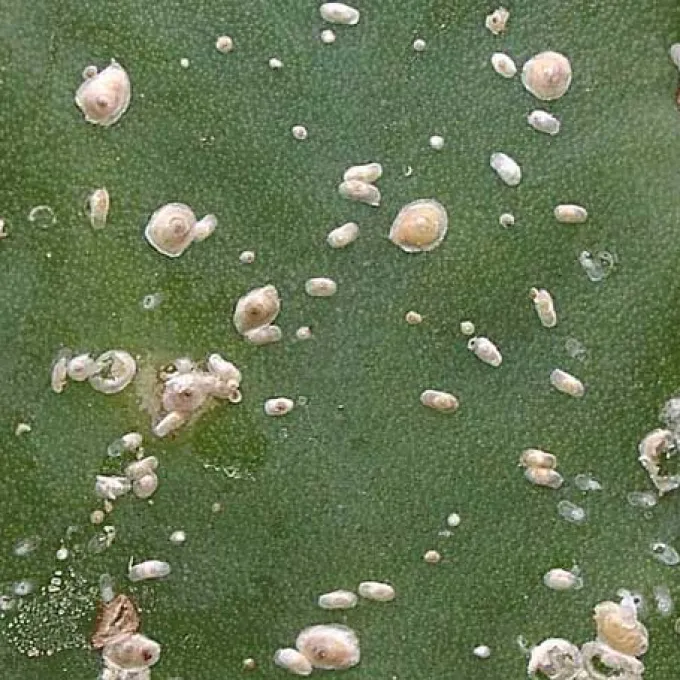
The palm scale Palmaspis inlabefacta is a member of the Diaspididae family, belonging to the order Hemiptera. These insects are known for their protective armor-like covers.
Adult females are sedentary, living under a wax-based shield that protects them from environmental stressors and many contact insecticides.
The insects are very small, often measuring only a few millimeters, making them look like small brownish or tan bumps on the host plant's surface.
Males are rarely seen; they are small, winged, and do not feed, serving only a short-lived reproductive purpose during their life cycle.
The crawler stage (first instar) is the only mobile phase, during which the insect moves across the plant to find a suitable feeding spot before settling down.
What it damages
This pest specifically targets palm species (family Arecaceae), feeding on the sap found in the leaves, petioles, and young stems.
By inserting their mouthparts into the plant tissue, they extract essential nutrients, which leads to stunted growth and loss of plant vigor over time.
Localized damage often manifests as yellow spots or chlorosis at the feeding sites, as the plant reacts to the scale's feeding behavior.
Extensive infestations can cause entire leaflets to turn brown and die, significantly reducing the aesthetic value of ornamental palm plants.
Beyond physical tissue damage, the scale produces honeydew, which fosters the growth of sooty mold, blocking photosynthesis and weakening the palm further.
Signs of infestation
The most visible sign is the presence of hard, bump-like structures on the foliage that cannot be wiped away without applying pressure or moisture.
A sticky, shiny residue on the leaf surface, known as honeydew, is a classic indication of an active infestation by sap-sucking insects.
Look for yellowing or premature senescence of the lower leaves, which often indicates that the pest load has been heavy for an extended period.
Inspect the undersides of leaves and the bases of leaf stalks, as these hidden, shaded areas are preferred locations for colonies to establish.
The development of black, soot-like fungal growth on the leaves is a secondary sign that typically accompanies a severe scale outbreak.
Control measures
For small infestations, manual removal using a soft brush or cotton swab dipped in rubbing alcohol is an effective and safe control measure.
Systemic insecticides are generally the most effective way to treat established colonies, as they are absorbed by the plant and kill the pests during feeding.
Ensure that the plants are not overly crowded, as good air circulation helps prevent the conditions that favor scale insect reproduction.
Always quarantine new plants for several weeks before introducing them to your collection to ensure they are free from pests like Palmaspis inlabefacta.
Regularly wash the leaves with a mild soapy solution to remove any dust or incipient honeydew, which keeps the foliage clean and healthy.
Taxonomy
- Latin name
- Palmaspis inlabefacta
- Order
- Hemiptera (bugs, aphids, leafhoppers)
- Family
- Asterolecaniidae
- EPPO code
- PLMAIN
Discussion
No discussions yet — be the first.