
Palm scale
Palmaspis degenerata
Description
How to identify
Palm scale (Palmaspis degenerata) is a member of the Diaspididae family, known for its ability to shield itself beneath a waxy covering. These insects are highly specialized, often overlooked until their population reaches damaging levels on the host plant.
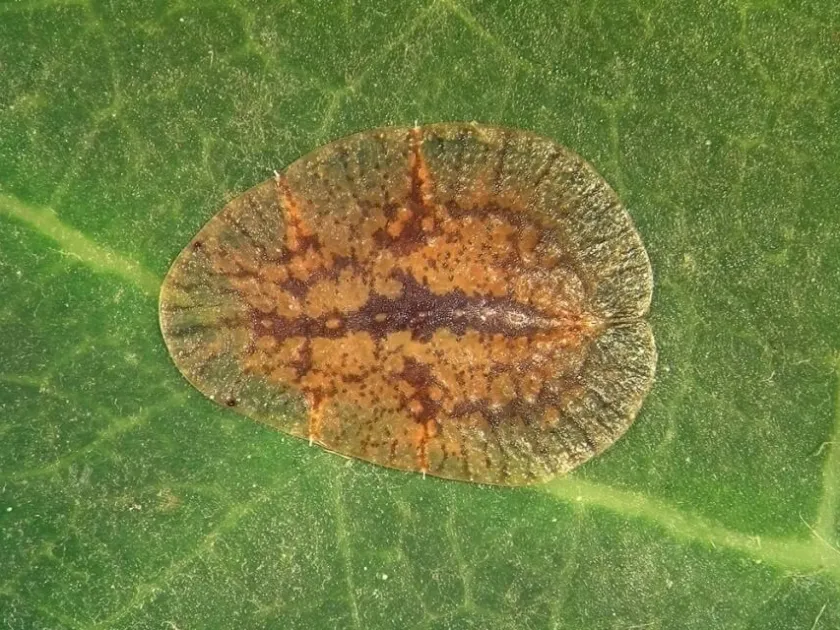
Adult females are sedentary, protected by an elongated, flattened scale that ranges from light to dark brown. These scales are firmly attached to the plant surface, primarily on the undersides of leaves or near the veins where the sap flow is most accessible.
The life cycle involves an egg stage, the crawler stage, and the sedentary adult phase. Crawlers are tiny, mobile nymphs that emerge from beneath the female's shield to find new feeding sites on the same or neighboring plants.
In greenhouses and indoor environments, reproduction can occur year-round. The lack of seasonal dormancy means that control measures must be continuous and vigilant to prevent rapid infestation cycles.
Identification is confirmed by examining the insect's pygidium morphology under a microscope. For practical purposes, growers identify them by the presence of small, static, hard shells adhering to the plant's cuticle.
What it damages
Palmaspis degenerata primarily targets palm species, though it frequently attacks other ornamental plants like citrus, laurel, and various greenhouse flora. The pest sucks sap directly from the plant's vascular system.
The feeding process causes chlorotic spotting on the leaves, where the plant tissue loses its green color. Over time, these spots can coalesce, leading to severe yellowing and potential necrosis of the leaf blades.
Growth reduction is a common secondary symptom. Because the plant loses essential nutrients and moisture, it becomes stunted and loses its structural integrity, leading to a significant loss in ornamental value.
Excessive feeding often results in the secretion of honeydew. This sugary substance serves as a substrate for sooty mold, which creates a dark, unsightly layer that reduces the plant's ability to perform photosynthesis efficiently.
Severe infestations weaken the plant's immune system, leaving it susceptible to secondary infections from fungi and bacteria. If left unchecked, the plant may eventually succumb to the combined stress of sap-sucking and fungal diseases.
Control measures
Controlling palm scale is challenging due to the protective scale that covers the insect, shielding it from many direct contact sprays. Systemic insecticides are the preferred choice, as they circulate through the plant sap.
Mechanical removal can be used as a supplementary measure for low-level infestations. Gently scrubbing the infested areas with a soft brush and a horticultural soap or alcohol solution helps remove the protective shields and lower the population density.
Quarantine is essential when introducing new plants into an existing collection. Inspecting the undersides of leaves and leaf axils for several weeks after purchase can prevent the introduction of this pest to healthy plants.
Biological control, such as releasing specific parasitoid wasps, is used in professional botanical gardens. These natural enemies can effectively keep scale populations at manageable levels without the need for heavy chemical intervention.
Maintaining optimal plant health through balanced fertilization and proper irrigation helps the host withstand the stress of an infestation. High humidity levels may also discourage certain types of scale insects compared to hot, arid conditions.
Taxonomy
- Latin name
- Palmaspis degenerata
- Order
- Hemiptera (bugs, aphids, leafhoppers)
- Family
- Asterolecaniidae
- EPPO code
- PLMADE
Discussion
No discussions yet — be the first.