
Palm scale
Palmaspis
Description
How to identify
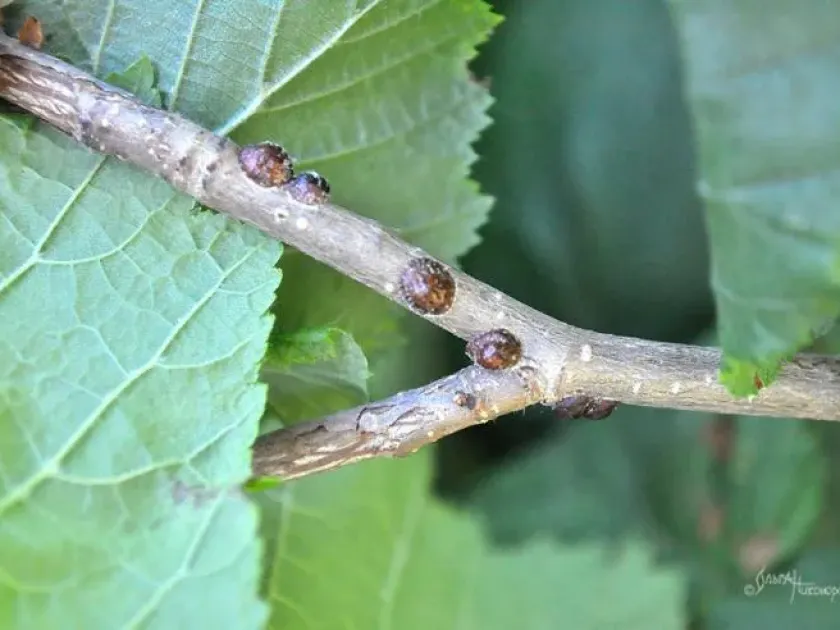
Palm scale (Palmaspis) is a genus of insects within the Asterolecaniidae family. These pests are characterized by their specialized adaptation to life on tropical plants, where they develop a protective shield to survive.
The adult female is sedentary and remains attached to a single spot on the host plant throughout its life. It secretes a waxy covering that functions as an armor, protecting the insect from predators and environmental stressors.
Crawlers, which are the first-instar nymphs, are the primary dispersal stage of the life cycle. They are microscopic, mobile, and can easily be spread via wind, water droplets, or contact between plants.
Because these insects are so small and match the color of the host plant's epidermis, they are often overlooked until the infestation has reached a critical stage.
Understanding their taxonomy is essential for selecting the correct control measures, as these scales are biologically distinct from common soft or armored scales found on temperate plants.
What it damages
The primary hosts of Palmaspis include various species of palms and related tropical ornamental plants. They thrive in environments such as greenhouses, botanical gardens, and indoor collections.
These scales infest leaves, petioles, and stems, inserting their piercing-sucking mouthparts into the plant tissue to extract essential sap and nutrients.
By feeding continuously, the insects drain the host plant of vital resources, leading to stunted growth and weakened immunity, which leaves the plant vulnerable to other pathogens.
The damage is not limited to the immediate site of feeding; the systemic effect of sap depletion affects the entire metabolic process of the plant, reducing its vigor and ornamental value.
In neglected cases, large colonies can cover entire fronds, causing significant discoloration, tissue necrosis, and ultimately, the death of the infested plant.
Signs of infestation
The most evident sign is the presence of small, raised bumps or scales on the surfaces of leaves or stems. These bumps often appear as crusty, waxy spots that are fixed firmly to the plant.
Sticky honeydew secretions are a major indicator of an active infestation. This substance frequently promotes the growth of black sooty mold, which can cover the foliage and further impair photosynthesis.
Yellowing (chlorosis) of the leaves is a common reaction to scale feeding. As the infestation progresses, leaves may turn brown, curl, and drop prematurely.
In addition to discoloration, distorted or deformed growth of new leaves is a classic sign of long-term nutrient deprivation caused by the scales.
A closer look at the infested area will reveal small, pale marks under the removed scales, which represent the locations where the insect has disrupted the plant tissue.
Control measures
Controlling Palmaspis requires a persistent and multi-faceted approach. Early detection is crucial, so regular monitoring of all plant surfaces, especially leaf axils, is recommended.
For minor infestations, manual removal using a soft brush dipped in horticultural oil or alcohol can be effective, provided that all visible insects are cleared from the plant.
Systemic insecticides are the most reliable method for larger or well-established populations, as they are absorbed by the plant and provide protection against scales that are protected by their waxy shields.
- Isolate newly acquired plants to prevent the introduction of pests.
- Maintain optimal plant health through balanced nutrition and proper watering.
- Use biological control agents, such as predatory beetles or parasitic wasps, in contained environments.
- Apply systemic insecticides according to the label requirements.
Because these scales are protected by their armor, multiple treatments are necessary to manage the generations as they hatch. Consistently following a treatment schedule is the key to complete eradication.
Taxonomy
- Latin name
- Palmaspis
- Order
- Hemiptera (bugs, aphids, leafhoppers)
- Family
- Asterolecaniidae
- EPPO code
- PLMASP
Discussion
No discussions yet — be the first.