
Java sparrow
Padda
Description
How to identify
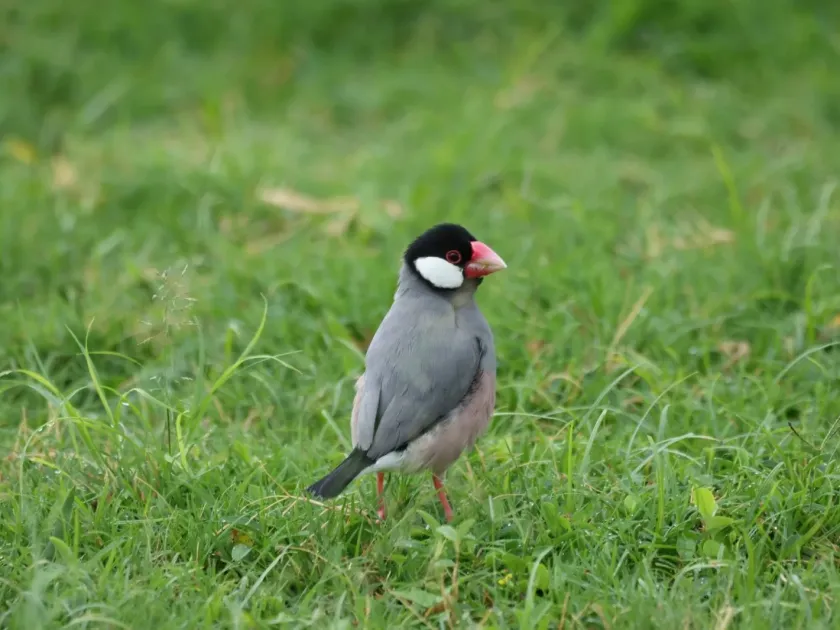
The Java sparrow (Padda oryzivora), also known as the rice sparrow, is a species of passerine bird belonging to the finch family. It is easily identified by its stout, bright pink beak, solid black head, and distinctive white cheek patches that contrast with its grey body.
Originally native to Indonesia, this bird has become a widespread invasive species in many tropical regions due to its adaptability. Its biological success is driven by its high social nature, as these birds thrive in large, highly coordinated colonies that exploit food resources efficiently.
These birds are exceptionally mobile, capable of traveling long distances between roosting sites and feeding grounds. This agility allows them to target agricultural zones precisely when crops are at their most vulnerable stage, particularly during the grain-filling period.
The lifecycle of the Java sparrow is closely linked to the availability of seed crops. Breeding patterns often coincide with the harvest season of rice, ensuring that the offspring have immediate access to high-energy food sources which supports rapid population growth.
Their intelligence and ability to learn makes them a challenging adversary for farmers. They quickly habituate to static scare tactics, requiring agricultural managers to employ dynamic and varied control strategies to protect their yields throughout the ripening phase.
What it damages
The primary crop damaged by the Java sparrow is rice (Oryza sativa). The birds feed on the grain starting from the milky stage until maturity, often stripping entire panicles and causing severe yield reductions that can exceed 50% in affected areas.
Beyond rice, these birds are known to attack other cereal crops including millet, sorghum, and maize. They are particularly attracted to areas where crops are planted early or late compared to the rest of the region, making those isolated fields prime targets for mass feeding.
Feeding behavior involves not only the consumption of seeds but also significant damage to the plant structure. The weight of large flocks landing on rice stems causes lodging, which significantly complicates mechanical harvesting and leads to further post-harvest losses.
Damage is often most severe at the field edges, where the birds find it easier to land and take off. However, in high-pressure years, the entire field can be subjected to repeated raids, leading to near-total destruction of the grain yield if left unprotected.
The economic impact of this pest extends beyond the field as well. Java sparrows can continue their damage in areas where grain is drying or being stored, provided there is minimal physical protection, making total farm management essential.
Signs of infestation
The most prominent sign of a Java sparrow infestation is the presence of empty or stripped rice panicles. Upon inspection, the stalks look shredded, and the fields exhibit patches where the grain has been completely removed by the feeding flock.
Significant amounts of spilled grain on the water surface or soil underneath the crop are common indicators. This waste is a clear sign that a large number of birds have been feeding in the immediate vicinity during the early hours of the day.
Visual confirmation of large, noisy flocks flying in a synchronized manner is a primary indicator of their presence. The sound of thousands of birds vocalizing is unmistakable and can often be heard well before the birds are spotted by farmers.
Presence of excrement on the leaves and stems of the rice plants is another sign. Accumulated waste can lead to secondary issues such as the spread of fungal spores or bacterial infections, further damaging the already stressed plants.
Farmers may also observe changes in local bird activity. Java sparrows often displace other smaller bird species, establishing dominance over the preferred feeding sites within the agricultural landscape.
Control measures
Effective management of the Java sparrow requires an integrated pest management (IPM) approach. Because they are highly mobile, reliance on a single deterrent method is typically ineffective; a combination of strategies is necessary for long-term success.
Acoustic deterrents that play alarm calls or predator sounds are useful but must be rotated frequently to prevent the birds from becoming habituated. Combining these with visual deterrents like rotating mirrors or predator decoys significantly enhances effectiveness.
Cultural control measures, such as community-wide synchronization of planting and harvesting dates, are critical. If an entire region harvests simultaneously, the window of vulnerability is reduced, leaving the birds with less time to exploit the crop.
In high-value areas, such as seed production fields, physical exclusion using protective netting is the only 100% effective method. While labor-intensive, it ensures the security of high-cost germplasm against mass bird raids.
Ongoing monitoring is essential to predict the arrival of flocks. By deploying field scouts to identify the first signs of activity, farmers can implement deterrent measures early, which is far more efficient than attempting to drive away an established colony.
Taxonomy
- Latin name
- Padda
- Family
- Estrildidae
- EPPO code
- PADDSP
Discussion
No discussions yet — be the first.