
Java sparrow
Lonchura oryzivora
Description
How to identify
The Java sparrow, scientifically known as Lonchura oryzivora, is a small passerine bird from the Estrildidae family. It is recognized by its sturdy, conical beak, specifically adapted for cracking open the hard husks of grain crops, particularly rice.
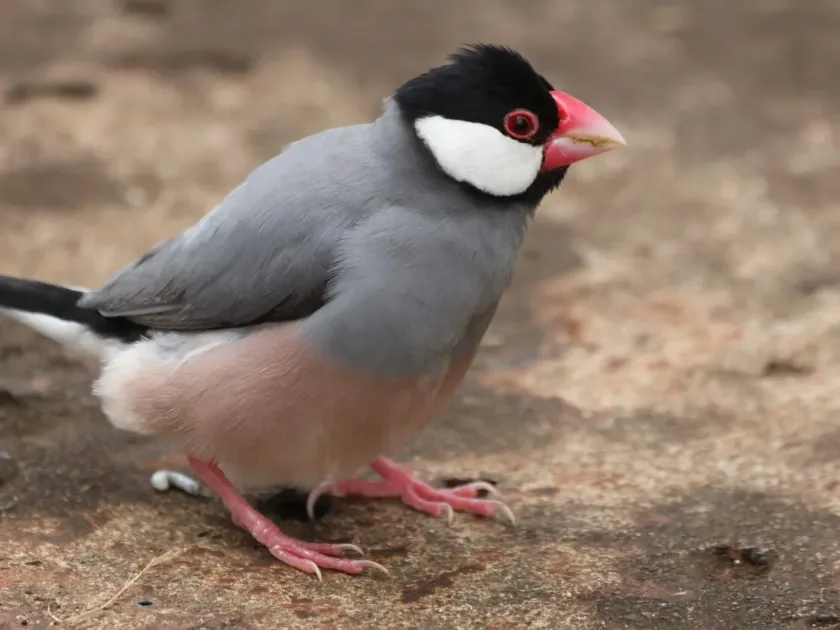
Adult birds exhibit a striking appearance with a grey back, a black head with prominent white cheek patches, and a distinctive red eye ring. Despite their popularity in the pet trade, in the wild, they are highly destructive pests in rice-growing regions.
These birds are highly social and gregarious, often congregating in massive flocks that can devastate agricultural yields in a very short period. Their ability to adapt to human-altered landscapes has contributed to their status as a significant agricultural threat.
The biological success of this species is largely due to its high reproductive rate, which ensures the recovery of local populations even after intensive control efforts. This resilience makes them a persistent challenge for commercial farmers.
Young Java sparrows, while less brightly colored than adults, are equally problematic for farmers. They travel in groups that quickly identify and exploit available food sources, leading to rapid expansion of their presence across cultivated lands.
What it damages
The Java sparrow primarily targets rice during the milk and dough stages of kernel development, when the grain is soft and rich in starch. They can consume large quantities of grain daily, posing a severe threat to commercial rice operations.
Beyond rice, these birds are known to forage on other cereal crops such as sorghum, millet, and maize. Their diet flexibility allows them to switch between crops, ensuring they remain a constant threat throughout the harvest season.
Mechanical damage is significant as flocks land on rice stalks, causing the stems to bend, break, or lodge. This not only results in direct grain loss but also creates secondary issues such as mold growth and complications during mechanical harvesting.
Impact on yields can be substantial, with reported losses ranging from 20% to over 50% in affected fields. This level of damage makes rice farming economically unviable in regions with high densities of these birds without robust protection measures.
Furthermore, the birds scatter unconsumed grain on the field floor, which may lead to unwanted sprouting. This creates complications for post-harvest land preparation and results in higher operational costs for farmers dealing with crop residue management.
When it appears
Java sparrow activity is closely tied to the phenology of the rice crop. Flocks are most aggressive during the critical stages from panicle emergence to full maturity, when grains are accessible and nutritious.
In tropical environments, where double or triple cropping is common, the threat from Java sparrows persists throughout the year. They effectively track the ripening schedule across different fields, creating a continuous cycle of infestation.
The breeding season often coincides with peak grain growth, as parent birds require high energy supplies to feed their nestlings. During this time, the pressure on nearby rice fields increases significantly, demanding constant vigilance from field managers.
Migration between fields follows a wave-like pattern, allowing farmers to monitor incoming threats by checking the status of neighboring plots. Early detection of scout birds is essential for timely deployment of deterrent systems.
Environmental stressors, such as droughts, may force these birds closer to human settlements and irrigated fields as they seek reliable food and water sources. This creates localized spikes in pest activity that require immediate intervention.
Signs of infestation
One of the most noticeable signs of a Java sparrow infestation is the auditory cue: the loud, collective rustling and chattering of a large flock rising from the crop. Visually, affected panicles appear stripped or partially eaten.
Discarded husks and fragments of grain found beneath the stalks provide definitive evidence of bird feeding. In addition, localized lodging or broken stems indicate where large groups of birds have been congregating to feed for extended periods.
The presence of droppings on rice leaves and stems is another indicator. Excessive accumulation of bird waste can encourage the growth of pathogenic fungi, further damaging the crop quality and overall field health.
- Stripped rice panicles with missing grains.
- Large quantities of grain husks on the ground.
- Flattened or broken rice stalks.
- Visible large flocks during dawn and dusk.
- Noticeable bird droppings on the vegetation.
An indirect sign is the alteration of the local bird community behavior, as smaller species often vacate the immediate area when a dominant flock of Java sparrows arrives to feed.
Control measures
Effective management of Java sparrows requires a multi-layered approach, combining deterrents to break their feeding patterns. Acoustic devices, such as propane cannons or alarm call broadcasts, are widely used to scare flocks away.
Visual deterrents, including reflective tapes, scarecrows, and predator replicas, supplement the noise-based systems. These tools are most effective when rotated frequently to prevent the birds from habituating to the stimuli.
For small-scale high-value fields, bird-proof netting is the most reliable method for complete protection. While labor-intensive to install, it provides a physical barrier that guarantees zero loss from bird foraging.
Agronomic practices, such as synchronizing planting schedules across a region, help ensure that the entire crop matures at once. This reduces the duration of vulnerability for any individual plot, making it less attractive for long-term foraging.
Modern precision agriculture leverages drones for automated field monitoring and deterrence. These aerial devices can patrol large areas and disperse flocks before they establish a permanent feeding routine, significantly lowering potential yield losses.
Taxonomy
- Latin name
- Lonchura oryzivora
- Family
- Estrildidae
- EPPO code
- LONCOR
Discussion
No discussions yet — be the first.