
Dark ground beetle
Oxypselaphus obscurus
Description
How to identify
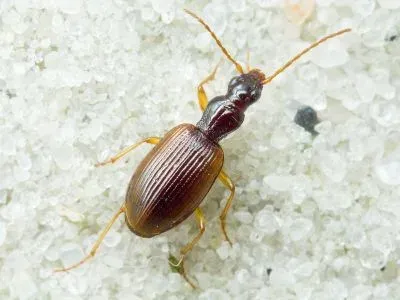
The dark ground beetle (Oxypselaphus obscurus) belongs to the family Carabidae, the order Coleoptera. Adult beetles typically reach 6 to 8 mm in length and exhibit a dark brown to black coloration with a subtle metallic sheen.
The beetle’s body is elongated with well-developed elytra featuring fine longitudinal grooves. Their mandibles are powerful and adapted for chewing, which facilitates their omnivorous behavior, allowing them to switch from predatory habits to feeding on plant tissues.
The larvae are subterranean, living within the upper soil layers or under crop residue. They possess a slender, flattened body, usually light yellow or whitish, with three pairs of thoracic legs, making them highly agile when searching for food or shelter.
Adults are predominantly nocturnal. During daylight hours, they remain inactive under soil clods, stones, or thick vegetative cover, making them difficult to detect during standard field scouting sessions.
While most carabids are strictly predatory, O. obscurus is a facultative pest. When natural prey populations are low or when environmental conditions are unfavorable, they readily consume seeds, roots, and tender parts of cereal seedlings.
What it damages
The primary economic damage occurs during the early stages of crop development, specifically during seed germination and seedling emergence. The beetles and larvae target the embryo of the seeds, destroying the plant before it even reaches the soil surface.
Larvae consume roots and rhizomes, leading to stunted growth, wilting, and often total plant death. This destruction results in patchy stands, which significantly reduces the final yield and necessitates costly replanting operations.
Adults contribute to damage by grazing on the margins of young leaves and stems. While these injuries might seem minor individually, the cumulative impact of mass infestation can severely weaken the crop and open entry points for various soil-borne pathogens.
The severity of the damage is often linked to the timing of sowing. Early-planted crops may face higher pressure if the conditions allow for a rapid increase in the local beetle population during the vulnerable germination phase.
Besides cereal crops, the dark ground beetle can affect a range of other plants, including perennial grasses. Their adaptability makes them a persistent challenge in areas where crop diversity is limited or where soil moisture remains high throughout the spring.
When it appears
Spring activity begins as soon as soil temperatures exceed 5-8 degrees Celsius. This period often coincides with the sowing of spring cereals, providing the beetles with a steady source of food just as they emerge from their winter dormancy.
The peak of larval activity typically occurs during May and June. During this time, the larvae feed voraciously on underground plant parts, aligning with the tillering phase of the cereal crops, which is a critical developmental stage.
During the heat of summer, adults migrate toward damper regions within the field, such as low-lying areas or edges bordering wooded corridors. This movement helps them survive extreme temperatures while continuing to impact surrounding crops.
As autumn approaches, both larvae and adults prepare for hibernation. They migrate to deeper soil layers or dense plant litter, entering a state of diapause where they remain until the following spring.
Population density is highly correlated with soil moisture levels. Wet springs generally favor larval survival and development, often leading to significant outbreaks in fields where soil moisture management is insufficient.
Signs of infestation
The first indicator of an infestation is the appearance of bare patches or thin, uneven stands across the field. Closer inspection of these areas often reveals missing or partially consumed seeds within the soil.
Wilting of young plants without clear evidence of foliar disease suggests below-ground damage. Digging into the soil near the base of the affected plants often reveals the presence of larvae or adult beetles hiding near the roots.
Using light traps or pitfall traps during the night is the most effective way to confirm the presence and activity level of adult beetles on the field. Monitoring should be focused on edges adjacent to hedgerows or uncultivated land.
Feeding marks on the leaves—specifically irregular notches along the edges—are symptomatic of adult beetle activity. These marks are distinct from the smoother damage caused by some other common crop pests.
- Patchy or thin seedling emergence.
- Seeds consumed within the soil.
- Wilting of young seedlings.
- Notched margins on young leaves.
- Presence of beetles found during soil excavation.
Control measures
The most reliable control method is the implementation of a diverse crop rotation strategy. Avoid planting susceptible cereal crops after hosts that encourage beetle population buildup to break the pest's life cycle.
Deep autumn tillage is highly effective in disrupting overwintering sites. By turning over the soil, larvae and hibernating adults are exposed to predators and adverse weather conditions, significantly reducing the population density.
Seed treatment with systemic insecticides is the standard practice for preventing damage during germination. This creates a protective zone around the seed, deterring larvae and beetles from feeding during the critical emergence phase.
If population thresholds are exceeded during the growing season, localized edge treatments with approved insecticides can effectively suppress the spread of the pest from surrounding habitats into the main production area.
Maintaining clean fields by managing weeds is essential. Weeds can act as alternative hosts or provide the necessary cover for beetles to thrive; keeping field edges free of excessive vegetation reduces the local beetle habitat.
Taxonomy
- Latin name
- Oxypselaphus obscurus
- Order
- Coleoptera (beetles)
- Family
- Carabidae
- EPPO code
- OXPYOB
Discussion
No discussions yet — be the first.