
Oxypselaphus beetle
Oxypselaphus
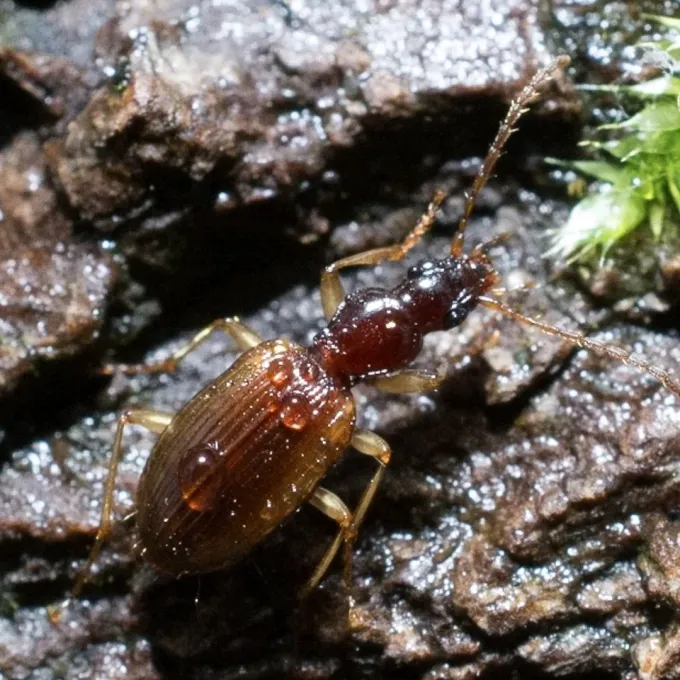
Description
How to identify
The Oxypselaphus beetle (Oxypselaphus obscurus) is a member of the Carabidae family, commonly known as ground beetles. These insects are characterized by their flattened, elongated bodies, which allow them to navigate effectively through soil crevices and dense vegetation.
Adult beetles possess strong mandibles adapted for a generalist diet. Their coloration is typically dark, ranging from brown to black, providing camouflage against the soil background. They are known for being primarily nocturnal, remaining hidden during daylight hours.
The larval stage is worm-like and resides within the upper soil layers. Larvae are highly active and rely on their developed legs to move through the soil profile in search of organic matter or, under specific conditions, crop seedlings.
The life cycle undergoes complete metamorphosis, consisting of the egg, larva, pupa, and adult stages. Environmental factors such as soil temperature and moisture content play a critical role in the rate of their development and population dynamics.
Identification of the species often requires professional taxonomic examination, as they may be easily confused with other beneficial ground beetle species that act as natural predators of major agricultural pests.
What it damages
Although many ground beetles are beneficial predators, Oxypselaphus can occasionally shift to phytophagous behavior, causing damage to agricultural crops. This typically occurs in early spring when natural food sources are limited.
The primary damage involves the destruction of seeds and young seedlings of cereal crops such as wheat, barley, and rye. Larvae may chew through the roots or the subterranean part of the stems, causing the plants to wither and die prematurely.
Affected fields often show irregular patterns of thinning. This damage is most severe immediately after germination, as the young plants have minimal resilience against physical injury to their root systems.
In addition to direct mechanical damage, the wounds created by the beetle's feeding can serve as entry points for secondary soil-borne pathogens, potentially leading to increased rates of root rot and other fungal diseases.
The overall crop loss is proportional to the pest density in the soil and the vigor of the seedlings. Under optimal growing conditions, plants may recover, but significant infestations can lead to substantial yield reductions.
Control measures
Integrated Pest Management (IPM) is essential for controlling Oxypselaphus. A diverse crop rotation helps disrupt the life cycle of the beetle by preventing the buildup of large populations that occur under continuous monoculture.
Mechanical cultivation practices, such as deep plowing and timely tillage, can effectively destroy larval habitats and expose them to natural predators. This method remains one of the most environmentally friendly approaches to suppression.
Seed treatment with systemic insecticides is the most effective preventative measure. Protecting the seed and the emerging sprout ensures the plant survives the initial, most vulnerable stage of development.
If population thresholds are exceeded during the vegetative stage, targeted foliar insecticide applications may be necessary. These should be applied according to local agricultural regulations and best management practices.
- Implement a varied crop rotation plan.
- Use certified seeds with high germination energy.
- Monitor soil moisture and field history to predict outbreak risks.
Taxonomy
- Latin name
- Oxypselaphus
- Order
- Coleoptera (beetles)
- Family
- Carabidae
- EPPO code
- OXPYSP
Discussion
No discussions yet — be the first.