
Black seed bug
Oxycarenus luctuosus
Description
How to identify
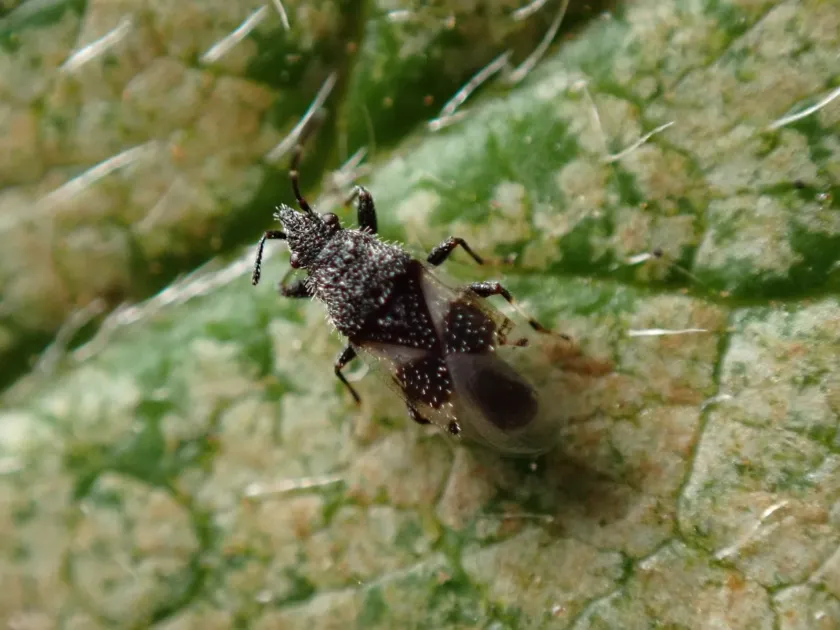
The black seed bug (Oxycarenus luctuosus) belongs to the order Hemiptera and the family Oxycarenidae. These small insects typically measure between 3 to 4 mm in length.
The adult bugs are characterized by a dark brown or black body color, allowing them to blend into their host plants. They possess fully developed wings, which enable efficient movement across fields and landscapes.
Nymphs resemble adults but lack functional wings and are often lighter in color, typically showing shades of brown or reddish tints on their abdomen as they progress through developmental stages.
Identification in the field is best achieved using a sweep net. Because these insects are highly mobile, they often drop to the ground when threatened, making quick visual checks of the lower foliage necessary.
The eggs are small, elongated, and often deposited in hidden areas of the plant, such as leaf axils or within the flower heads, providing protection from harsh environmental conditions and predators.
What it damages
This species is a known polyphagous pest, although it shows a marked preference for plants within the Malvaceae family. It feeds on the sap of various agricultural and wild plants.
The insects use their piercing-sucking mouthparts to feed on the reproductive parts of plants, including developing seeds and fruit, which directly impairs the plant's yield potential.
Beyond the loss of nutrients, the punctures created during feeding weaken the plant structure and provide pathways for secondary fungal infections and pathogens to invade the fruit.
In technical crops like cotton, the bug feeds on the developing bolls, causing severe damage to fiber quality and resulting in significant economic losses for producers.
Overall plant vitality is compromised when large populations feed simultaneously, leading to stunted growth and reduced seed viability in affected crop sectors.
When it appears
The black seed bug's life cycle is heavily influenced by ambient temperatures, which dictate the speed of development and the frequency of generations throughout the growing season.
Adults overwinter in sheltered locations, including crop residues, leaf litter, and topsoil, emerging only when the weather consistently warms up in the spring.
Initial infestation typically occurs as adults move onto emerging vegetation or early-flowering weeds, which serve as primary hosts before the main crop reaches a susceptible growth stage.
Multiple generations occur throughout the year, with population peaks frequently observed during the mid-to-late summer months when seed production is at its height.
As temperatures begin to drop in autumn, the insects begin seeking overwintering sites, often congregating in large numbers near fence lines or within dense vegetation to prepare for dormancy.
Signs of infestation
The primary visual indicator of an infestation is the appearance of tiny, discolored punctures on flowers and developing fruit, which may eventually form necrotic spots.
If an infestation is significant, growers may observe premature fruit drop, stunted boll development, or deformed seed pods that fail to reach full maturity.
Close inspection of the plant canopy, especially within the flower heads, will often reveal clusters of nymphs and adults engaged in feeding activity.
Excrement spots, appearing as tiny black dots on leaf surfaces and fruit skins, are clear signs that a colony has been actively feeding in the immediate vicinity.
- Wilted or dried-out flower buds indicating sap loss.
- Reduced seed viability due to direct feeding on the germ.
- General chlorosis or decline in plant health across the field.
Control measures
Effective management begins with robust cultural practices, such as clearing crop residues and deep plowing after harvest to destroy overwintering grounds.
Weed management, particularly targeting Malvaceae weeds on field margins, is essential to deprive the pest of secondary hosts and reduce early-season population build-up.
Chemical control should be reserved for instances where monitoring indicates that the economic threshold of damage has been exceeded, using selective insecticides to protect beneficial insects.
Biological control methods, such as utilizing entomopathogenic fungi, can be highly effective in high-humidity environments, providing a sustainable alternative to chemical applications.
Regular field scouting using yellow sticky traps is a recommended monitoring technique to track population trends and optimize the timing of any necessary intervention.
Taxonomy
- Latin name
- Oxycarenus luctuosus
- Order
- Hemiptera (bugs, aphids, leafhoppers)
- Family
- Oxycarenidae
- EPPO code
- OXYALU
Discussion
No discussions yet — be the first.