
Dusky cotton bug
Oxycarenus bicolor
Description
How to identify
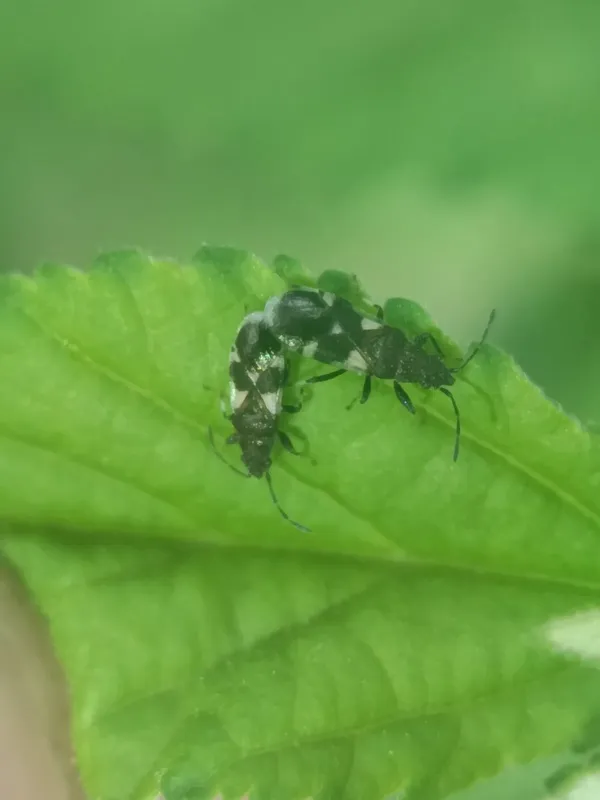
The dusky cotton bug (Oxycarenus bicolor) is a small hemipteran insect belonging to the Lygaeidae family. Typically measuring between 3 to 5 millimeters in length, these bugs are recognized by their distinct black and white coloration.
Adults possess a dark head and pronotum with contrasting clear, membranous wings folded over the abdomen. This color pattern allows them to blend in with various plant structures, though they remain visible during mass infestations.
Nymphs are smaller than adults and lack developed wings. They are easily identified by their reddish or orange-tinted abdomen, which makes them distinguishable from the mature stages of the insect during field surveys.
The species is highly mobile and thrives in sunny, warm environments. They are typically found in clusters, moving across leaves, stems, and specifically congregating on the reproductive parts of host plants.
Field identification is performed by using insect nets for sampling or by performing direct visual inspections of seed pods and flowers, where the bugs often hide to feed on the developing tissues.
What it damages
Oxycarenus bicolor is a known polyphagous pest that targets various plants, most notably those within the Malvaceae family. Cotton crops are particularly susceptible to their feeding habits.
The bugs utilize their piercing-sucking mouthparts to feed on seeds and developing fruit. By extracting nutrients from these organs, they severely impact the vitality and reproductive success of the plant.
Damage is characterized by shriveled, malformed, or underdeveloped seeds. In cotton production, the feeding activities result in reduced lint quality and lower overall yields per hectare.
Furthermore, the physical damage caused by the punctures provides an entry point for various secondary pathogens, including fungi and bacteria, which can cause internal decay of the seed pods.
High population densities can cause significant economic losses, especially during extended hot and dry periods that favor the rapid reproduction and development of the bug's life cycle.
When it appears
The dusky cotton bug overwinters as an adult, hiding in protective habitats such as leaf litter, soil cracks, or under the bark of trees. Activity resumes once spring temperatures become consistently favorable.
Early generations often develop on weed species before migrating to agricultural crops. This movement typically aligns with the flowering and fruiting stages of the main crop, which provide the primary food source.
Multiple generations can occur throughout the growing season, with the development speed being highly dependent on temperature. Warm, dry weather is known to accelerate the bug's reproductive capacity.
As the season approaches its end and crops begin to senesce, the bugs start seeking overwintering sites, often moving toward field borders and debris-rich areas to prepare for winter dormancy.
Effective scouting during the peak blooming stage is crucial, as this is when the vulnerability of the crop to damage is at its highest and the bug population begins to increase rapidly.
Signs of infestation
The primary sign of an infestation is the presence of the black and white adults and their nymphs on flower buds, blooms, and maturing seed pods, often in dense, visible clusters.
Punctured seeds show visible lesions where the bugs have inserted their stylets. These areas may appear discolored or necrotic as the tissue begins to die due to the loss of nutrients.
In cotton fields, the accumulation of insect excrement inside the bolls can stain the lint, which is a major quality indicator of infestation that significantly lowers the market value of the harvest.
Premature shedding of flower buds or young fruits is another common symptom. If plants lose a significant number of their reproductive organs, the resulting yield reduction becomes highly apparent.
Close inspection of the underside of leaves and along the stems often reveals the presence of nymphs, whose bright coloration makes them stand out against the green vegetative tissue of the host plant.
Control measures
Integrated pest management starts with cultural practices, primarily the elimination of alternative weed hosts that serve as bridges for the pest before it moves into the main cultivated crop.
Deep plowing or mechanical tillage following harvest is an effective way to destroy overwintering sites, exposing the adults to cold temperatures and reducing the population for the next season.
Chemical control should only be applied when scouting confirms that the insect density has reached the economic injury level, ensuring the use of selective insecticides that minimize harm to beneficial organisms.
Managing insecticide resistance is vital, necessitating the rotation of chemical classes to ensure long-term efficacy and prevent the development of resistant bug populations within the field.
The use of pheromone traps or monitoring sticky cards can provide farmers with early warnings, allowing for localized treatments before an infestation becomes widespread and difficult to control.
Taxonomy
- Latin name
- Oxycarenus bicolor
- Order
- Hemiptera (bugs, aphids, leafhoppers)
- Family
- Oxycarenidae
- EPPO code
- OXYABI
Discussion
No discussions yet — be the first.