
Oxycarenus collaris
Oxycarenus collaris
Description
How to identify
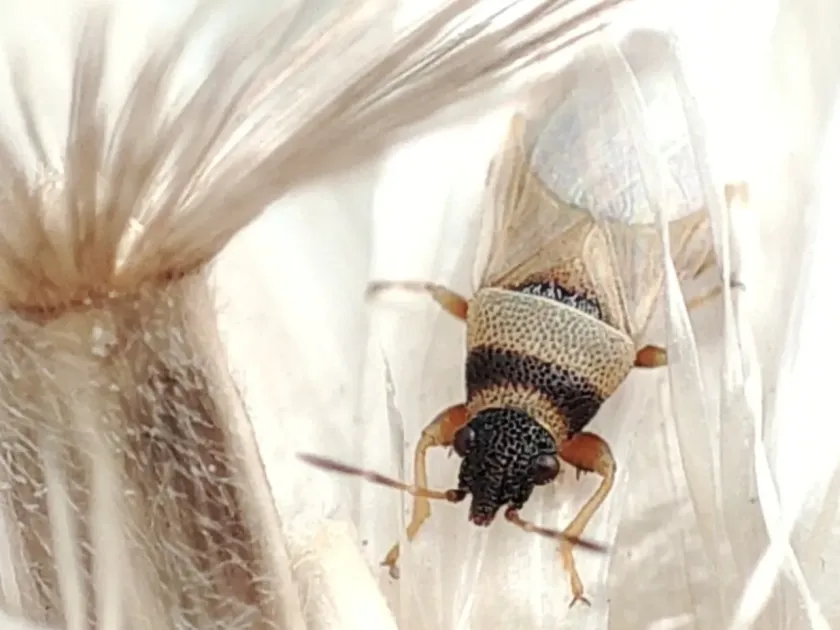
Oxycarenus collaris is a species of true bug belonging to the family Lygaeidae within the order Hemiptera. These small insects typically measure between 3 and 4 mm in length.
The adult insect is primarily black in color. It is distinguished by a clear, pale transverse band across the pronotum, often referred to as a "collar," which gives the species its specific name.
The body is flattened and well-adapted for hiding within narrow crevices, such as the bracts of cotton bolls or between folded leaves of host plants.
The life cycle undergoes incomplete metamorphosis, consisting of egg, nymph, and adult stages. Nymphs resemble miniature versions of adults but are wingless and have different coloration.
Adults overwinter in protected sites, such as leaf litter, soil cracks, or beneath the bark of nearby trees, emerging in the spring once temperatures become favorable for activity.
What it damages
The primary host plants for this pest are members of the Malvaceae family, with cotton being the most economically significant crop impacted by its feeding activities.
Besides cotton, the bug feeds on various wild malvaceous weeds, which serve as essential reservoirs allowing the population to survive and multiply throughout the entire growing season.
Damage is caused by the insect piercing plant tissues and extracting sap. This feeding process results in reduced plant vigor, stunted growth, and lower overall photosynthetic efficiency.
When populations reach high levels, the bugs concentrate on the reproductive parts of the plant, specifically targeting developing cotton bolls, which may lead to total loss of the fruit.
Feeding on seeds inside the boll ruins their viability and negatively affects the quality and length of the cotton fiber, causing severe financial losses for the agricultural producer.
Signs of infestation
The most evident sign of infestation is the presence of dense clusters of small black bugs found within the bracts of the cotton boll or inside the boll once it begins to open.
Chlorotic spots and necrotic patches may appear on the foliage as a result of salivary enzymes injected by the bugs, which can lead to premature leaf drop or yellowing.
Infected bolls often fail to open properly or open prematurely, exposing damaged, low-quality fiber that may be stained or contaminated with the insects' excrement.
The presence of sooty mold on the leaves is a secondary sign, as the mold grows on the honeydew or waste products left behind by the feeding insects on the plant surface.
General wilting of the plant and signs of physiological stress, especially during peak heat hours, indicate that a large population is actively draining resources from the host plant.
Control measures
Effective management begins with aggressive weed control, particularly targeting Malvaceae weeds in and around fields to remove alternative hosts for the bug.
Post-harvest agricultural practices such as deep plowing help to destroy overwintering sites for the adults, significantly reducing the population that emerges the following spring.
Crop rotation and the implementation of fallow periods are recommended to break the life cycle of the pest and prevent large colonies from establishing in subsequent seasons.
Chemical control involving systemic insecticides is utilized when infestation thresholds are exceeded, ensuring that applications are timed to coincide with the most vulnerable nymphal stages.
Biological control methods, including the protection and encouragement of natural predators like lacewings and spiders, play a vital role in maintaining the pest population below economic thresholds.
Taxonomy
- Latin name
- Oxycarenus collaris
- Order
- Hemiptera (bugs, aphids, leafhoppers)
- Family
- Oxycarenidae
- EPPO code
- OXYACO
Discussion
No discussions yet — be the first.