
Cotton seed bug
Oxycarenus albidipennis
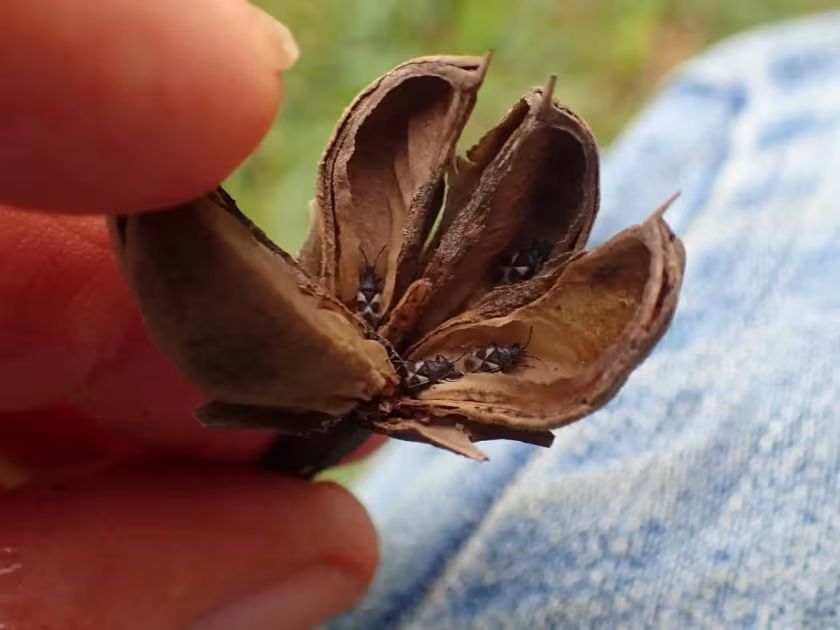
Description
How to identify
The cotton seed bug (Oxycarenus albidipennis) is a small insect belonging to the family Oxycarenidae, order Hemiptera. Adult bugs typically measure 3–4 mm in length and possess a dark brown to black body with distinct whitish, semi-transparent areas on the wings.
These insects are highly mobile and exhibit rapid reproductive rates in warm climates. The nymphs pass through several developmental stages, progressively resembling the adults but lacking fully developed wings during the early instars.
The species is commonly found in tropical and subtropical regions. Its biological flexibility allows it to adapt quickly to varying microclimates within agricultural fields, making it a persistent nuisance for farmers.
Identification in the field is often challenging due to their small size and tendency to hide within cotton bolls or under the bracts of the plant. Agronomists typically use visual inspection and yellow sticky traps for population monitoring.
Accurate identification is critical, as Oxycarenus albidipennis specifically targets the reproductive organs of the host plant, often sheltering deep inside maturing bolls.
What it damages
Both adults and nymphs cause damage by piercing the seed coats and feeding on the internal contents. This feeding behavior significantly reduces seed germination rates and overall seed quality for future planting.
The most severe impact is observed on cotton crops, where the bug infests maturing bolls. By feeding on the developing fibers and seeds, the insects cause the fiber to lose strength and become stained with their excrement and specialized secretions.
In addition to cotton, the bug affects a variety of alternative host plants, particularly those belonging to the Malvaceae family. This wide host range allows the pest to survive throughout the year on weeds and other crops.
Infested seeds are highly susceptible to secondary infections, such as fungal pathogens, which further degrade the commercial value and weight of the harvest.
During outbreak years, losses can be economically devastating, requiring aggressive intervention strategies to protect the fiber yield and seed viability.
When it appears
The activity and lifecycle of the cotton seed bug are strongly correlated with temperature and humidity levels. Peak reproductive activity occurs during hot summer months, with optimal temperatures exceeding 25 degrees Celsius.
The total lifecycle, from egg to adult, spans approximately 20–30 days, allowing for several generations per growing season. Population spikes usually coincide with the fruit development and maturation phases of the crop.
The bugs typically overwinter as adults, seeking refuge in plant debris, soil cracks, or storage facilities where harvested cotton is kept. This makes sanitation a vital part of the annual control cycle.
Migration to crops begins as soon as the first bolls form, providing the necessary food source for egg-laying. Early monitoring during this phase is essential for preventing large-scale infestations.
As temperatures drop in the autumn, the insects begin their migration to overwintering sites, highlighting the importance of post-harvest field management and plowing.
Signs of infestation
A primary indicator of infestation is the presence of adult bugs and nymphs inside the cotton bolls. Upon opening a boll, one may observe discoloration of the fiber and signs of insect fecal matter.
Plants heavily infested by Oxycarenus albidipennis may show signs of premature wilting or distorted fiber growth. Externally, the cotton quality appears significantly reduced, with a brownish, dull appearance.
Reduced quality of the raw cotton is a key indicator of economic damage. During field inspections, farmers can often observe mass congregations of bugs on flowers and young fruit bolls.
Damaged seeds display visible puncture marks where the bug has extracted sap. These seeds are usually shriveled, discolored, and ultimately non-viable for agricultural use.
In cases of severe infestation, the bugs release a pungent, unpleasant odor due to their scent glands, which serves as a distinct sensory sign of their presence in the field.
Control measures
Effective management relies on an integrated approach combining cultural practices and chemical interventions. Eliminating weeds, especially those in the Malvaceae family, is essential to reduce reservoir populations.
Post-harvest deep plowing helps destroy overwintering sites and reduces the overwintering population for the next season. Strict adherence to crop rotation schedules further limits the buildup of the pest.
- Application of systemic insecticides during peak migration periods when thresholds are exceeded.
- Use of adhesive traps for early detection and ongoing population monitoring.
- Accelerating harvest schedules to minimize the time bolls remain in the field exposed to the bug.
Chemical control should be applied judiciously, guided by economic thresholds to minimize environmental impact and prevent the development of resistance in pest populations.
Biological control, focusing on the conservation of natural predators like predatory bugs and spiders, can also play a significant role in keeping populations below economic injury levels.
Taxonomy
- Latin name
- Oxycarenus albidipennis
- Order
- Hemiptera (bugs, aphids, leafhoppers)
- Family
- Oxycarenidae
- EPPO code
- OXYAAL
Discussion
No discussions yet — be the first.